
It was a drizzly late-summer Saturday in 2024 when about three dozen residents of Wynnewood’s English Village finally admitted defeat and moved their traditional block party indoors. It hadn’t been held since before Covid, but the neighborhood has always looked for ways to keep the flavor of the 1920s alive–in more ways than one.
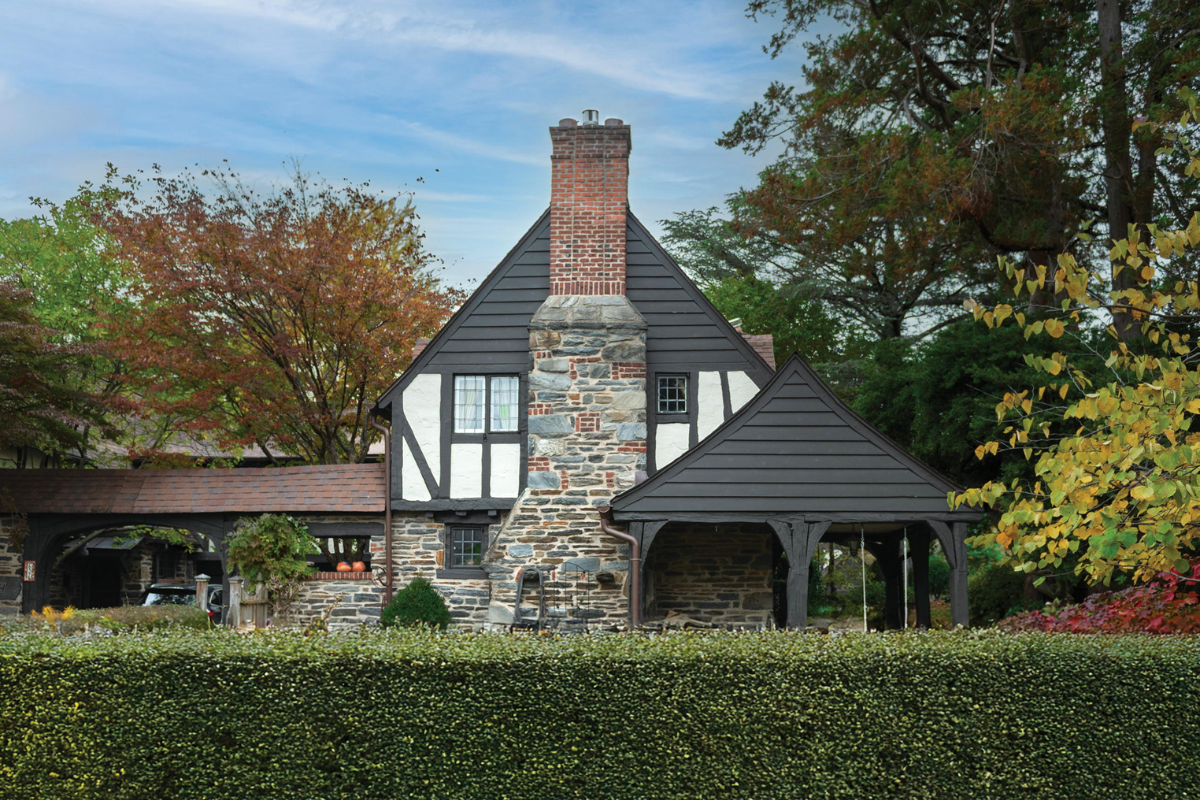
Last year marked the 100th anniversary of this cluster of 29 Tudor-style homes. Tucked away between Cherry Lane and Wister Road near Lower Merion High School, the neighborhood’s medieval charms are an offbeat surprise even to some locals. “Nobody would build this today,” says architect Tom Hall, who moved to nearby Bryn Mawr eight years ago and hadn’t a clue about the English Village. “It’s sort of like the Grand Canal in Venice.”
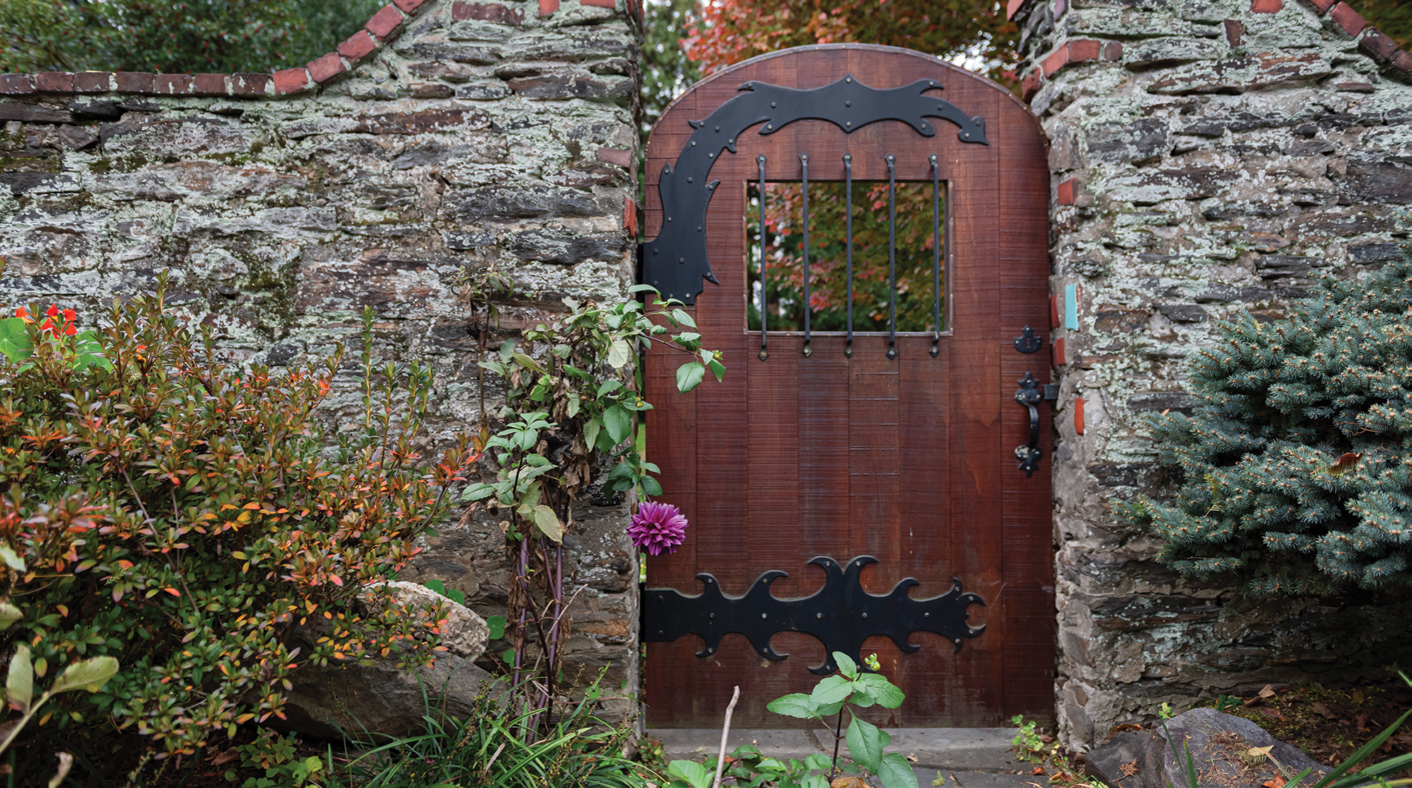
“It aimed to evoke a setting that felt genuinely old and organically evolved,” adds Kathleen Abplanalp, Lower Merion Conservancy’s director of historic preservation, noting its stone and brick facades, leaded glass windows, Moravian tiles, stone floors and broad fireplaces. “Residents recognize the neighborhood’s distinct character and have worked to preserve it.”
For the English Village, the passage from the 20th to 21st centuries hasn’t always been smooth, but its certification as a state historic district in 2010 has assured the preservation of its unique exteriors. “It keeps anyone from putting in Andersen windows,” says Mark Dinneen, a resident for 30 years.
But costs for owners have ballooned, mainly because of the small number of companies skilled enough in historic preservation to do the work. Many newcomers make interior changes, which aren’t regulated but can still be pricey. Nonetheless, Dinneen says vacancies are rare—and when they do occur, a home is snatched up quickly. Each fresh arrival brings a “new vibe” to the neighborhood. “There’s a surprise around every corner,” Dinneen notes.
Jesse Kahn became a resident in 2022. The psychotherapist can’t imagine any tensions with his neighbors—and if you have a dog, you’ll soon know every other dog owner in the village. Decades ago, Elaine Serota and her husband were so charmed by the place that they left a note with several households expressing their desire to live there. “The religions and the marriages are mixed,” says the painter and woodcut artist, who’s been a resident since 1972. “We’ll stay until we can’t.”
“NOBODY WOULD BUILD THIS TODAY. IT’S SORT OF LIKE THE GRAND CANAL IN VENICE.”
—ARCHITECT AND RESIDENT TOM HALL
Developer Donald M. Love and his architect brother, S. Arthur, built the English Village in the 1920s, back when interest in styles of the past was high. Both had spent time in England’s Cotswold District—Donald as an infantry captain in World War I and Arthur as a student at Oxford University. Neither was an artist, but they started the village as a colony for creatives. To a degree, it remains so to this day.
After looking at many “sterile” houses, interior designer Jane Moore and her architect husband, Isaiah King, made the move from of their Brooklyn, New York, apartment in 2023. Their English Village house reminds her of Disney World’s Epcot. She also appreciates the “strong, well-bonded community.” And while the coveted Lower Merion School District is a big draw for families, newcomers tend to be closer to middle age due to home prices. Late last year, a four-bedroom, three-bath house in the neighborhood sold for just under $1 million.
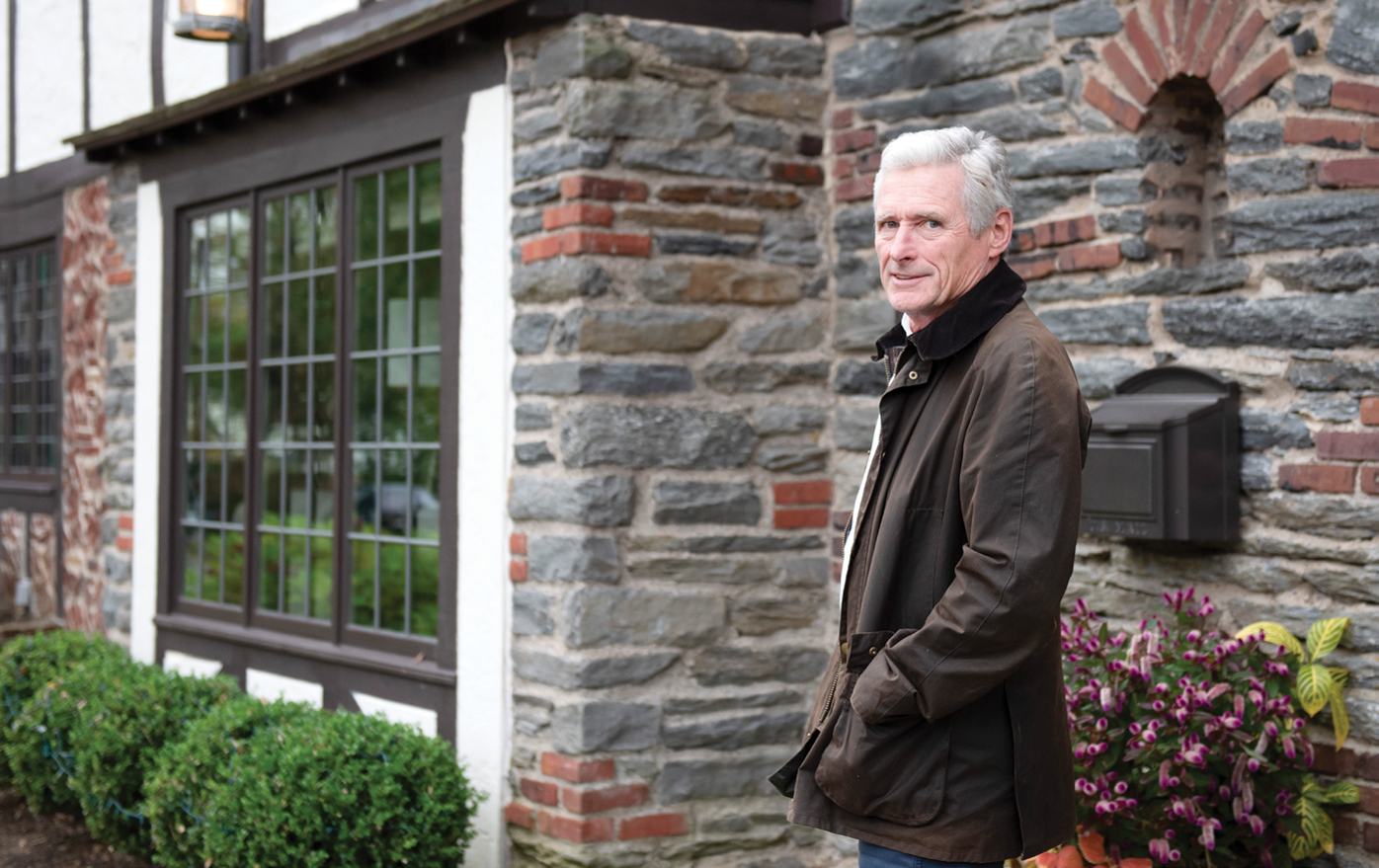
As you might expect, there’s a certain reverence for history in the English Village. Hall’s wife, Lisa, notes that most residents have previously lived in hundred-year-old homes. But this doesn’t always mean they’re thrilled with the regulations that come with living in a historic district. “People say, ‘Why do we need this?’” says Megan McNish, a community coordinator for the Pennsylvania State Historic Preservation Office.
Many Main Line buyers are attracted to vintage homes. “But they want move-in condition,” says Mike McCann, a realtor who’s sold in the area for decades. “Historic homes are desirable if they tell a good story, but more people want contemporary modern these days.”
Over the years at the English Village, Abplanalp has seen one constant: “Residents have been loving and respectful students of their houses.” Hall’s house was the rare exception. Neglected when he bought it, renovations took a year while the couple lived elsewhere. Lately, the only major structural change made in the village was a garage expansion approved by the township.
In 2020, Abplanalp helped spread the word about the English Village community by sharing a self-guided, eight-stop walking/cycling tour of its two streets, Loves Lane and Arthur’s Round Table. She also provided a detailed history to the Lower Merion Conservancy. “During Covid, there were more people on Loves Lane than in Times Square,” says Dinneen half-jokingly.
Greg Prichard attributes the English Village’s success story to the people who call it home. “The character has been maintained now for a century thanks to the dedicated residents who understand and appreciate the uniqueness and importance of the community,” says Lower Merion Township’s historic preservation planner. “The work to preserve its character has been an effort spanning generations.”
“DEVELOPER DONALD M. LOVE AND HIS ARCHITECT BROTHER, S. ARTHUR, BUILT THE ENGLISH VILLAGE IN THE 1920S, BACK WHEN INTEREST IN STYLES OF THE PAST WAS HIGH.
Visit The English Village Historic District website.
Related: This Malvern Home Embraces Cheerful, Vibrant Colors