
A company linked to a local data center developer, who also proposes to build a power plant in Archbald, wants a Lackawanna County judge to void Dickson City’s zoning regulations for data centers.
Dickson City Development LLC, 99 Power Blvd., Archbald, filed a land use appeal March 13 in the Lackawanna County Court of Common Pleas, asking the court to annul Dickson City’s Feb. 12 adoption of an ordinance that established zoning standards for data centers. The appeal, filed by attorney Michael Mey of Dunmore-based Mey & Sulla LLP, names Dickson City Borough and borough council as defendants. It alleges the ordinance is exclusionary to data centers, unlawfully delegates authority, lacks uniform standards and is inconsistent and vague, among other contentions.
If not voided, the land use appeal asks the court to remand the ordinance back to the borough.
Dickson City Development shares an address with Kriger Construction Inc. and its affiliated NEPA Concrete & Asphalt plant; Kriger’s president, Jim Marzolino, applied in Archbald last year to develop a nearly 620,000-square-foot data center on Eynon Jermyn Road. Earlier this month, he and Mey applied to build a four-turbine power plant across the street from the data center, known as Project Boson. Marzolino sold 180-plus acres between Eynon Jermyn Road and Business Route 6 for the Project Gravity data center campus that will have seven data centers. He was also the co-developer in withdrawn plans to build up to four data centers in Blakely. Mey also represents Scranton Materials LLC as it challenges Ransom Twp.’s zoning as exclusionary to data centers.
Last month, Dickson City Council unanimously voted on a zoning ordinance that defined, regulated and restricted data centers and accessory uses as special exceptions in the borough’s light manufacturing district, requiring any proposal to receive approval from the borough’s zoning hearing board. Doing so established standards governing data center development in the borough while limiting them to Enterprise Street near Eagle Lane and undeveloped land southeast of Railroad Street.
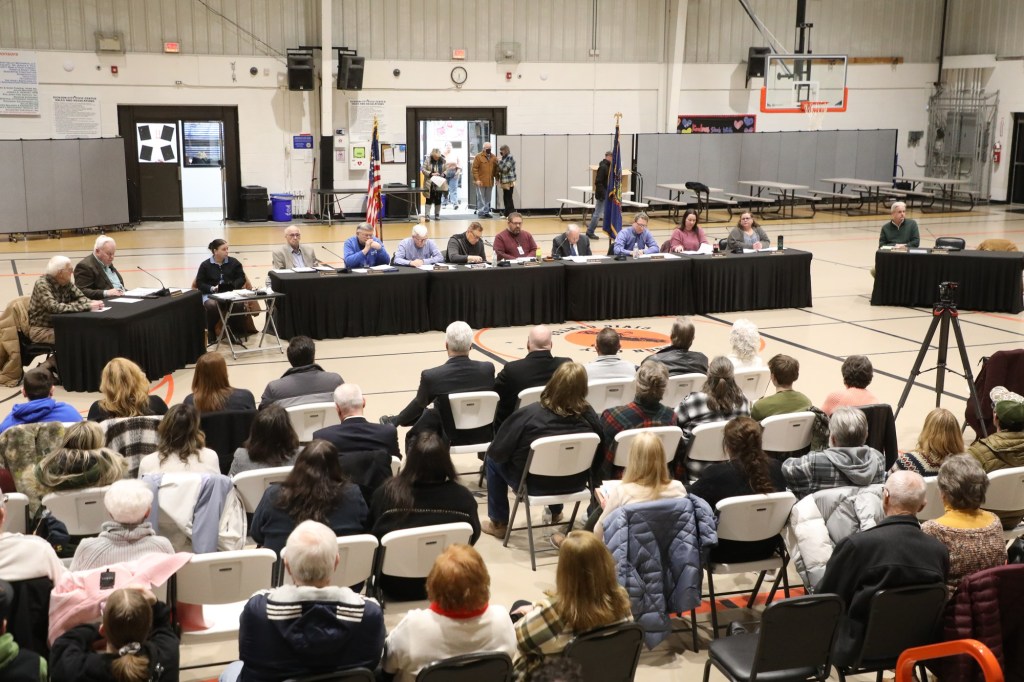
The borough held three public hearings prior to voting. Residents packed the Borough Building and later the Dickson City Civic Center to raise concerns and voice their opposition to data centers.
Municipalities in Pennsylvania are required to allow for every type of lawful land use somewhere within their borders and expose themselves to legal challenges over exclusionary zoning if they fail to include a use, such as data centers.
The zoning change directly affected Dickson City Development’s plans for data centers in the borough.
Attempts to reach borough Solicitor Bill Jones were unsuccessful Wednesday.
Mey and attorney Raymond Rinaldi, both of whom represented the developer, argued in January that Dickson City already permitted data centers in its highway commercial zoning districts because of language allowing “data processing and record storage.” They contended such language allows them to develop data centers above the site of a proposed Wawa on Cold Spring Road. The developer also submitted its own zoning ordinance to the borough that sought a 403-acre data center overlay district to permit a campus around Bell Mountain.
The appeal notes that Dickson City Development has equitable interest in multiple properties in the borough’s highway commercial zones. It argues that “data processing and record storage” is still a principally permitted use in those zones because the borough’s data center ordinance did not include language repealing it. Mey also references multiple zoning use appeals currently pending before the Dickson City Zoning Hearing Board regarding the same properties.
The filing challenges Dickson City’s zoning on multiple fronts, characterizing it as having procedural noncompliance, internal inconsistency and vagueness, unlawful delegation of legislative authority, lack of uniform standards, substantive unreasonableness, denial of substantial due process and exclusionary to data centers.
The ordinance creates “compounding barriers that render data center development practically unattainable,” Mey wrote. It requires a minimum of five acres for any data center, which the attorney wrote, “Severely curtails the number of feasible parcels and functions.”
The land use appeal contends data centers should be allowed closer to residential areas. Dickson City’s 200-foot residential setback requirements for data centers eliminate otherwise developable properties, “Effectively barring data centers from typical edge-of-district locations where industrial and residential uses often interface,” Mey wrote.
According to the appeal, the borough also failed to follow enactment requirements under the Pennsylvania Municipalities Planning Code, which is the state law providing the framework for municipal zoning, including that the ordinance was not prepared by the borough’s planning commission, nor was it submitted to the borough or county planning commissions at least 30 days prior to the hearing so the commissions could provide recommendations. Mey also alleges violations of the state’s Sunshine Act, including by holding a hearing in a “severely overcrowded” meeting space where residents were “unable to enter the chambers and others forced into the vestibule or to remain outside the Borough Building.” The Sunshine Act, or Open Meetings Law, is the legislation requiring agencies to deliberate and take official action in open, public meetings, according to the Pennsylvania Office of Open Records.
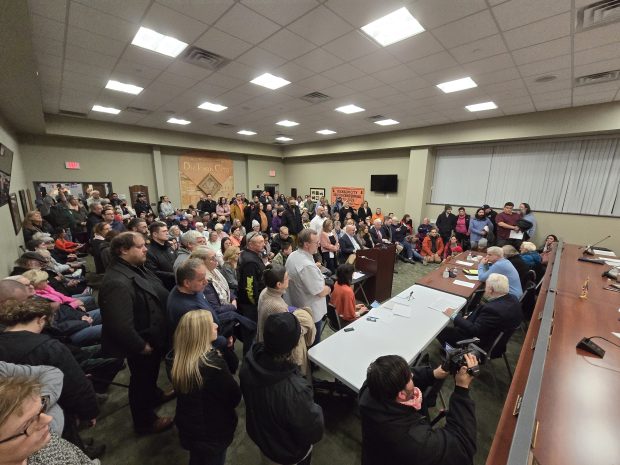 An overflow crowd of at least 200 residents packs into the Dickson City Borough Building for a public hearing Tuesday, Jan. 20, 2026, in the Dickson City. (FRANK WILKES LESNEFSKY / STAFF PHOTO)
Among other contentions of vagueness, inconsistency and unlawful delegation of authority, the appeal cites language dictating data center applicants must “meet all reasonable requests for training, equipment and information relevant to fire protection to the satisfaction of the fire department,” though it does not have legislative standards, fiscal limits or appeal criteria, Mey wrote.
The appeal asks the court to declare the ordinance void, annul its adoption, remand it back to the borough and award Dickson City Development any other relief.