
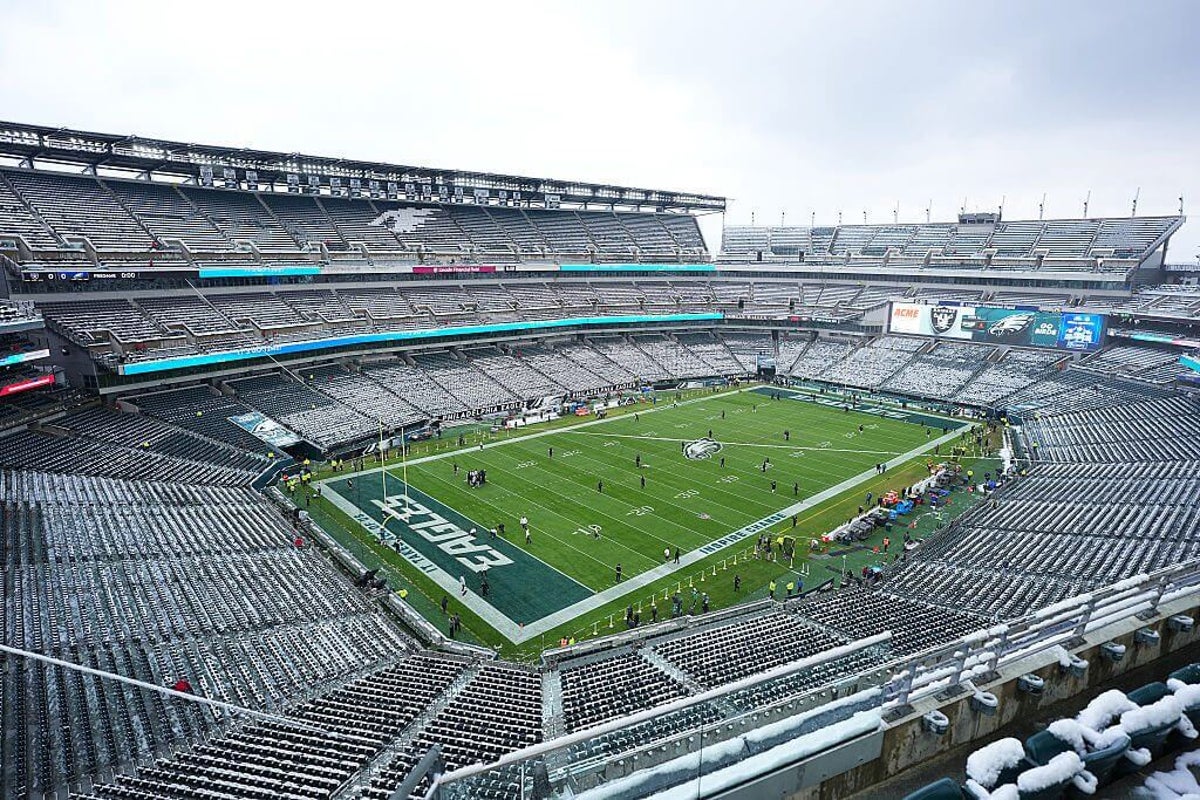
On July 24, the Philadelphia Eagles sent an email soliciting feedback from season ticket holders. This is fairly common, except that this particular survey went beyond quicker lines or tastier food options. The title of the email read, “Help Shape the Future Eagles Stadium Experience!” It explained how the Eagles are evaluating changes for their home stadium — “including both renovation options and the possibility of a brand new stadium in the region.”
The email was a clear signal about a topic that has been the subject of murmurs in recent years, and that will become louder around the franchise in the next year or two. For as much interest as there is in A.J. Brown updates or whether the Tush Push will remain a part of the game, one of the most important storylines about the franchise’s future is whether the Eagles will replace Lincoln Financial Field in the next decade. The Eagles’ current lease with the city runs through 2032. Seven seasons might seem like a long time until you consider the timeline to approve, plan and construct a new stadium or renovate a stadium — one that could perhaps have a roof and allow Philadelphia to host more major sporting events.
There are no substantive updates while the franchise remains in an exploratory phase. With NFL owners and executives convening in Phoenix next week for the annual league meetings — and with Eagles owner Jeffrey Lurie expected to hold his de facto state of the franchise address — the conversation about the Eagles’ future home stadium will intensify. Expect Lurie to field questions about the franchise’s stadium plans, and Eagles officials will hear about new projects in Buffalo, N.Y., Kansas City, Mo., Washington, Cleveland, Nashville, Tenn., Jacksonville, Fla., and potentially Chicago.
“I think we’ve got a wonderful stadium. We’ll have to make some decisions down the road,” Lurie said in February 2025 ahead of Super Bowl LIX. “No stadium is optimal forever. We’ll have decisions over renovating it or creating a new stadium. I think we’ve been neutral with all the evolution of the South Philly complex, with all those rumored city arenas and all that. So we’ve been neutral. We’re not involved in that at all. We want what’s best for the Eagles and our fans, and someday, if we can deliver a Super Bowl to Philadelphia, then that would be incredible.”
The reference about delivering a Super Bowl was not about winning one — the Eagles have done that twice during Lurie’s ownership, including six days after these comments — but rather hosting one. That’s something that Philadelphia has never done. It’s only happened once outdoors in a cold-weather city (New York/New Jersey in February 2024) and would require a climate-controlled venue if it were to happen in Philadelphia. The NFL mandates that a Super Bowl host city have an average annual temperature of at least 50 degrees in the month leading up to the game.
Whether a roof came via new construction or a renovated stadium, it would be a hot-button issue in Philadelphia. Part of the lure of Philadelphia football is the winter conditions late in the season or in the postseason. Fans have vivid memories of games in the snow — the two best rushing performances at Lincoln Financial Field (LeSean McCoy in 2013 and Saquon Barkley in 2025) came on a field that could have been in a snow globe.
But Eagles fans also remember their first Super Bowl victory, which took place in Minneapolis because there’s a domed stadium. Washington’s new stadium will have a translucent roof that will resemble an open-air venue but is free from winter conditions and would put the nation’s capital in contention to host the NFL’s marquee event.
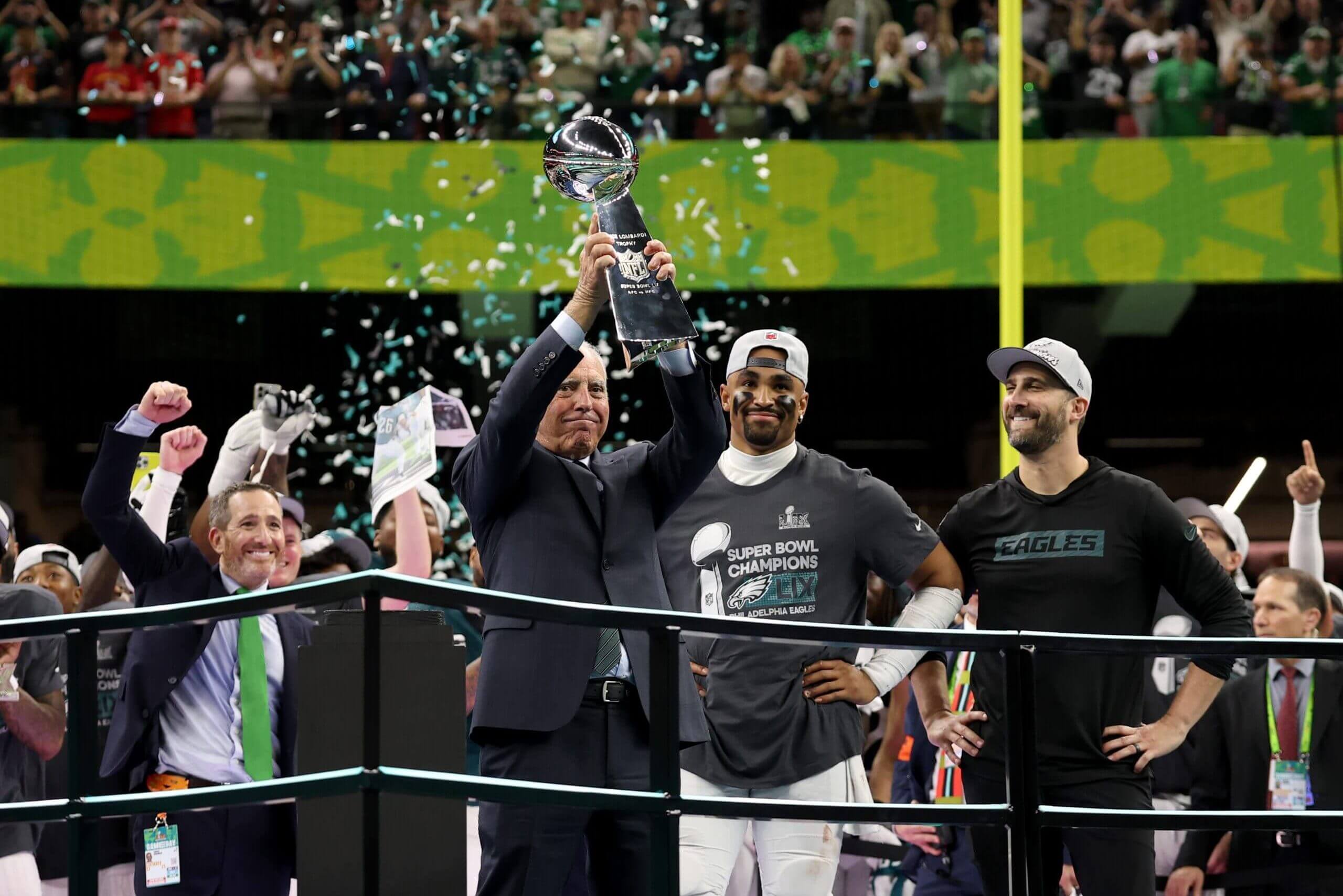
Eagles owner Jeffrey Lurie believes Philadelphia deserves to host the Super Bowl. (Jamie Squire / Getty Images)
Philadelphia hosted the first and second rounds of the NCAA Tournament this past weekend, although it wouldn’t get into the Final Four rotation without a dome. Every scheduled Final Four through 2031 will be played in a dome or a stadium with the option of a roof. Atlanta, Dallas and Indianapolis all have retractable roofs.
“I love outdoor football. I love the cold games. I like the hot games, like the snow games,” Lurie said last year. “On the other hand, Philadelphia deserves to host the Super Bowl, NCAA Final Four, lots of great events. It’s an incredible sports city. Does it deserve it? Yes. So we have to balance all those things.”
Buffalo stayed true to its region’s roots and will open an open-air stadium this season that keeps 60-65 percent of the seats covered, but keeps the field open to the upstate New York wintry conditions. New stadiums under construction in Nashville (2027) and Cleveland (2029) will have translucent roofs, and stadiums under agreement in Washington, Denver and Kansas City will have translucent or retractable roofs. Wherever the Bears build their new stadium, it is expected to have a roof.
When Washington’s new stadium is completed with an estimated fall 2030 date, the Eagles would have the oldest venue in the NFC East. Lincoln Financial Field opened in 2003. There were 14 stadiums erected in the decade before. Six are already being replaced or undergoing major renovations. Replacing or renovating Lincoln Financial Field does not seem to be a necessity, although stadium architecture and features have evolved during its 23-year lifespan. The Eagles’ stadium rights deal was originally 20 years and was extended in 2019 through … the 2032 season — the same year the lease expires. That further highlights a potential inflection point in 2033. (Of course, a lease can be extended just like a naming rights deal.)
Across the street from Lincoln Financial Field is the Xfinity Mobile Arena, where the Philadelphia 76ers and Philadelphia Flyers play. The facility opened in 1996 — seven years before the Eagles’ stadium. The arena is projected to be replaced in 2031 when the 76ers and Flyers move into a planned new arena together in South Philadelphia. That resolution came after the 76ers had plans to build a $1.3 billion arena in the Market East section of Philadelphia, leaving the South Philadelphia sports complex that houses Philadelphia’s four major sports teams.
That two-year saga included local debate about keeping the franchises together or bringing a facility closer to the city center. During that period, the Philadelphia Phillies partnered with Comcast Spectacor (the owner of the Flyers) to formally plan developing the sports complex as part of a mixed-use project. The Eagles notably stayed out of the fray, choosing to remain the Philadelphia sports version of Switzerland — and perhaps keeping their own ambition ambiguous.
Citizens Bank Park, which opened eight months after the Eagles’ stadium, is across Pattison Avenue from Lincoln Financial Field and shares the same parking lots. The Phillies have committed to renovations rather than rebuilding their ballpark.
Although it seems natural for the Eagles to remain in South Philadelphia, stadium sites have become a hot-button issue in the NFL. The Chiefs are moving across state lines from their longtime home in Missouri to Kansas rather than renovating Arrowhead Stadium. (Their current lease expires in January 2031, two seasons before the Eagles’ lease at Lincoln Financial Field. The agreement with Kansas was reached in December.) The Bears have had project possibilities in Northwest Indiana and in the Chicago suburbs, in addition to their current home in downtown Chicago, and the latest development would have them moving across state lines. The Browns, famous for playing by the lake in downtown Cleveland, are moving about 15 miles away to Brook Park, Ohio, where they will house a stadium and entertainment complex.
The location of a stadium is often subject to financing. When Lincoln Financial Field was constructed, it included financing from the city and the state. Pennsylvania Gov. Josh Shapiro told The Associated Press in June that he would discuss with the Eagles and Steelers what is needed for the future of their stadiums, but he declined to discuss specifics.
There’s nothing concrete to discuss, much less concrete to pour. That’s why the conversation about a new stadium or a stadium renovation might seem premature. The Eagles have at least seven more years to go at Lincoln Financial Field.
But consider this: Seven years ago, the NFL league meetings were held at the same posh resort as next week. At that event, Bills ownership met with reporters and noted fan surveys from the previous year. They explained that the study was still in its early phases. They did not divulge details on plans. But they also did not deny interest.
Three years later, they reached an agreement with the state and county for a new stadium. One year later, they broke ground. This September, they will kick off in a state-of-the-art venue. Survey to stadium in seven years. It arrives quicker than it seems.