
This is WESA Arts, a weekly newsletter by Bill O’Driscoll providing in-depth reporting about the Pittsburgh area art scene. Sign up here to get it every Wednesday afternoon.
In February 1946, Pittsburgh’s Civic Light Opera Association announced its very first season, which began with an outdoor show at old Pitt Stadium. The group — created with help from department store heir Edgar J. Kaufmann, and staging fare like “Brigadoon” and “On The Town” — proved popular enough that the Civic Arena was originally built to house its shows. The CLO moved Downtown to the Benedum Center in 1988, and has been there since.
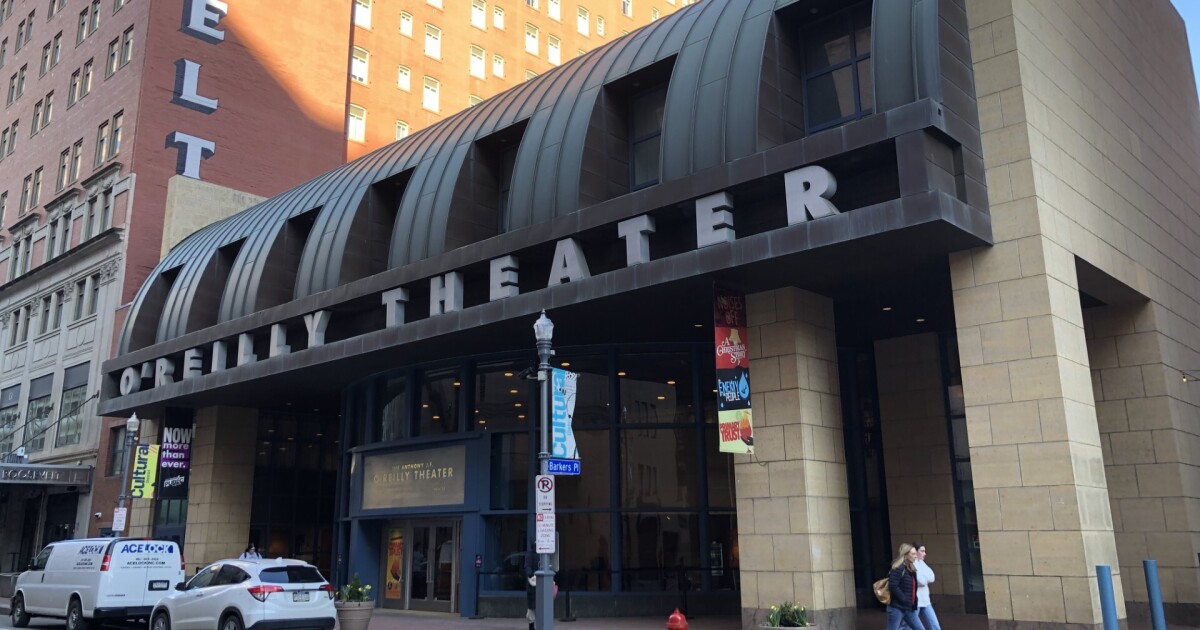
In 1974, Pittsburgh natives Joan Apt (a founding member of the CLO board) and Margaret Rieck teamed with New York City-based playwright and director Ben Shaktman to revive the city’s seemingly moribund homegrown theater scene. With support from local philanthropists, foundations and subscribers, Pittsburgh Public Theater debuted in September 1975 with its production of “The Glass Menagerie” at the Allegheny Theater (now the New Hazlett). A storied history that includes its 1999 move to Downtown’s purpose-built O’Reilly Theater, and a couple dozen world premieres including August Wilson’s “King Hedley II,” continues to this day.
But not for much longer.
Performances begin this week of the Public’s Pittsburgh-premiere staging of Eboni Booth’s 2024 Pulitzer Prize-winning drama “Primary Trust,” which will likely be the last full production the troupe stages under that name (though other events are planned). Likewise, the CLO’s upcoming summer season, featuring a local production of the Tony-winning musical “Suffs,” looks to be its last after the city’s two largest stage groups announced last week they would consolidate into a single entity.
The groups say the new troupe will premiere in January. That means the 2026 fall theater season will be (pandemic aside) Pittsburgh’s first without the Public in half a century. And 2027 will bring the first summer without CLO shows since World II ended.
Pittsburgh’s two largest theater companies, and two of the oldest, the Pittsburgh Public Theater and the Pittsburgh CLO, have voted to merge into a new organization.
The decision had been looming for months, ever since the Public and CLO began talks about sharing resources to survive in a difficult climate for live theater nationally. (City Theatre was originally involved, but opted out in January.)
Statements by the groups led some observers to believe the end result would be more a resource-sharing arrangement than the final arrangement as announced, which resembles an all-out merger. The dissolution of the two venerable troupes — actor David Whalen calls the Public “the flagship theater of Pittsburgh” — was always a possibility, but still felt like an epochal change.
“I was a little shocked by it, and really sad, but hopeful,” said Daina Griffith, performer, director and acting coach who first acted at the Public in 2003.
“I just assumed that these giant organizations were too big to fail,” said Patrick Jordan, a longtime member of the theater scene as founder of barebones productions. “But if this works, I’m thrilled.”
“I think that it’s a sign of the times,” said Mark Clayton Southers, the founder and artistic director of Pittsburgh Playwrights Theatre Co. The lack of younger patrons to replace the aging theater-goers who have supported the scene for so long is a growing concern, he said.
Estelle Comay, of Oakland, who with her husband, Bruce Rabin, has been a Public season subscriber since the company began, sounded a hopeful note. “It seems like a fit that might work,” she said.
Top of mind for many observers was what the merger means for theater artists trying to survive, whether they are Public or CLO staffers or the cast and crew hired on a per-show basis.
“We’re devastated that our colleagues are in such difficulty and feel quite intimately involved,” wrote Quantum Theatre artistic director Karla Boos, in a statement. “The theater ecosystem supports all the artists we work with and we must be a place where performing artists, designers, directors, and crew can make their home, and we must have theater made here, by us.”
Ken Bolden, whose dozen roles at the Public began with “The Comedy of Errors,” in 2007, said the absence of a fall season there will hurt.
“That’s four months [of] no work. That’s a lot for people,” he said.
The CLO welcomed some 50,000 patrons in 2025, and the Public last season drew about 40,000. But the impact of the theaters radiates beyond what audiences see on stage.
Griffith recalls first auditioning at the CLO as a Point Park University student. “That was the place you started for musical theater,” she said. Even for students, who were unlikely to be cast, just auditioning is valuable experience.
Wali Jamal, who’s done “Kinky Boots” at the CLO and shows from “Our Town” to “Noises Off” at the Public, said the troupes offered local performers like him the chance to work with “all these actors that they brought into town that I otherwise never would have met.”
The Public and City Theatre are the lone Pittsburgh-based members of the League of Resident Theatres, and as such are known for paying especially well. “It was great to have a job at the Public,” said David Whalen, a Pittsburgh native and for years one of the busiest stage actors in town.
The Public, in particular, also sometimes provided a literally bigger stage (and budget) to local playwrights, including Southers, whose drama “The Coffin Maker” premiered at the O’Reilly in 2024.
Details about the merger remain in process; representatives of the two groups and the transition team are not yet speaking about it publicly.
But the stage community has its hopes — and some advice.
Bolden joined Griffith in urging the new troupe to focus less on hiring out-of-town cast and crew — who require housing and other support for weeks — and instead support Pittsburgh-based artists. “It’s like, ‘We’ve got them here! And they’re great!” Griffith said.
Southers said the new, merged group’s choice of an artistic director will be crucial. “They really need someone that can galvanize and bring excitement,” he said. “If we’re going to come out with a new name and a new theater company, that’s gonna be key.”
Though many questions remain unanswered, many observers expressed faith in the process and its prospects.
“Having the Public combine with the CLO, I think it’ll be a good thing,” said Jamal. “People just need to give it a chance and see what happens.”