
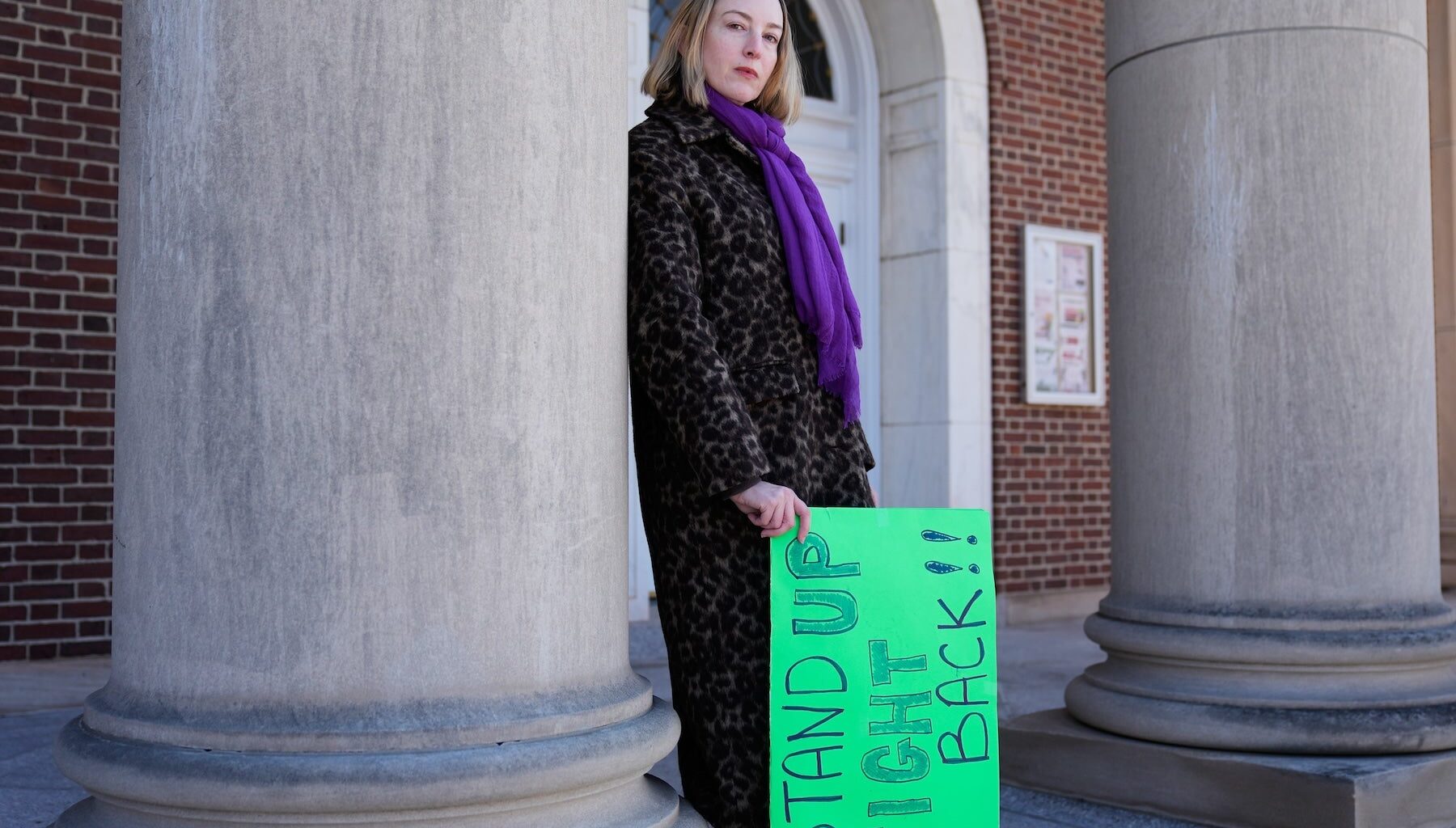
A few years ago, Allison Posner was barely involved in politics.
Now the 42-year-old mother of two from Maplewood, New Jersey, hands out food and diapers to immigrant families outside a nearby detention facility. She waves signs on a highway overpass between school pickups and orthodontist appointments. And this weekend, she’ll lead a No Kings protest march across this affluent town alongside her husband, her children and thousands of others who are convinced President Donald Trump represents a direct threat to American democracy.
“The people in the suburbs are definitely radicalizing,” said Posner, a freelance actor.
A growing faction of concerned citizens living in suburban communities across the United States — places once known for political moderation or even conservatism — are increasingly positioned on the front lines of the anti-Trump resistance. More than a year into the Republican president’s second term, the soccer moms are becoming bona fide activists taking to their well-manicured streets to fight Trump and his allies.
The leftward lurch could cost Republicans control of Congress for the president’s final two years in office. It could also reshape the Democratic Party by elevating a fresh crop of fiery progressive candidates emboldened to push back against the Trump administration more aggressively than the establishment may prefer.
Indivisible, the activist organization spearheading the third round of No Kings protests this weekend, said roughly two-thirds of more than 3,000 planned demonstrations will be held outside urban areas. Overall, more than 9 million people are expected to turn out nationwide for what leaders predict will be the largest day of protesting in U.S. history.
“We’re going to be everywhere,” Indivisible co-founder Ezra Levin said.
Organizers said sign-ups have been especially enthusiastic in suburban areas with high-profile congressional races like Scottsdale, Arizona; Langhorne, Pennsylvania; East Cobb, Georgia; and here in northern New Jersey’s 11th District, which holds a special election April 16.
Democratic voters last month chose Analilia Mejia, a former political director for Vermont independent Sen. Bernie Sanders, as their candidate to replace Mikie Sherrill, the more moderate Democrat who was recently elected as New Jersey’s governor.
Posner said she’s excited to have a fighter represent her district, someone who can channel the outrage she sees every day.
“I’m seeing people from the PTA or the neighborhood who would have never joined a protest in the past, who are now asking how they can get involved,” Posner said. “This is not some other people’s fight. This is our fight.”
‘Our hair is on fire’
For decades, affluent suburbs like those in northern New Jersey helped elect Republicans who fit the districts they represented: business-oriented, culturally moderate and disinterested in ideological fights.
That began to change in the Trump era.
Across the country, college-educated suburban voters recoiled from Trump’s brand of politics. They shifted sharply toward Democrats in the 2018 midterms and in the presidential elections that followed. Districts like New Jersey’s 11th, once a Republican stronghold, have since become part of a new liberal coalition rooted in places that were, until very recently, politically competitive.
Even in Summit, New Jersey, one of the nation’s wealthiest suburbs, Jeff Naiman feels as if he’s living in an “authoritarian nightmare” of Trump’s making.
“It’s like our hair is on fire,” says Naiman, a 59-year-old radiologist who leads his local chapter of Indivisible. “Our country’s being torn apart.”
He’s supporting Mejia, and he has no doubt she’ll win next month’s special election — and again in November’s general election.
“In this environment,” Naiman said, “I think the chances of her losing the general election are basically zero.”
Mejia, an outspoken progressive activist endorsed by Sanders and Rep. Alexandria Ocasio-Cortez, D-N.Y., emerged from the crowded Democratic primary last month, beating more moderate candidates like former congressman Tom Malinowski.