
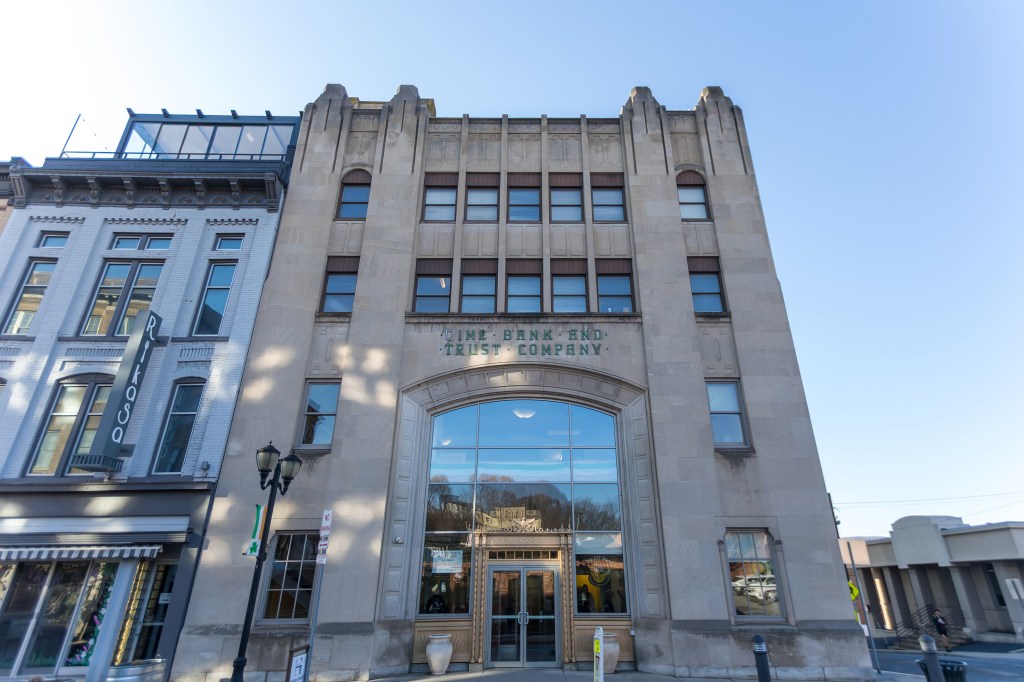
Characterized decades ago by empty storefronts and sparse foot traffic, downtown Pittston is now a revitalized city center with ambitious plans for more development, including a 612-seat theater with commercial space and high-end residential units.
The return of businesses and foot traffic has created conditions that have allowed city officials to plan the next step, a focus on the intersection of Market and Main Streets and the immediate surrounding areas.
City Administrator Joe Chacke said plans for the estimated $32 million theater project include roughly 50,000 square feet of commercial space. The figures for the residential space are still in the planning stages.
“We’re not sure on the number of residential units yet, because we’re still working on what type of bedrooms and things like that. So that will all impact that, but it’ll be three levels of residential space,” Chacke said.
The city also plans to build a park that complements the theater, with the vision of live events, picnics and other recreational activities, as well as the potential for a new grocery store.
“The mayor has charged us with trying to find a grocery store. We don’t have one in the downtown, so (Deputy City Administrator and Director of Community Development Shannon Bonacci) is working on some marketing and pieces for that to attract a grocery store,” Chacke said.
The city has a four-story parking garage in the works to accommodate greater demand for parking.
“We’re building a four-story parking garage that will park 300 plus cars, and then we’re wrapping that parking garage, so you won’t see the parking garage from the outside. We’re wrapping that in commercial and residential space,” Chacke said.
The theater itself will be a multipurpose venue. The city sees it as a versatile downtown cultural center promoting arts and entertainment as well as public and private events.
Focused on downtown
Downtown Pittston’s transformation began shortly after Mayor Michael Lombardo took office in 1998. During the decadeslong revitalization project, city leaders have focused efforts on the downtown core by upgrading streetscapes, improving walkability and increasing occupancy rates.
“A lot of our focus has been in the downtown over the last two decades … not because the neighborhoods aren’t important,” Lombardo said. “Main Street downtown was not doing what it was supposed to be doing, and it was not helping us economically, and arguably, it was economically draining the city.”
City officials’ rationale was that reviving the downtown area first would create revenue that would allow for the opportunity to expand development into the neighborhoods.
“So, we theorized decades ago that if we made a significant focused investment in the downtown, and it kept growing, that the value of that would be our ability then to go and capture that value and move it out, you know, into the neighborhoods,” Lombardo said. “I’m very proud to tell you that 16 over the last 17 years we’ve held the line on taxes.”
In addition to avoiding significant tax increases, the downtown resurgence has helped fund the city’s implementation of a municipal-level homestead property tax exemption. The exemption reduces the taxable assessed value of a homeowner’s primary residence, which lowers the property tax bill.
“If you own and live in your home, you get a pretty significant reduction in your taxes, and that is being fueled solely 98 point some percent by the value of Main Street and the investments that they have stirred,” Lombardo said.
According to the city’s website, the homestead property exemption reduced the assed value for property taxes by $16,500 for homeowners in fiscal year 2025. The exemption will increase to $40,000 for 2026.
Chacke said 26% of city residents live in poverty. Up until this point, city officials have remained cognizant of bringing in a more affluent tax base without sacrificing the affordability of the city for longtime residents and have plans to use revenue to improve the city as a whole.
“That’s why the revitalization has worked. Are we allowed to attract higher earners? Absolutely, and there’s a reason for that. But are we also looking to do senior housing? Absolutely. Are we doing home repairs on low income and senior housing? Yes. Are we doing projects on our public housing? Absolutely,” Chacke said.
Getting around
City officials said they have focused on improving the walkability of downtown.
“We got a grant from the state to create our first active transportation plan. So Main Street is walkable. We continue to try to make our North Main Street just as walkable by putting in new sidewalks, new lighting, all of that,” Bonacci said. “Something that the plan really focused on was, well, how do we get people from the neighborhoods into downtown? So, we created something called Project Connect, and it focused on some of these feeder streets and how we can more easily go in with maybe smaller streetscape grants or even state grants to try to fix sidewalks block by block.”
The downtown renaissance has brought a much younger tax base to Pittston. City officials say as recently as 2012, Pittston was a majority older-adult city, but now, the majority age demographic is 25-45.
The occupancy rate has undergone a complete transformation since Lombardo first took office in 1998.
“When I took office back in ’98 for the first time, the occupancy downtown was below 25%. Now we are up in the probably high 90s,” Lombardo said.
According to Mary Kroptavich, Main Street manager and deputy city administrator, the commercial occupancy is nearly full in downtown.
“I mean, speaking of downtown, yes, we have maybe one or two commercial vacancies, and they get taken pretty quick,” Kroptavich said.
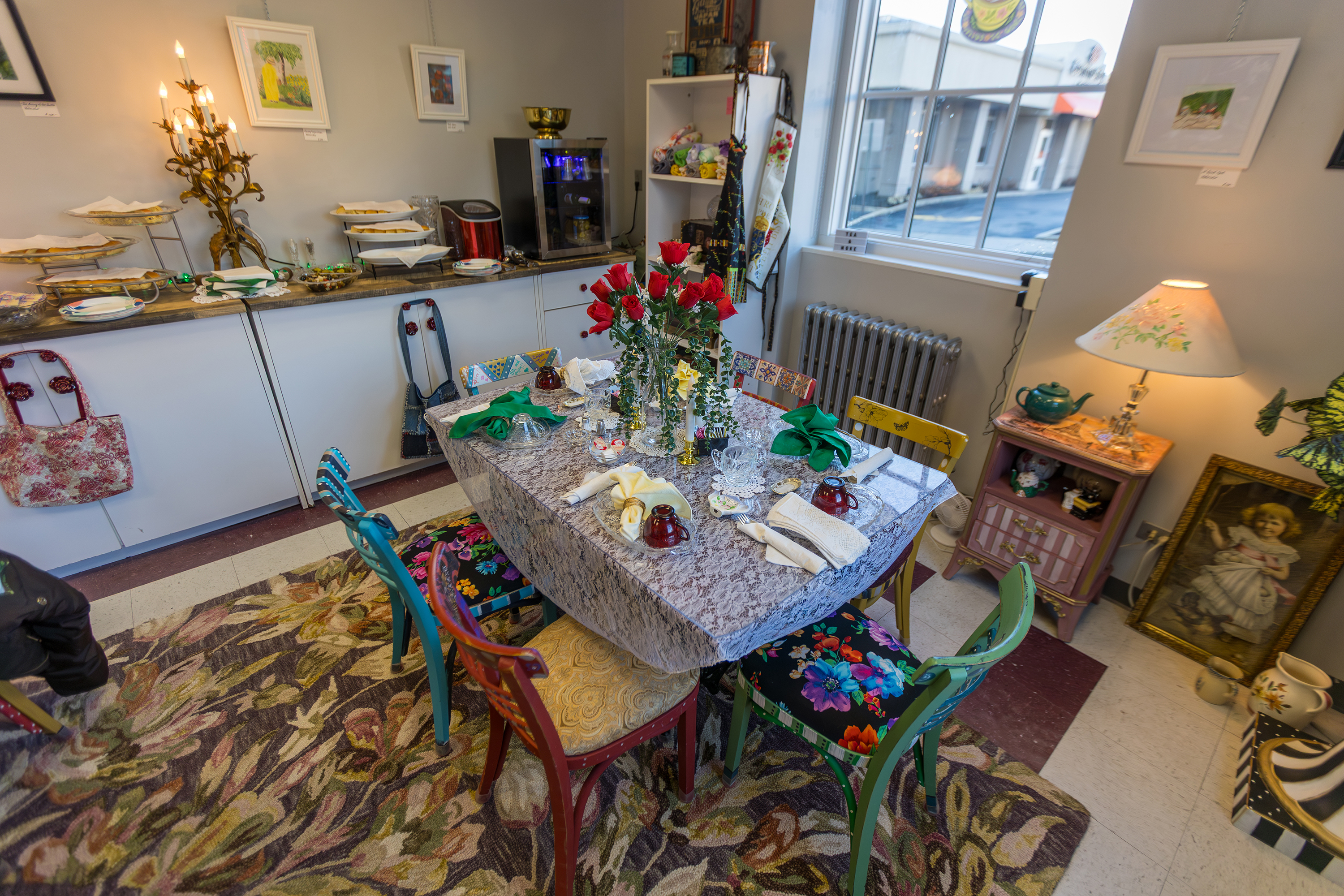
A tea table on display during the grand opening of Tea and More in Pittston on Wednesday, March 4, 2026. (JASON ARDAN / STAFF PHOTOGRAPHER)
Show Caption
1 of 1
A tea table on display during the grand opening of Tea and More in Pittston on Wednesday, March 4, 2026. (JASON ARDAN / STAFF PHOTOGRAPHER)
On Dec. 5, Judi Passetti held a grand opening for Tea and More, a tearoom, at 49 S. Main Street.
Passetti remembers how desolate the downtown area appeared just prior to the rehabilitation efforts.
“I mean, I didn’t come up too much, but when I did, there were boards on the doors and the windows, and it was like, ‘What happened to Pittston?’ ” Passetti said.
Passetti chose the downtown location for her business due to the revitalization.
“Mike Lombardo, the mayor, he is from Pittston. He’s proud of this town. It is his town. He wants it to thrive. It is coming back. I mean, a lot of the buildings were sold and resold and everything, but they fixed them up beautiful. … It’s a booming little town now. It’s the revitalization. If you come through at Christmastime, it’s a little Manhattan. It’s decorated beautiful,” Passetti said.
The city celebrated the grand opening of Tea and More with a ribbon-cutting ceremony March 4. The tearoom features 45 teas, homemade sandwiches and soups and coffee from Bason Coffee Roasting. Passetti also has a passion for jewelry making and sells handmade jewelry in the store as well as soaps and lotions made by Summer Hill Botanicals.
The walkability and streetscape improvements paired with the increase in businesses have had a positive effect on safety.
“If you went and asked any of our residents to give you five words that describe the streetscape, I’ll guarantee you one of the words they pick is safe. It’s well-lit and safe. Not only safe from crime, but it’s also not tripping on surfaces that don’t align the right way. Safe and passable also relates to people with disabilities,” Lombardo said.
Building up
In line with many larger cities across the U.S., the city has reached the point in its development where building vertically rather than horizontally is necessary for any future improvements.
“The reason we’re building up is because we don’t have the horizontal space. Our Main Street is very linear, and in order to maximize it, now we need to start thinking about going up,” Lombardo said.
In 2018, Pittston’s new zoning ordinance designated a minimum height for any future construction downtown, requiring structures to be at least four stories.
City officials credit a balanced, collaborative and creative approach to their success so far, and they recommend the same for any municipality beginning the planning stages of downtown development. Further recommendations include taking risks, putting egos aside, using general tax fund dollars instead of solely relying on grants and building streetscapes block by block.
“One of the things that I always say when we talk to other municipalities that come to see us or ask us how we do what we do … if there’s a book on how to do government, take that book and put it in the bottom drawer of your desk. A lot of municipalities get tied up in saying it says I have to do this, or I can do this, instead of looking at what doesn’t it say,” said Chacke.