
All over Schuylkill County, middle and high school students in Envirothon are feverishly learning how to identify the appearance and calls of Pennsylvania amphibians.
Amphibian ID is a hallmark component of the county competition’s aquatic ecology station, where participants are expected to know the high-pitched, whistle-like “peep” of spring peepers, the banjo-string-plucking-like twang of the green frog and the nasally, guttural grunts of Eastern spadefoots, among others.
While students involved in Envirothon certainly gain early exposure to the wonderful world of amphibians, it’s important to know that learning about toads, frogs and salamanders at any age makes you more likely to better understand and protect these important species.
The payoff can be fast and rewarding because these species are highly sensitive to environmental changes. That means that even small actions can make a big difference.
Here are four meaningful ways you can help.
Learn to ID local species
As the great British natural historian David Attenborough famously said, “It seems to me that the natural world is the greatest source of excitement; the greatest source of visual beauty; the greatest source of intellectual interest. It is the greatest source of so much in life that makes life worth living.”
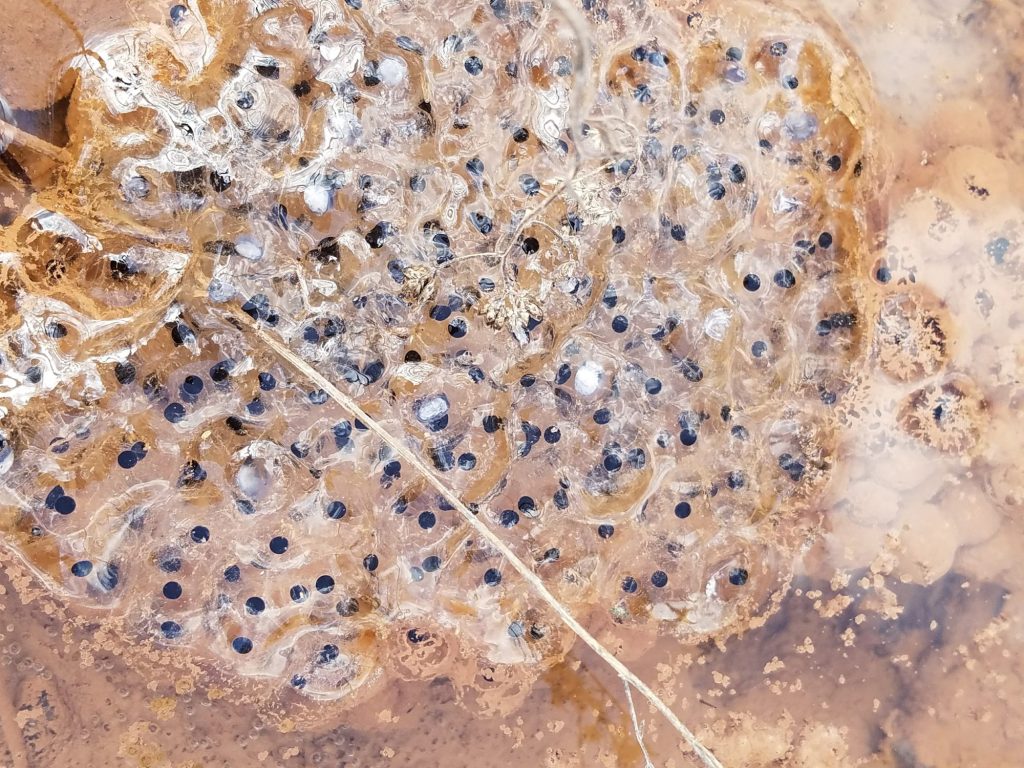
Simply getting curious about the types of amphibians living in your neighborhood can bring a great source of joy. Have you ever had the honor of seeing frog eggs turn into tadpoles out in the wild? Or listening to tree frogs call outside of your window? Suddenly, you will start noticing vernal pools harboring amphibian eggs in your neighborhood – and become passionate about keeping ATVs from driving through them!
Visit www.paherps.com to learn more about amphibian calls, life cycles and identification.
Protect their habitat
There are so many ways to improve conditions for Pennsylvania amphibians. Everything from eliminating the use of pesticides to leaving leaf litter in your yard helps to create healthier environmental conditions for critters (and you)!
Additionally, if you know of a vernal pool – a small, shallow, unique type of wetland that generally only appears during seasonal rains – register it with the Pennsylvania Natural Heritage Program.
These precious sites – often mistaken for plain “puddles” are places where the following species almost exclusively rely on vernal pools for breeding and larval development , according to the Western Pennsylvania Conservancy:
Marbled Salamander (Ambystoma opacum)
Spotted Salamander (Ambystoma maculatum)
Jefferson Salamander (Ambystoma jeffersonianum)
Blue-spotted Salamander (Ambystoma laterale)
Wood Frog (Lithobates sylvaticus)
Eastern Spadefoot (Scaphiopus holbrooki)
On a larger scale, fight large development projects that bring water, light, sound pollution to your area. And support policies and lawmakers that work to protect wetlands. Side note – the more wetlands we have the more free benefits we enjoy. The economic benefits of wetlands have been valued at more than $1 trillion a year due to wetlands’ ability to store floodwater and reduce flooding, filter water, promote wildlife for ecotourism, offer robust pest control and sequester carbon. This makes wetlands one of the most economically valuable ecosystems per acre in the United States.
Sadly, Earth’s wetlands are disappearing faster than any other ecosystem.
Support politicians who aim to protect and restore wetlands – not ones who want to erase them through development.
Leave them be
Amphibians are a crucial part of a healthy food web in Pennsylvania because they serve as both predator and prey. While it might be tempting to take a salamander, frog or toad home, removing them from their ecosystem is generally a death sentence. Amphibians are programmed to return to specific breeding grounds through instinctual, environmental and sensory cues, and they have very specific needs. Beyond that, taking amphibians out of the wild could be illegal, depending on the species.
Drive like a slow poke
On warmer, rainy spring days and nights, amphibians engage in a massive, instinct-driven migration from their winter hibernation spots to their breeding sites (which are often vernal pools). During these conditions, it’s very important to drive very slowly to prevent squishing amphibians resting on roadways.
Additionally, support state efforts to install wildlife corridors in areas that feature concentrated amphibian road crossings. According to the United States Geological Survey, amphibian crossings involve installing permanent under-road tunnels, guiding fences, and temporary, human-led migration efforts during peak migration. Some areas even close high-risk roads during the first rainy, warm nights of spring. If you have a high-amphibian crossing in your neighborhood, consider working with your municipality to institute road closings during amphibian migration nights.