
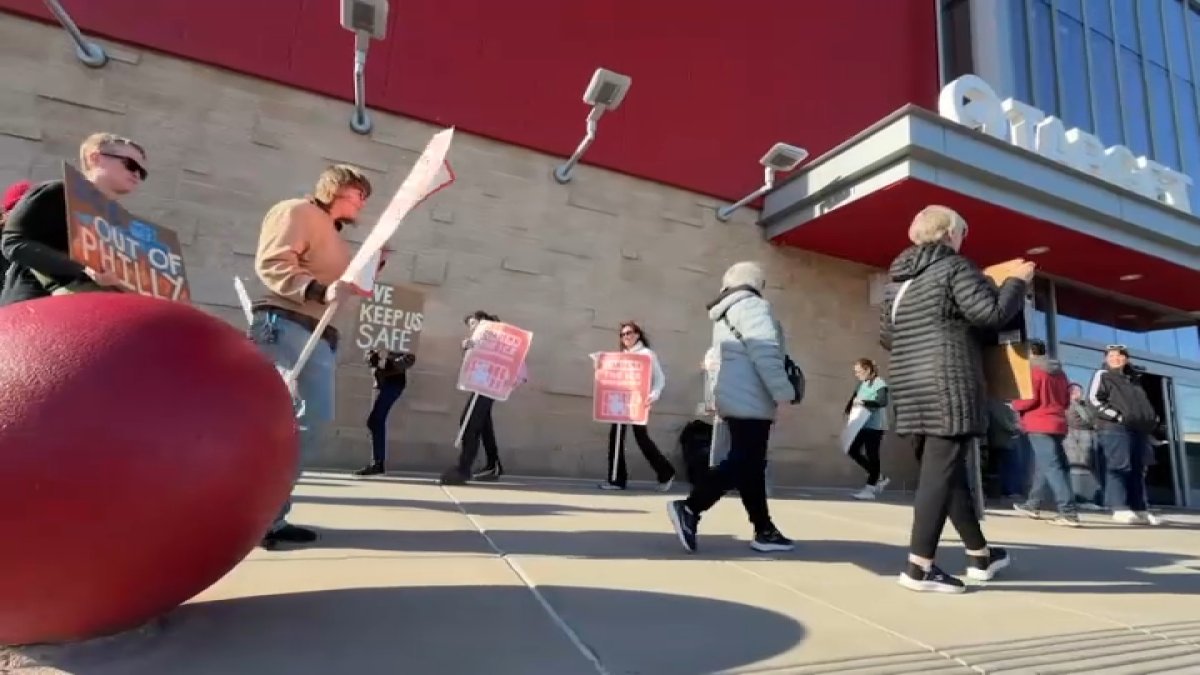
“No ICE Philly” held a demonstration outside a Target store in King of Prussia on Sunday, with protesters there saying they want the Minneapolis-based retailer to do more to stand up to ICE.
NBC10 was there to find around 20 people at the event.
“We are here in solidarity with Minneapolis to ask that Target stops cooperating with ICE and make a public condemnation of their behavior,” said Taylor Flynn.
The demonstrators also said that they want Target to deny federal agents to their parking lots, as well as entry without a warrant.
In a statement to NBC10, Target said it does not have a cooperation agreement with ICE or any other immigration agency. In fact, their CEO said in a note to employees that “we are doing everything we can to manage what’s in our control, always keeping the safety of our team and guests our top priority.”
Anyone — including immigration enforcement officers — can legally enter the public areas of a business. Those can include dining areas, parking lots, office lobbies and store aisles. In those places, immigration officials can question people, seize information and even make arrests, according to John Medeiros, who leads the corporate immigration practice at Minneapolis-based law firm Nilan Johnson Lewis.
But workers and patrons have some legal protections. They can decline to talk to immigration enforcement officers, refuse to consent to searches or ask for an attorney.
ICE needs permission from the employer or a judicial warrant to enter private spaces of a business, such as a back office or an emergency room. A judicial warrant must be signed by a judge and list a specific authorizing court. Those warrants can be limited to specific days or types of information about the business. Experts stress that it’s important to educate workers about their rights, what areas of the business are private and how to differentiate between warrants.
Immigration attorneys have raised alarm about ICE entering private spaces without proper warrants and detaining people unlawfully.
Medeiros encourages people to record encounters with federal agents.
For Linda Brenner, of Phoenixville, the protest was a chance for her to take a stand.
“Yeah, its very upsetting,” she said. “They don’t care about the American people. They care about the top 1%, that’s it.”