
Love Philly? So do we. Let’s be friends. Sign up for the Billy Penn newsletter today.
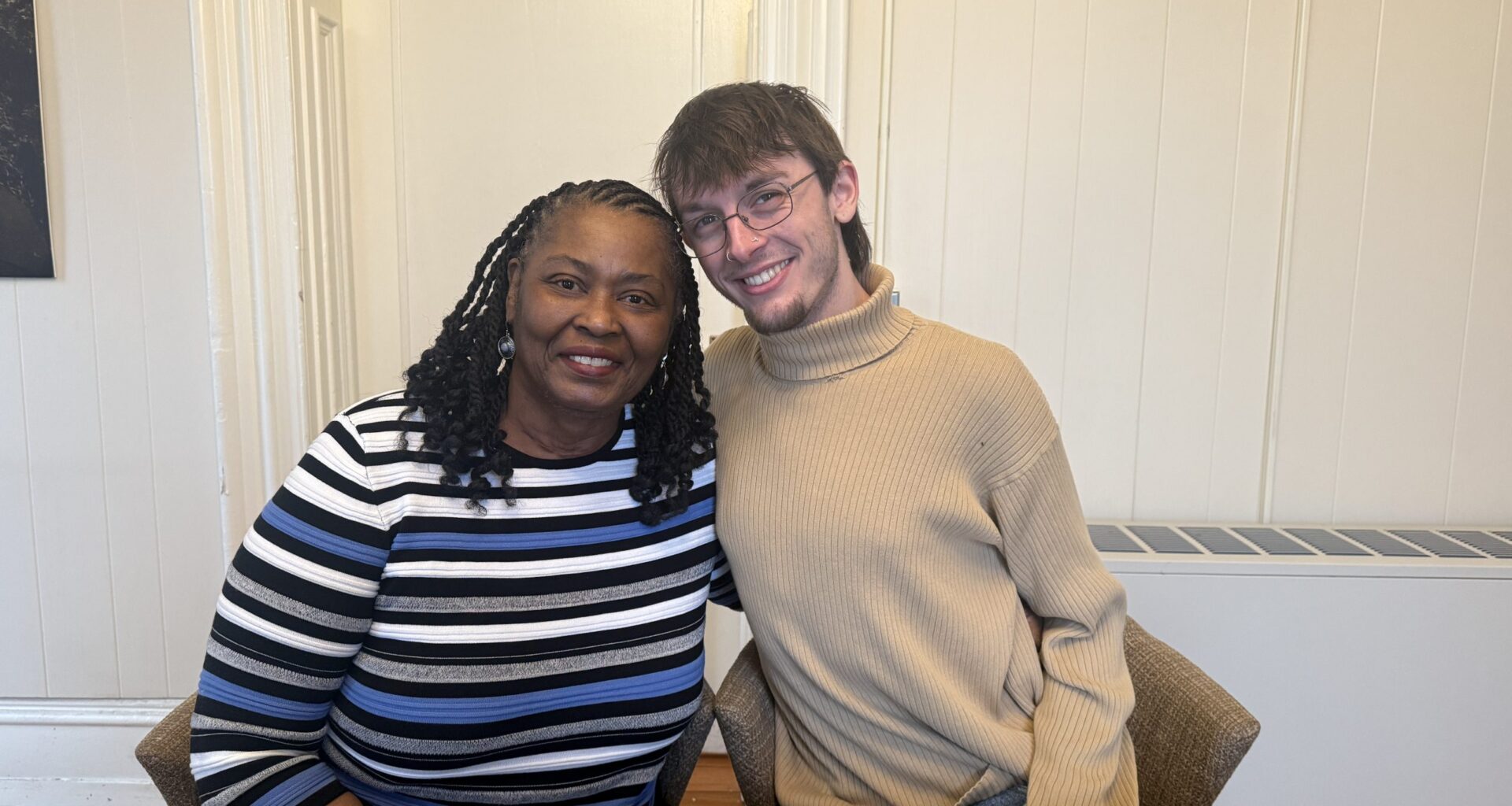
Ms. Julia, a retired CNA and mental health worker, has lived in West Philly’s Mantua neighborhood for more than 50 years. These days she is filling her time by volunteering, catching movies and staying active in her community, while adjusting to life with a new roommate.
He is 22.
This unlikely living arrangement is part of a growing intergenerational housing program called Second Story Collective.
The program, which stems from a Drexel University group called Writers Room, matches a student in the area with an older adult living around the school’s campus. Ms. Julia said she was hesitant about becoming a participant.
“[My friend] was telling me about the program,” she said. “She was telling me someone else had joined the program. And I said, ‘Well, I’ll look into it and see.’”
She decided to give it a try.
Second Story Collective matched her with Jackson Tignor, a Drexel University architecture major.
Tignor had spent his first two years living on Drexel’s campus and was ready for a change.
“Second Story was the perfect option, because then my money could go back towards those people and this community that I love,” he said.
A creative solution to the housing crisis
The Second Story Collective’s intergenerational housing program emerged from Writers Room – a Drexel literary arts, academic and community-based program.
The home-sharing component was born as an arts-centered, affordable housing project, aiming to match students with residents to address high housing costs in the neighborhood.
The program has had three home sharers so far – with two active home sharing agreements and two additional agreements in the works for later in the year.
Presently, the collective is targeting the Mantua neighborhood – an area steeped in African American history but threatened by “studentification.”
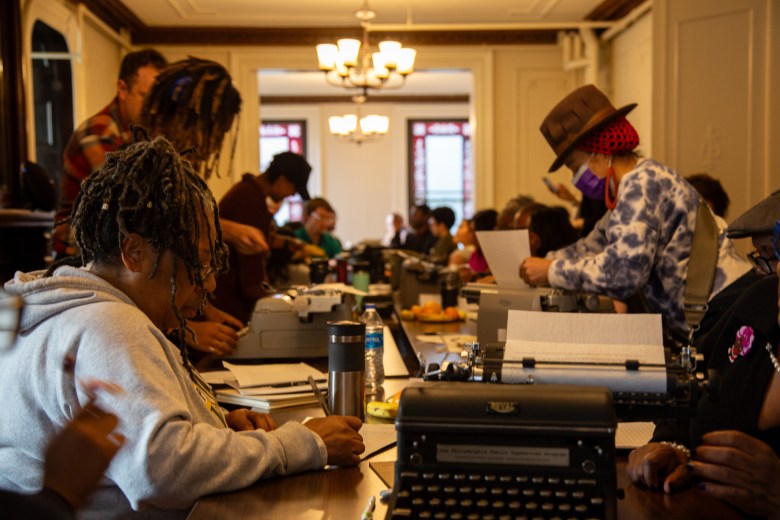 One of the biggest events put on by Writers Room is Second Tuesday, a monthly community writing workshop meant to bring community members together (Photo courtesy of Writers Room)
President Barack Obama designated several West Philly neighborhoods, including Mantua, as one of twenty-two national Promise Zones in 2014. The West Philadelphia Promise Zone received millions of dollars invested in federal resources to “increase economic activity, create jobs and reduce violent crime.”
Although the initiative lasted only 10 years, it helped inform the collective on where to find eligible homeowners for the program, said Victoria Huggins Peurifoy, the collective’s community engagement liaison.
Research from Writers Room, Drexel’s Youth (JoY) Education Lab and the Mantua Civic Association found that the displacement of Black residents is happening rapidly, with a 73% increase in Mantua’s white population over the past 10 years.
Additionally, Mantua’s rental rates rose more than 44%, with a 74% increase in those paying more than 30% of their income on rent, and a 454% increase in those paying 50% of their income on rent.
This trend threatens long-term residents with displacement while creating a gap in housing affordability for lower-income students.
One other concern is the lack of authenticity of newly developed buildings, Ms. Julia said.
“A lot of us in the community don’t care about [developers] building,” she said. “We would just like for them to keep the buildings at the same height and stuff like that. Because it does look weird.”
From strangers to joy–adjusting to a new way of living
Second Story Collective’s approach is “one of a kind,” said Kevin Latimer, an AmeriCorps VISTA service member who works with the collective. He explained that despite some initial apprehension, things have worked out for all home sharers so far.
“We’ve been rather fortunate,” he said. “We haven’t had any big conflicts between homeowners and homesharers. We weren’t sure what to expect, since the homeowner is inviting a stranger and a college student into your home.”
Tignor said he had to make some adjustments but emphasized there was never a real anxiety around living together.
“I felt like there was a pretty clear baseline in the house where everyone was like, ‘Okay, this is about to get a little weird and so everyone’s going to take baby steps here,’” he said. “And that’s really been my mentality from the beginning.”
Tignor emphasized that there is an understanding of space and boundaries between the roommates.
“The time we spend together, more often than not, becomes almost those ‘packing peanuts time,’” he said. “All those little bits and pieces in between the day of either coming and going or doing laundry [gives us time to talk].”
Ms. Julia said she was hesitant about letting a stranger into her home.
“It’s not that I haven’t shared space with other people before,” she said. “I have, but when I shared the space, it was often with someone I knew through someone else. But [Jackson] was a total stranger to me.”
Still it didn’t take long for her to adjust and called Jackson a “joy.”
“He has his own life, and so do I, but I enjoy him,” Ms. Julia said. “He’s a breath of fresh air here.”
Affordable housing and a built-in support system
Diana Nicholas, an associate professor of architecture, design and urbanism at Drexel University said the program bridges a gap between generations.
“It’s not just that the younger person or the student is helping the aging person,” she said. “I think one of the things that we as a society kind of miss is that everybody really needs that support. Everybody needs to have somebody in their life who’s maybe mentoring them in some of the adulting that is just getting harder and harder, and so it’s a mutual benefit.”
Nicholas works as a researcher studying ways residents can “age in place,”. Her work with the Second Story Collective started with a research initiative related to this.
“I worked with the community, and I worked with Second Story Collective to develop the Mantua Creative Standard for Aging in Place, which is a reporting tool that I utilize in my lab to create a professional report for people who are trying to age in place,” she said.
Nicholas said an important part of the program is walking through the houses where students will live to ensure they are accessible, get necessary repairs, and have necessary private spaces for students.
“I go in, I tour the home with Rebuilding Together Philadelphia, I create a report and Rebuilding Together Philadelphia creates the budget and the ability to kind of put together the project,” she said. “They do the construction with, sometimes, advice and sketches for me.”
Brandon Alcorn, the director of operations with Rebuilding Together Philadelphia said his organization partners with the Second Story Collective to provide these free home repairs for income-eligible homeowners. For Jackson and Ms. Julia’s space, Alcorn said the biggest change was creating a private area for Jackson.
“We helped convert her third-floor space into a space that could be kind of an ‘in-law’ apartment,” he said. “She has a beautiful home, which was incredibly well cared for. One of the bedrooms on the third floor was already ready for the student to move in, and we took the second bedroom, and we converted that second bedroom into a full bathroom and a kitchenette, so the student has their independent living space on the third floor.”
Ms. Julia says completing the renovations was a long process, but the repairs ultimately improved her space.
“There were a lot of people coming and going and I had to change my schedule around… but they did a wonderful job,” she said.
Jackson said having a space to himself was a game-changer
“I have a bedroom, a small kitchenette, and a full bathroom, and it’s quite a squeeze…but right out my window, I have this beautiful view of the art museum, like, how do you get that as a 22-year-old?” he said.
Huggins Peurifoy explained that students and the home sharers also have a collaborative relationship.
“One of the reasons why the students can pay a lower rent is that they agree to be of assistance to that senior citizen,” she said. “For example, students agree to help the homeowner with trash, snow removal if necessary, maybe they go shopping or maybe they have a night where they watch a movie together or cook together.”
Jackson said he has helped around the house in his arrangement including shoveling snow off the roof.
What does the future look like for the collective?
The Second Story Collective plans to create more intergenerational co-housing, said De’Wayne Drummond, president of the Mantua Civic Association.
“There’s a project that’s going on at 36 Haverford Avenue, where there is supposed to be homeownership opportunities for the community, health and well-being opportunities, a medical center, market, radio station and WURD will be there too,” he said. “There will be 18 homes and cooperative living.”
The Village Square on Haverford will include 18 units for more intergenerational cohousing – helping neighborhood families maintain their space and students find affordable housing.
Drummond said developers have to be very intentional when working with the Mantua area. He said he enjoys the intergenerational housing program, and is excited to see where it goes, especially with these new developments.
“I’m very optimistic about the process, and I can see a bright future for our community,” he said.
Writers Room is currently working to identify program participants and will prioritize selling units to long-term neighborhood residents.
Tignor and Ms. Julia emphasized that they are grateful for the role Writers Room has played in their lives.
“What’s happening when I’m coming to a Writer’s Room event is that I’m tapping into my community,” Tignor said. “I’m becoming a member of that community and showing up for that community, and when you as a student or as a community member come to a Writer’s Room event, you can feel that difference in yourself and in how you now met these people that you wouldn’t have otherwise known.”
And as an active community member, Ms. Julia said this program has helped her strengthen her connections.
“It just feels good and warm because it doesn’t seem like, ‘no, we just keep to ourselves,’” she said. “It’s an invite. Everybody’s welcome, whoever wants to come.”