
Philly needs to get out of its own way.
Our city has begun to embrace the language of economic mobility, but what does it mean to make it real? The lack of upward mobility in our region is clear: high poverty rates, economically segregated neighborhoods, and a pervasive sense of diminished prospects. We know there aren’t enough good-paying jobs or affordable homes. We remain over-reliant on “eds and meds”, and Comcast is our only Fortune 250 company.
For years, we have been too committed to our competing fiefdoms rather than unlocking our potential. Simply put, we have to get out of our own way. We must make a decades-long commitment to investing in working-class people. Symbolic actions are no longer enough; we must deliver material benefits and share resources to maximize opportunities for everyone.
We need a vision for Philly: A city for the working class
A city that grows population and opportunity. A place people come to hungry for opportunity and willing to work for it. We need to show those left behind for generations that there is a path to prosperity — for them and, most importantly, their kids. Young people need to see that this place values their worth and needs their talent. This is not a town of handouts or elitist favors. In Philly, we believe American Prosperity is still possible through mass opportunity — for the people, by the people.
To make that vision real, there are six things we need to address:
Connect every graduate to opportunity. Schools, colleges, and training programs must be more than “aligned” with industry — they need to connect graduates to actual career paths. Education must be affordable and oriented toward working-class success. At Heights Philadelphia, we have committed to serving 5,000 students annually. We will use our influence to ensure institutions connect young people to opportunities that pay.
Provide economic development for workers and industry. We need to connect people from working-class neighborhoods to decent-paying jobs and attract employers who see the value in our workforce and are willing to invest in their training. We see this potential with companies like HRC in the Bellwether District and Rhoads Industries at the Navy Yard. We need to scale these successes. A tax break means nothing if you don’t have the people to fill the jobs.
Philly can be the national center of working-class mobility. This requires an effort akin to the Manhattan Project in scope and scale — individuals, neighborhoods, government, and foundations pooling resources, staying disciplined, understanding what works, and having the courage to stop what doesn’t.
Integrate our communities. Building housing isn’t enough; we need people of different economic classes living as neighbors. We can no longer afford to create or protect pockets of concentrated poverty or wealth. Economic integration makes housing more affordable and communities stronger. Mt. Airy has modeled this for decades — we need to take it citywide.
Start neighborhood-based mobility efforts. We must integrate resources across nonprofits, community organizations, government, and business at the neighborhood level. This is where we deliver real material results, track improvement on real communities, and scale those successes across the city.
Build on Philly’s culture of mutual aid. To be a Philadelphian means to help one another. Research shows that cross-class interaction increases social mobility. A massive volunteer effort for career and community mentorship stays true to our roots and shows how people can help each other right now.
Mass transit for all. Our economy is regional. SEPTA, with all its faults, is critical to our future. We must make service fast and reliable, ensuring it reaches job centers across the region. We need bold projects like the Roosevelt Boulevard Subway and the Bus Revolution (now called the New Bus Network) to connect our people to their livelihoods and each other.
This is a plan rooted in the Promise of 1776, but more importantly, it is a chance to make new history. Philly can be the national center of working-class mobility. This requires an effort akin to the Manhattan Project in scope and scale — individuals, neighborhoods, government, and foundations pooling resources, staying disciplined, understanding what works, and having the courage to stop what doesn’t.
It is not only possible; we don’t have a choice. At Heights Philadelphia, we are committed to making this real — in partnership with you and whoever else is ready to go.
Sean E. Vereen, Ed.D., is President & CEO of Heights Philadelphia.
The Citizen welcomes guest commentary from community members who represent that it is their own work and their own opinion based on true facts that they know firsthand.
 MORE ON ECONOMIC DEVELOPMENT IN PHILLY
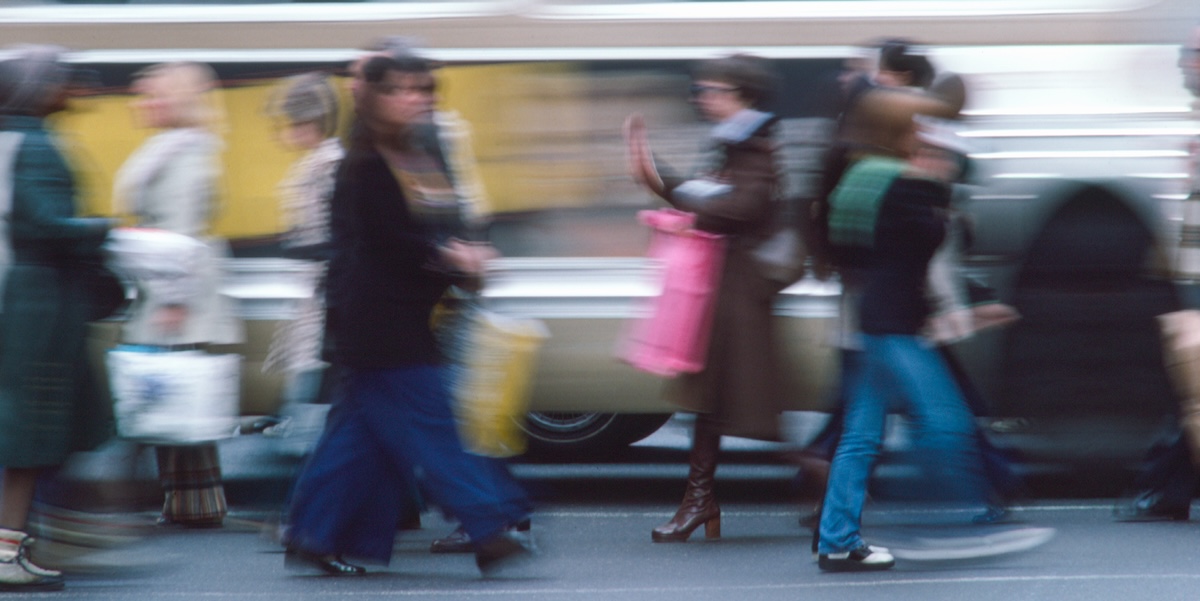
PHILADELPHIA, PENNSYLVANIA – CIRCA 1974: Shoppers cross an intersection in front of a SEPTA bus during the busy Christmas holiday shopping season in Center City Philadelphia, Pennsylvania in 1974. (Photo by James Drake/Getty Images)