
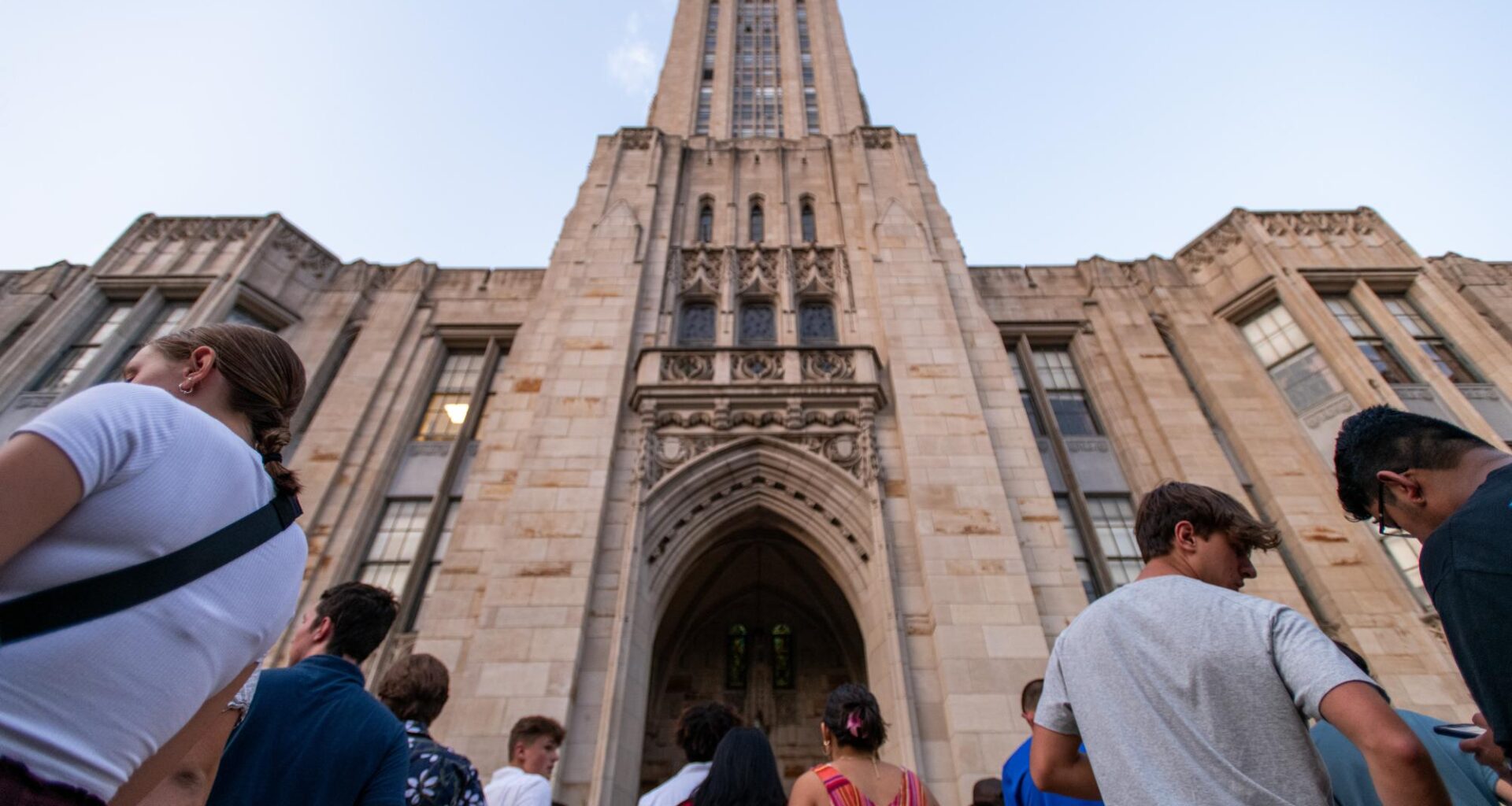
As enrollment declines at universities across Pennsylvania, Pitt is moving in the opposite direction, reporting steady student population growth.
Pennsylvania State University, Temple University and Lincoln University — all state-related universities in Pennsylvania — have all reported enrollment declines in recent years. But at Pitt, the University’s student population grew 4.5% between 2024 and 2025. This includes from the University’s largest incoming class to date last fall, with 5,870 first-years on campus.
According to University spokesperson Jared Stonesifer, Pitt has adjusted its admissions strategy in response to a projected decline in the number of Pennsylvania high school graduates. The Western Interstate Commission for Higher Education projects a 13% decline in Pennsylvania high school graduates by 2041, intensifying competition among colleges for a smaller pool of students.
“Knowing that Pennsylvania would experience a decline in the number of graduating high school seniors, Pitt has been intentional and strategic in expanding and enhancing recruitment efforts in Pennsylvania, across the country and around the world,” Stonesifer said.
Chancellor Joan Gabel has emphasized affordability as a cornerstone of its enrollment strategy. Stonesifer said Pitt has made a “sustained, concrete commitment” to keeping education accessible, and state funding remains a critical piece of that effort. Pennsylvania appropriations currently support in-state tuition discounts for about 17,000 students in Pennsylvania, helping maintain affordability for in-state students, according to Stonesifer.
Stonesifer said Pitt’s increasing enrollment reflects years of institutional momentum rather than any single element.
“Several factors are driving growth,” Stonesifer said, “including growing brand strength [such as] being named a Public Ivy and a ‘dream school’ by author Jeff Selingo.”
Stonesifer said academic reputation, program availability and access to research opportunities are all key factors influencing student decisions. The University ranks seventh nationally in funding from the National Institutes of Health, with all six of Pitt’s health science schools ranking in the top 20 for their categories.
Stonesifer also emphasized the City of Pittsburgh’s role in why students want to come to Pitt.
“Pittsburgh’s transformation into a nationally recognized hub for AI, health innovation and biotechnology — with Pitt at the center of that growth — has made the city an increasingly compelling destination for students who want to learn, research and launch careers in fields that matter,” Stonesifier said.
Stonesifer said Pitt has also introduced new initiatives, including the Finish Line Grant, aimed at helping continuing students complete their degrees. This need-based grant allows undergraduate students within one or two semesters of completing their degree to receive financial assistance.
Certain academic programs are drawing particularly strong interest from prospective students. According to Stonesifer, nursing, business and science-related majors — especially pre-med tracks — are among the most popular. National data supports that trend, with enrollment in fields like computer science, engineering and health professions having grown in recent years, even as overall college enrollment has declined.
“This reflects broader student and workforce interest in high-impact careers in health, technology and research,” Stonesifer said.
Emily Garberina, a first-year nursing student, chose to attend Pitt as an out-of-state student because of its program’s ranking compared to her other university choices.
“I chose here because of the direct entry program, which is different from how they do it down south,” Garberina said. “[Pitt] is so highly ranked for nursing, which I liked, and they have good graduate programs if you want to continue your nursing career in the future.”
Pitt and Pittsburgh “genuinely benefit” from one another, Stonesifer said.
“In many ways, Pitt is a hybrid [—] undergraduate housing for approximately 9,000 students fuels a vibrant campus atmosphere, complemented by outdoor spaces and parks, and anchored by the Cathedral of Learning — an iconic building and the tallest educational structure on a college campus in the United States,” Stonesifer said.
96% of Pitt graduates are employed or pursuing further education within six months.