
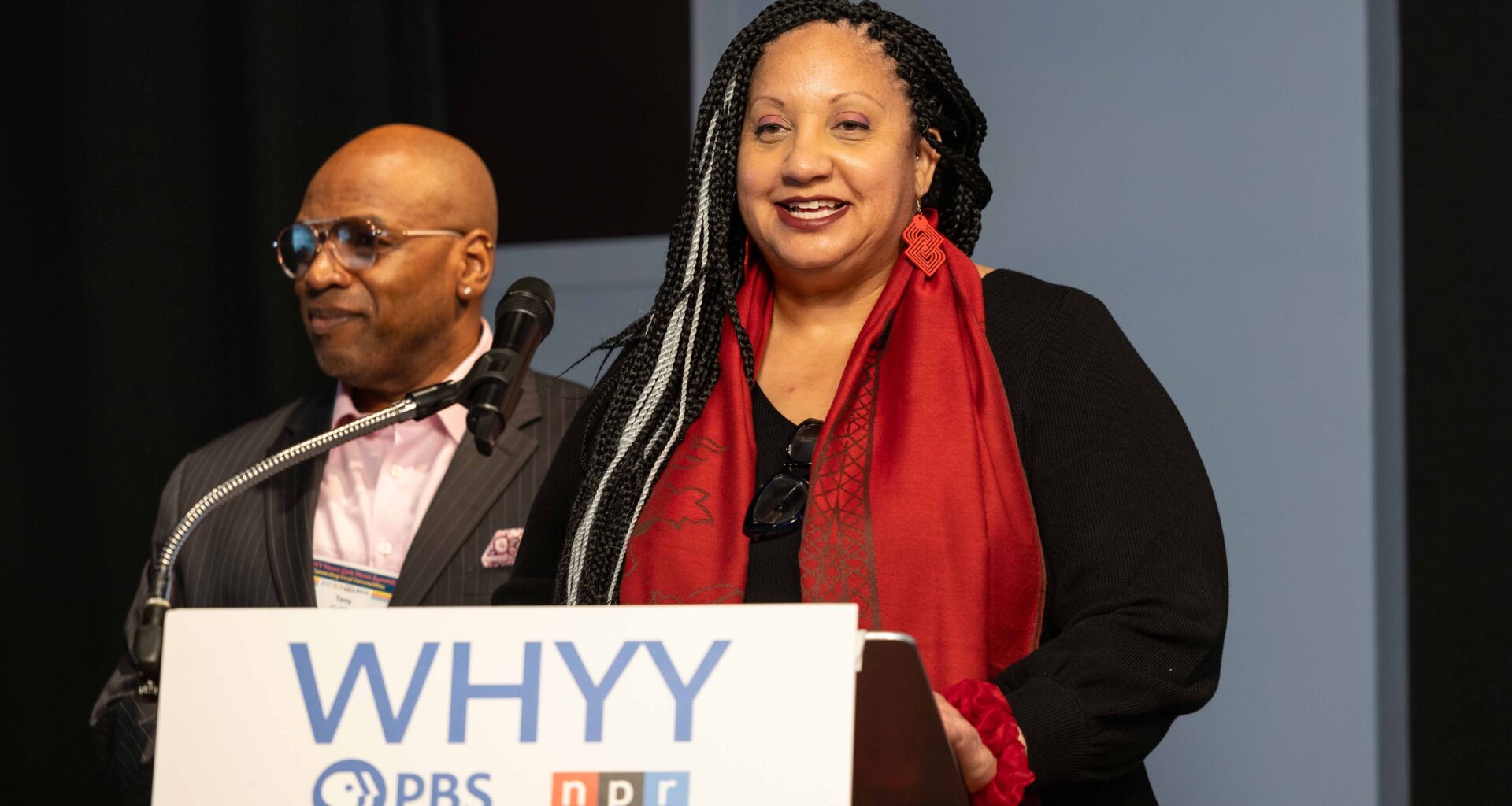
JL: Now, recent data indicate that Black journalists in U.S. newsrooms face a crisis in representation. You’re a journalist of color in the business for decades. What needs correction or healing right now?
SG: As a Black journalist myself leading a local newsroom, I have a terrific opportunity here at WHYY to lead, but also lead by example. And so where we’re butting up against challenges for journalists of color and Black journalists is the lack of representation in newsrooms, because at the end of the day, your newsroom should look like the community. It should be unique and representative of all kinds of people. And that’s what makes a news report accurate. It makes the news report well done because you have representation of the people who are actually generating that news and engaging with the community.
Is there a clear-cut answer into how we’re going to deal with diversity issues in the media moving forward? No, I think it’s a huge challenge. And the biggest hurdle is that there are fewer staff, there are fewer journalists working in newsrooms across the country. So there are fewer opportunities. I would just challenge anyone working in news leadership or in corporate media to ensure that the opportunities are fair and balanced.
No one should get a job because of the way they look, but no one should also be excluded or not provided an opportunity because of the way they look. So if we’re doing good journalism, we’re fair and we’re balanced. And that’s the key that I hope that the philosophy continues moving forward.
JL: The summit gets into community engagement, engaged journalism. Our Bridging Blocks team at WHYY has so many events. They’ve really become a mainstay of civic dialogue in the tri-state region. Is there ever pressure to refrain from some of the most difficult conversations in public spaces because those conversations become too incendiary?
SG: You know, Bridging Blocks is such a unique program for any newsroom. We partner with the Free Library of Philadelphia, other library systems and community partners, and we hold micro, small conversations in neighborhoods.
Topics are picked that could be ones that would cause tension or a difference of opinion, but through the facilitators that work on our staff and community members who actually work inside the newsroom, they facilitate those conversations so that you can disagree with your neighbor, but you are not disagreeable when you disagree. And it’s a really great educational opportunity. It also helps bring community members together.
We’re excited because in 2025, we actually convened over a thousand people for these really important and impactful conversations, and we’re looking to expand that work heading into the future.
JL: And I want to note that a few panels at the summit this week will stream live on Facebook. So just go to the WHYY Facebook page, such as the topic “The Future of Public Media,” which is a good one. Sarah, thank you.
SG: Thank you so much. And you know what? The best thing about this summit — it’s free, and we’re going to serve breakfast and lunch. You know, learn a whole lot. I hope to see you there.
—
WHYY’s Civic News Summit will focus on trust, truth and the future of local news. The event is free and open to the public. To register, visit whyy.org/events for more details.