
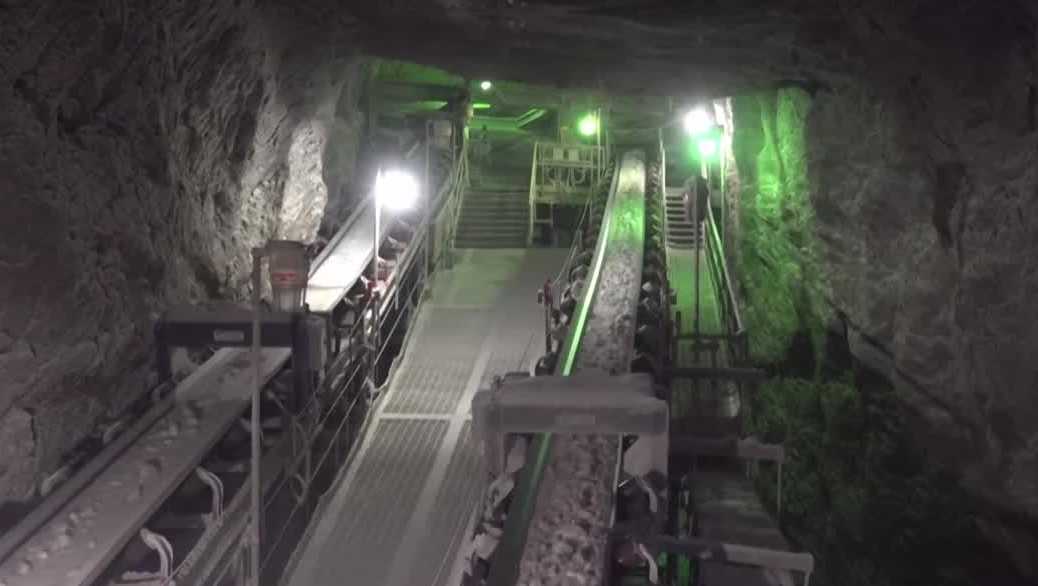
WELL, TONIGHT WE’RE TALKING ABOUT THAT CRUCIAL WINTER MINERAL THAT WE MENTIONED EVERY WINTER, AND THE TABLE VERSION OF WHICH GOES RIGHT ON OUR FOOD. BUT DID YOU KNOW ONE OF THE LARGEST SALT MINES IN THE WORLD, PRODUCING 3 TO 4 MILLION TONS OF THE STUFF A YEAR, SITS MILES UNDERGROUND BENEATH LAKE ERIE. SO 1800 FEET UNDERGROUND, ABOUT FOUR AND A HALF MILES OUT UNDERNEATH LAKE ERIE. AND IN CLEVELAND, CARGILL SALT MINE, THE WHISKEY ISLAND SALT MINE, OWNED BY FOOD GIANT CARGILL, HELPS SUPPLY ROAD SALT ACROSS THE NORTHEAST AND GREAT LAKES YEAR ROUND. SALT IS EXTRACTED BY DRILLING AND BLASTING THROUGH VAST TUNNELS FORMED FROM AN ANCIENT INLAND SEA THAT DRIED UP MILLIONS OF YEARS AGO. INSIDE THE MINE IS A MAZE OF RECTANGULAR CAVERNS WITH CHALKY WHITE WALLS AND CEILINGS THAT EXTEND FOR MILES. IT’S DIMLY LIT, OFTEN PITCH BLACK. BEYOND THE GLARE OF THOSE HEADLAMPS AND FLOODLIGHTS. AND ESPECIALLY WITH THIS PAST WINTER’S HARSH CONDITIONS, THE MINERS WORKED AROUND THE CLOCK TO GET THOSE DEICING SOLUTIONS OUT THE DOOR. THE DRILLERS COME IN, THEY DRILL A HOLE PATTERN AROUND OUR RELIEF HOLE, AND THEN THE POWDER PEOPLE COME IN AND THEY LOAD THE FACES WITH EXPLOSIVES, AND THEN WE BLAST ANYWHERE, SOMETIMES 2 OR 3 TIMES A DAY. WE. PROCESS OUR SALT UNDERGROUND. AND THEN IT COMES TO THE SURFACE. AND THEN WE DISTRIBUTE THAT THROUGH BOAT, RAIL OR TRUCK. AND OPERATORS SAY THEY AREN’T WORRIED ABOUT THE MINE RUNNING OUT OF SAL
The Whiskey Island salt mine beneath Lake Erie, owned by food giant Cargill, produces 3 to 4 million tons of salt annually, supplying road salt across the Northeast and Great Lakes.Extracted by drilling and blastingYear-round, salt is extracted by drilling and blasting through vast tunnels formed from an inland sea that dried up millions of years ago.Inside, the mine is a maze of rectangular caverns with chalky white walls and ceilings that extend for miles. It is dimly lit and often pitch-black beyond the glare of headlamps and floodlights.Especially with this past winter’s harsh conditions, miners worked around the clock to get de-icing solutions out the door. “The drillers come in, they drill a hole pattern around our relief hole, and then the powder. People come in and they load the faces with explosives, and then we blast anywhere, sometimes two or three times a day,” said George Campbell, maintenance supervisor for Cargill Cleveland Mine. “We process our salt underground, and then it comes to the surface and then we distribute that through boat, rail or truck.”Operators said they aren’t worried about the mine running out of salt anytime soon and that there’s enough there to keep things going for at least a few more decades.
The Whiskey Island salt mine beneath Lake Erie, owned by food giant Cargill, produces 3 to 4 million tons of salt annually, supplying road salt across the Northeast and Great Lakes.
Extracted by drilling and blasting
Year-round, salt is extracted by drilling and blasting through vast tunnels formed from an inland sea that dried up millions of years ago.
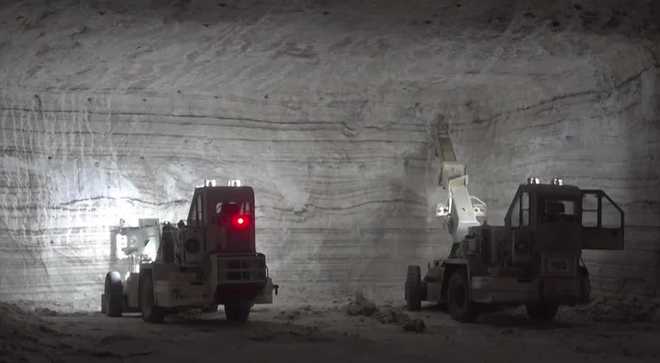
Inside, the mine is a maze of rectangular caverns with chalky white walls and ceilings that extend for miles. It is dimly lit and often pitch-black beyond the glare of headlamps and floodlights.
Especially with this past winter’s harsh conditions, miners worked around the clock to get de-icing solutions out the door.
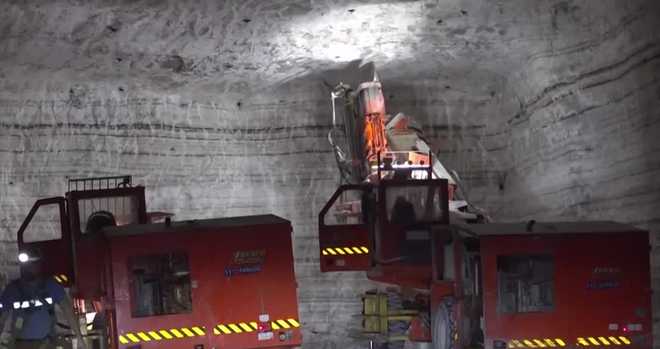
“The drillers come in, they drill a hole pattern around our relief hole, and then the powder. People come in and they load the faces with explosives, and then we blast anywhere, sometimes two or three times a day,” said George Campbell, maintenance supervisor for Cargill Cleveland Mine. “We process our salt underground, and then it comes to the surface and then we distribute that through boat, rail or truck.”
Operators said they aren’t worried about the mine running out of salt anytime soon and that there’s enough there to keep things going for at least a few more decades.