
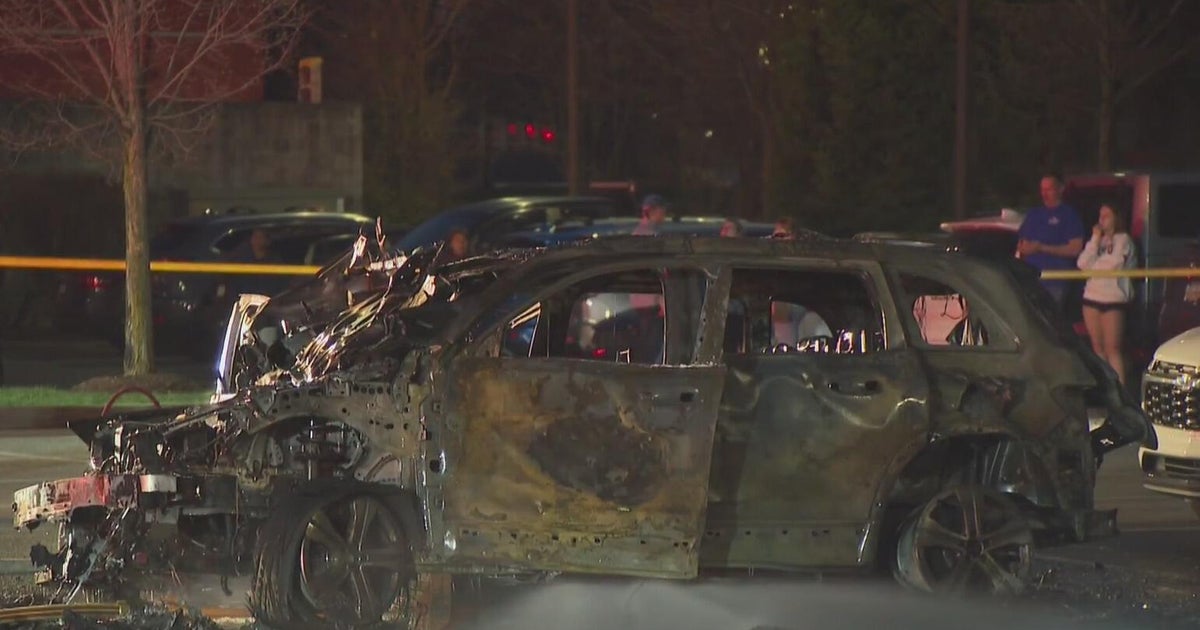
An electric car parked in the McCandless Crossing shopping plaza caught fire while charging on Tuesday evening. The car completely disintegrated, damaging several other vehicles.
Despite being in a busy shopping area, nobody was injured.
“Every explosion, it seemed like the flames got bigger,” said witness Robert Zedo.
The video of the fire is so vivid that it almost doesn’t look real. Massive flames and a ball of orange just radiation in the lot. Around 7:30 p.m. Tuesday, a woman was in her car before hearing a loud pop and seeing smoke. She then fled the car and called 911.
“What I thought was just an overheating car, and I turned around, it was just white smoke coming towards me,” said Zedo.
When fire crews arrived, they were met with the EV completely engulfed in flames, and they quickly began taking action to try to contain its spread.
It’s not a common thing for electric vehicles to catch fire. But when they do, they pose a serious threat.
“The batteries are the biggest challenge. The battery pack is under the car; they’re very difficult to get, and they don’t need oxygen to burn. So, we can drown it in water, and it can technically still burn,” said McCandless Fire Marshal Jeff Wissner.
Wissner says those batteries even have the potential to catch fire weeks later. The best the fire crews can do is try to cool them down.
There are other concerns when batteries of electric vehicles catch fire.
“The batteries also produce some really nasty gases like hydrogen cyanide, hydrogen fluoride, those you definitely don’t want to breathe in,” said Wissner.
Wissner says a special nozzle that goes under cars and sprays water was used by a neighboring company to help knock out the fire. Not every department has special nozzles due to the hefty $3,000 price and the general lack of funding that fire departments face.
Although with the increasing amount of EVs, Wissner says it’s likely that departments will start equipping them.
“I think that’s something you’re going to start seeing more and more fire departments investing in just because there are more vehicles on the road and EV chargers around,” said Wissner.