
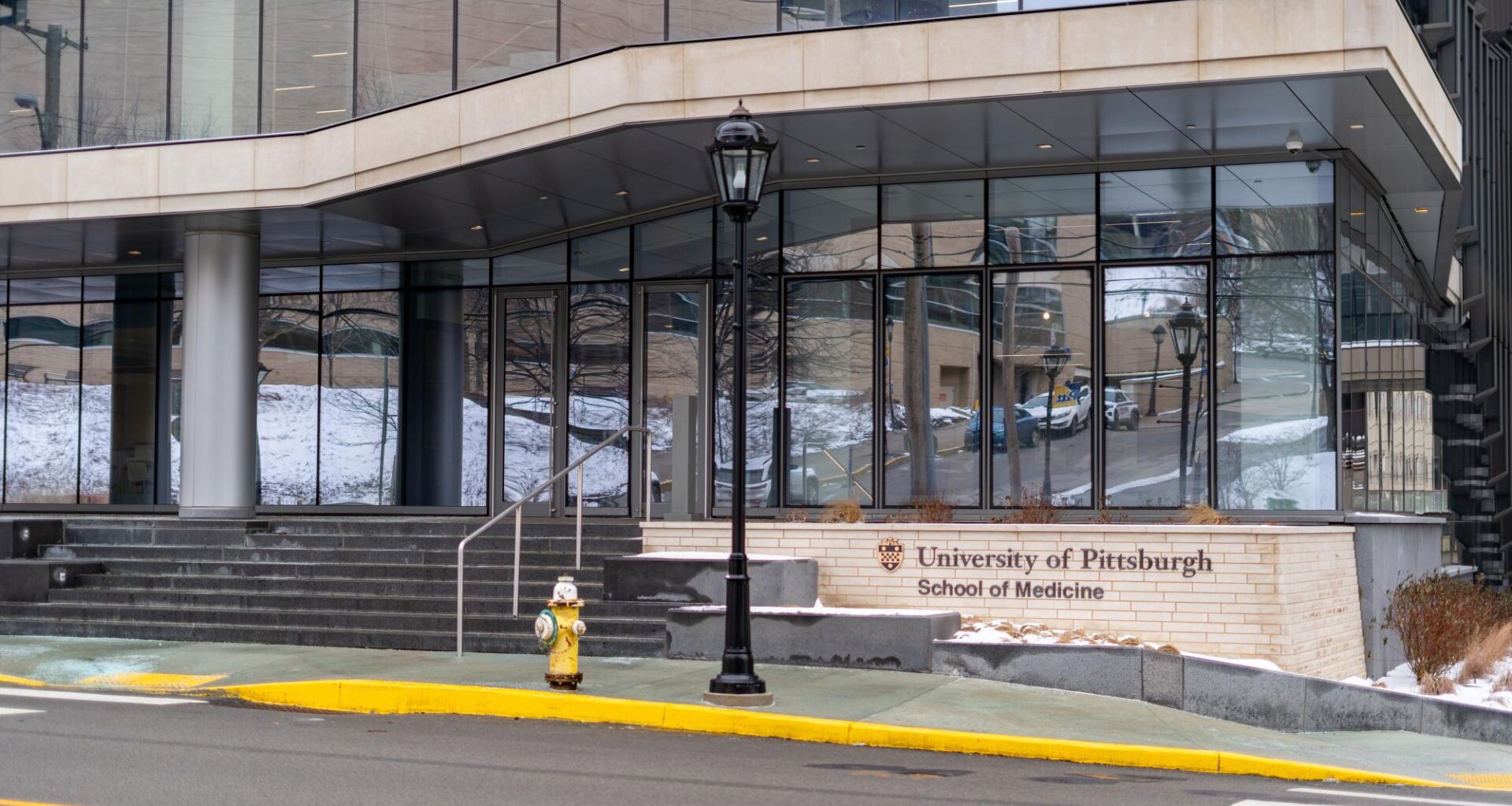
A new program in Pitt’s Institute for Bioethics aims to study and improve communication between patients and clinicians.
Pitt recently launched the Humanistic Communication in Medicine Program, which is dedicated to researching patient-centered communication in medicine. The program seeks to address the lack of structured training for clinicians in communication skills by researching techniques, improving current curriculum and developing AI-training platforms.
Rene Claxton, director of the Humanistic Communication in Medicine Program, said many physicians haven’t received structured training in communication skills, which are critical for patient care. Better communication reduces overtreatment, improves patient satisfaction and supports equitable care for patients in marginalized communities, according to Claxton.
“When clinicians communicate well, patients make decisions that align with their own values and goals, so these benefits are humanistic, clinical and economic as well,” Claxton said.
Douglas White, director of the Institute for Bioethics, said the program focuses on turning ethical principles of patient care, such as establishing trust and centering patients’ lived experience as a factor in treatment, into concrete, teachable skills.
“As AI takes over more of the analytical work in medicine, what becomes irreplaceable is the human side,” White said. “[It is] the ability to sit with a patient who is frightened, to help a family make impossible decisions, to build real trust. Medical schools have an obligation to train for that, and Pitt is going to lead the way.”
Program faculty developed an AI-powered platform that allows clinicians to practice communication skills with virtual patients and coaching, according to White. He said the platform will make training more accessible to clinicians.
“We now have technology that makes large-scale training possible in a way it simply wasn’t before,” White said.
Claxton, who has previously researched patient-centered communication in medical education, said traditional training in patient communication relies on simulating patient encounters with trained actors and coaching from faculty with expertise. However, she said this model is difficult to implement as a standardized curriculum across schools due to limitations on the volume of patient simulations that can be run.
“Our program is trying to build infrastructure to address the scalability problem,” Claxton said. “We try to use AI to develop virtual patients and coaches. One of the benefits we’re seeing is it gives more volume of practice in a low-stress environment for the learner.”
Claxton emphasized that the platform would not replace human interaction but rather enhance current curriculums.
“We’re trying to make humans better at talking to each other by giving them more opportunities to practice,” Claxton said. “Students can practice with AI-powered tools and then work with [in person] simulated patients and faculty clinicians for further coaching.”
According to Claxton, the program also aims to make training in communication skills more structured and evidence-based. She said the program’s faculty were exploring the implementation of “high engagement teaching strategies” that encourage more cognitive interaction with the material.
“We are reviewing the curriculum on communication skills training in the medical schools and trying to figure out how to implement these [teaching strategies],” Claxton said. “It’s much more helpful to get information into long-term memory through learning, actively manipulating information, talking ideas through and applying them.”
Maya Jacob, a second-year dental hygiene student, said she often sees miscommunication between patients and clinicians about their symptoms, which leads to difficulty giving proper treatment.
“I think implementing better communication techniques through this program is a great idea that could help clinicians ask the correct questions and prevent gaps in the information that patients tell their doctors,” Jacob said.
Jacob also said learning how to communicate with patients was difficult for her, as someone who considered herself shy.
“[Patient communication] became much better after lots of experience in the patient-operator setting,” Jacob said. “More practice is needed to improve communication.”
Jennifer Nguyen, a second-year pharmacy student, said she believes miscommunication between doctors and patients happens particularly because of the use of medical jargon that patients don’t understand.
“We interact with lots of patients, ranging from teenagers to older adults, who may be hard of hearing, so you really have to cater your tone, diction and terminology,” Nguyen said. “It’s difficult to learn how to do that.”
Nguyen hopes the new program helps lead to improved patient outcomes where patients and their families can fully understand their treatments.
“We have to make sure when we interact with patients, that they know how and why they’re taking certain medications,” Nguyen said. “We have to learn how to use understandable phrases to convey diagnoses, rationale and medical regimens to patients with better communication.”
White said physician training needs to be redefined to address patients’ deepening mistrust of the health care system.
“At a moment when trust in medicine is under strain, training physicians who are skilled at human connection is one of the most important things a medical school can do,” White said.