
From Philly and the Pa. suburbs to South Jersey and Delaware, what would you like WHYY News to cover? Let us know!
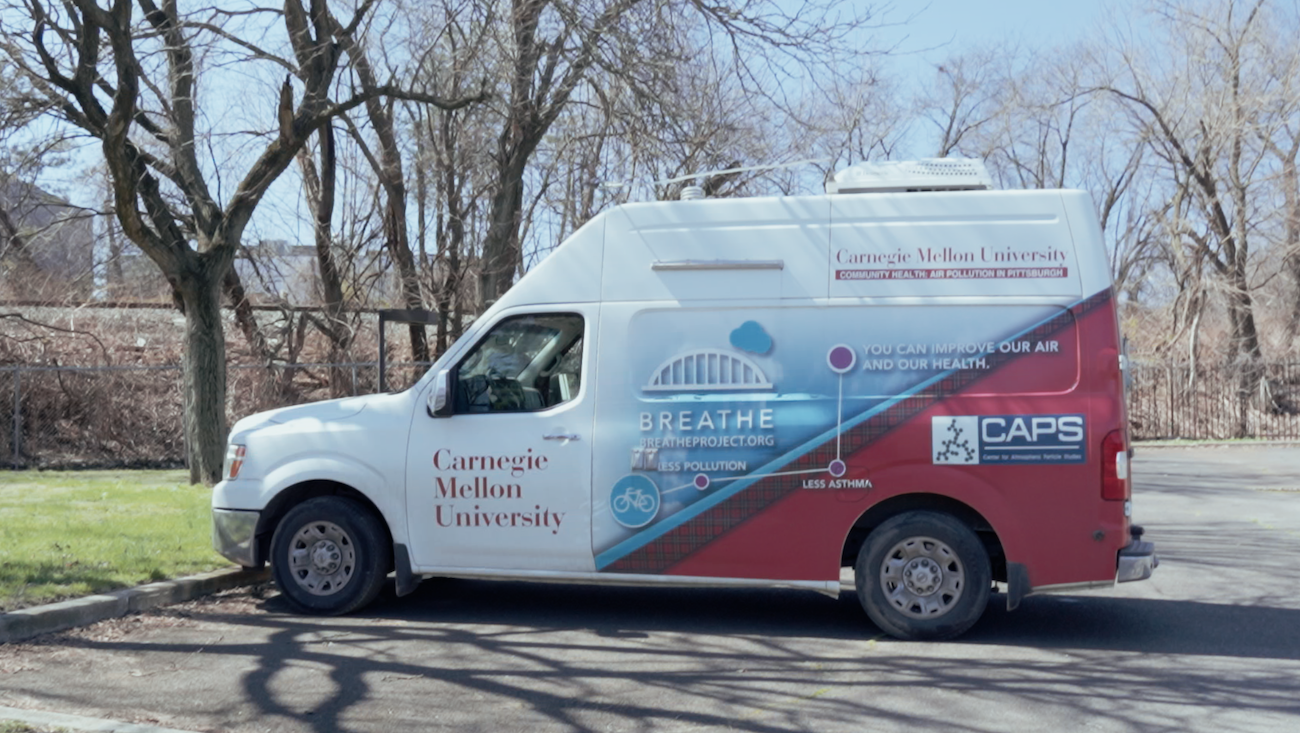
For two weeks in March, a white van drove a circuitous route through Camden, past homes, schools, gas stations and industrial facilities.
As it wound through city streets, special sensors attached to the van measured levels of pollutants in the air that come from vehicle traffic and some industrial activities.
The drive was part of a statewide mobile air monitoring project the New Jersey Department of Environmental Protection plans to conduct over the next two years. The goal is to identify hotspots of air pollution in four communities the state classifies as overburdened by environmental and public health stressors.
“It will give us a picture, a detailed picture, that we don’t know [yet] of what these pollutants are actually doing at the local level,” said Jeff Cantor, data manager at DEP’s Bureau of Air Monitoring.
The state is gathering air quality data in Elizabeth and Newark’s Ironbound and South Ward neighborhoods, as well as along the Camden waterfront, which is home to several industrial operations including EMR, a scrap metal recycler that the state sued early this year over repeated fires.
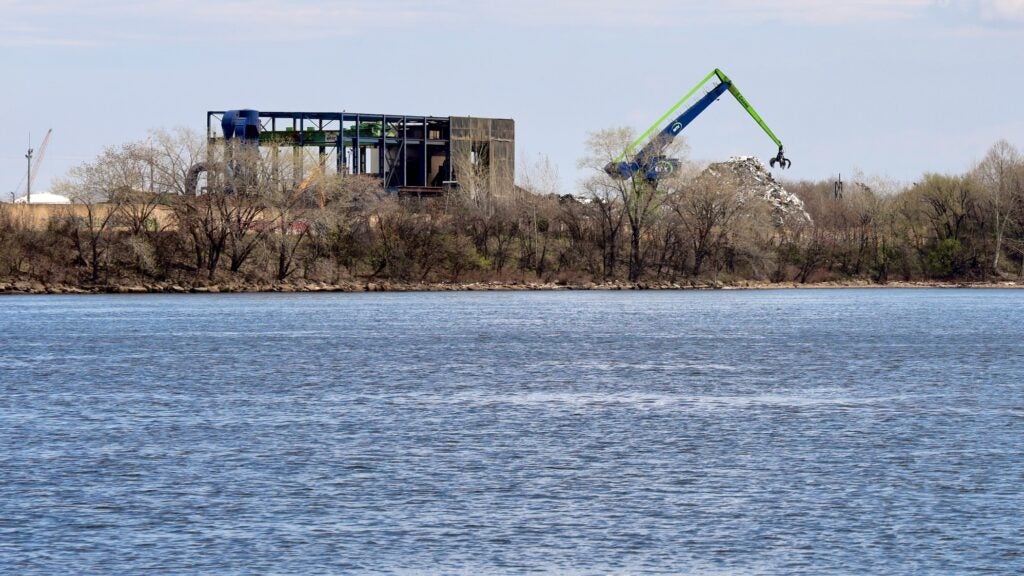 The EMR scrap metal junkyard in Camden is seen from Pier 68 in Philadelphia. (Emma Lee/WHYY)
Measuring toxic air pollutants along Camden’s waterfront
The instruments attached to the van measure planet-warming greenhouse gases, particulate matter and other commonly monitored pollutants that can exacerbate conditions like asthma. The sensors can also pick up several families of toxic air pollutants, including cancer-causing benzene, which comes from vehicle exhaust, formaldehyde, which can be found in building materials, paints and fertilizers, and acetonitrile, which is used to make pharmaceuticals and lithium batteries.
DEP says it is focusing on air toxics because they can cause birth defects, cancer or lung irritation.
Cantor said air toxics tend to break down quickly in the air, so data from an existing stationary air monitor located at the Camden County Municipal Utilities Authority may not reflect concentrations on nearby residential streets.
The van’s data collection route passes by several industrial facilities in Camden, including EMR’s shredder, pier facilities and My Auto Store site, the Balzano Marine Terminal, the sewage treatment plant, a Georgia-Pacific Gypsum facility, a natural gas-fired power plant, and Reworld’s waste incinerator. It also winds into residential neighborhoods and passes Cooper University Hospital, the Adventure Aquarium and several schools including the Sacred Heart School in the Waterfront South neighborhood.
To design the route, DEP sought input from community organizations, including the Center for Environmental Transformation. Officials also considered the location of permitted facilities and odor complaints from the past two years that described the smell of sewage, chemicals, burning plastic and metals in Camden.