
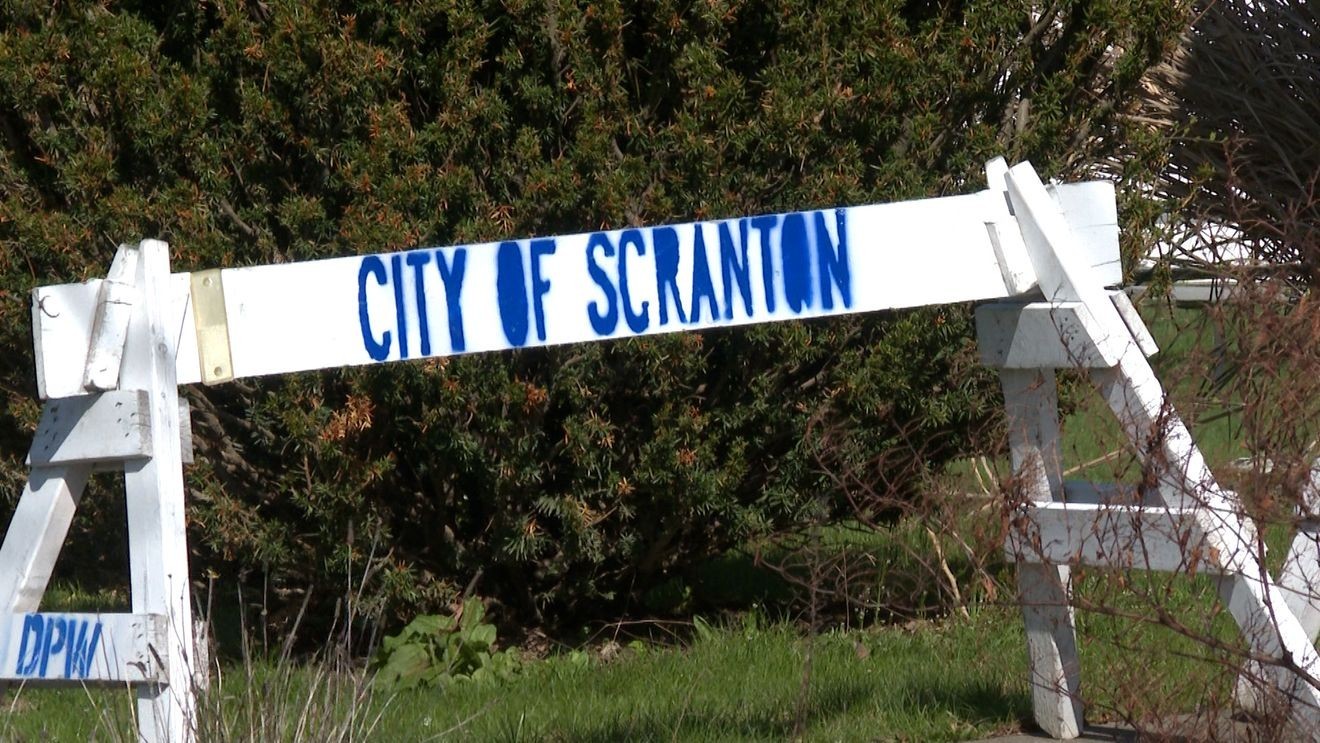
SCRANTON, LACKAWANNA CO. (WOLF) — Thirty-one months after the September 9th, 2023 storm, the damage is still easy to see on North Merrifield Avenue and Leggett Street. Boarded-up homes and several vacant lots remain unlivable, families forced out, still unable to return.
Eighteen houses and three vacant lots were deemed unlivable after the storm. Nearly two dozen families were displaced, many of whom have now been waiting more than 30 months for a permanent solution.
City leaders say the plan has been to buy out flood-prone properties and restore the floodplain, using FEMA’s Building Resilient Infrastructure and Communities (BRIC) program.
However, that funding has faced repeated setbacks.
The program was paused last year, cutting off a major source of support for flood mitigation projects. Although a recent court order reinstated BRIC, a partial shutdown of the Department of Homeland Security, which oversees FEMA, has delayed the flow of money.
Scranton Mayor Paige Cognetti says the city is hopeful but frustrated by the timeline.
“FEMA has said that they are going to go through with that funding. We’re cautiously optimistic that that will happen. However, we should never have been in this situation in the first place. We should have done that nine months ago, gotten those families whole, gotten them to the life that they’ve been wanting to live for a long time. They have been stuck,” said Cognetti.
Cognetti says the delays have left families in limbo for far too long.
“These families have been waiting and waiting, and it’s wildly unfair to them.”
At the same time, the city is still dealing with the financial impact of the 2023 storm. Scranton officials say they were unable to secure federal public infrastructure funding and are now covering millions in damages on their own.
“We tried very hard to get public infrastructure funding from the federal government during that time. We tried, and we were unsuccessful. We didn’t meet the threshold. We’re out $7.5 million for that storm. And that’s before any of this funding for the buyouts for the families,” said Cognetti.
The mayor says that reality highlights a growing concern that local governments may not be able to handle another major storm without federal support.
“It is very expensive to try to just clean up and rebuild from these storms. You think about prevention and making sure you’re ready for the next one. It’s nearly impossible for a local government to fund that type of work,” said Cognetti.
While waiting on federal dollars, the city has turned to American Rescue Plan Act (ARPA) funding to address stormwater issues in the Keyser Valley, one of the hardest-hit areas.
Several projects are already underway, including debris removal along Lindy Creek, clearing of storm pipes, and upgrading stormwater systems in residential neighborhoods like Fawnwood Heights.
Officials are also planning a major regional stormwater detention basin on West Mountain, designed to temporarily hold and slowly release runoff during heavy rain.
The broader Keyser Valley initiative is the city’s largest flood mitigation effort, and also the most time-consuming, in part due to extensive permitting requirements.
Still, city leaders say ARPA funding is limited and running out.
“That money is running out. And with FEMA in its current state, the current administration is increasing rather than decreasing those thresholds. It’s less likely than before that if we have another catastrophic event, as we did in 2023, that we would be able to get any recovery money,” said Cognetti.
For now, Scranton officials say they are exploring a backup plan in case federal funding falls through, but maintain that FEMA support is critical.