
NAZARETH, Pa. – A man from Northampton County is directly tied to the Artemis II project.
As an Associate Chief Engineer, Jason Powell of Nazareth helped develop the rockets that launched Artemis II into space, and propelled the Orion Capsule on its path to the moon.
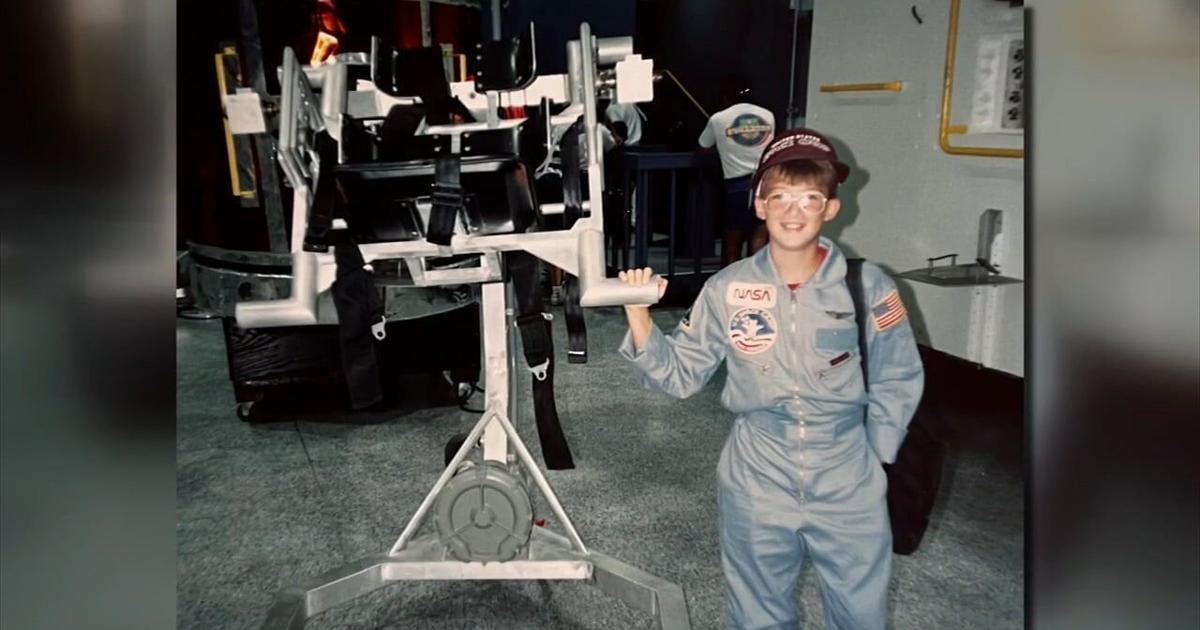
Space has been Powell’s career path for 25 years, and has been his passion since he was a boy going through Nazareth public schools.
“I struggle with the words for it. Because it really does have that kind of gravity in the heart,” Powell said.
With one day remaining on the historic Artemis II Mission, Powell says the mission has been a tremendous success but one of the most dangerous aspects remains.
“The mission’s not done until you have boots back on Earth. And we’re looking forward to a clean re-entry,” said Powell.
The astronauts will break through Earth’s atmosphere at temperatures reaching 5,000 degrees.
Powell says ‘he’ entered this Earth with space as his path, attending launches with his mom, and studying space as a kid.
He gained knowledge of rockets and engineering, which has been instrumental in leading America on a return path to the Moon.
Powell says his is stunned by the images sent back to Earth.
“Seeing our blue oasis against the stark black of space, and you see our dusty Moon, in the foreground, it’s amazing,” Powell said.
Powell envisions a Moon landing by the end of the decade, with astronauts on Mars to follow.
Powell says he struggled with dyslexia, and that none of his success would have been possible without the support of his teachers in the Lehigh Valley. Such a small world.
“It was quite a struggle. To grow up from a small town, have a learning disability, and work hard to get through school, it didn’t come easy to me,” shared Powell. “And I am just honored to have been able to do this.”
Powell now lives and works with NASA from his home in Alabama.
He is already working on Artemis III, which will test docking the Lunar Lander and the capsule in low earth orbit.
From there, Artemis IV will return humans to the Moon, likely by end of the decade.