
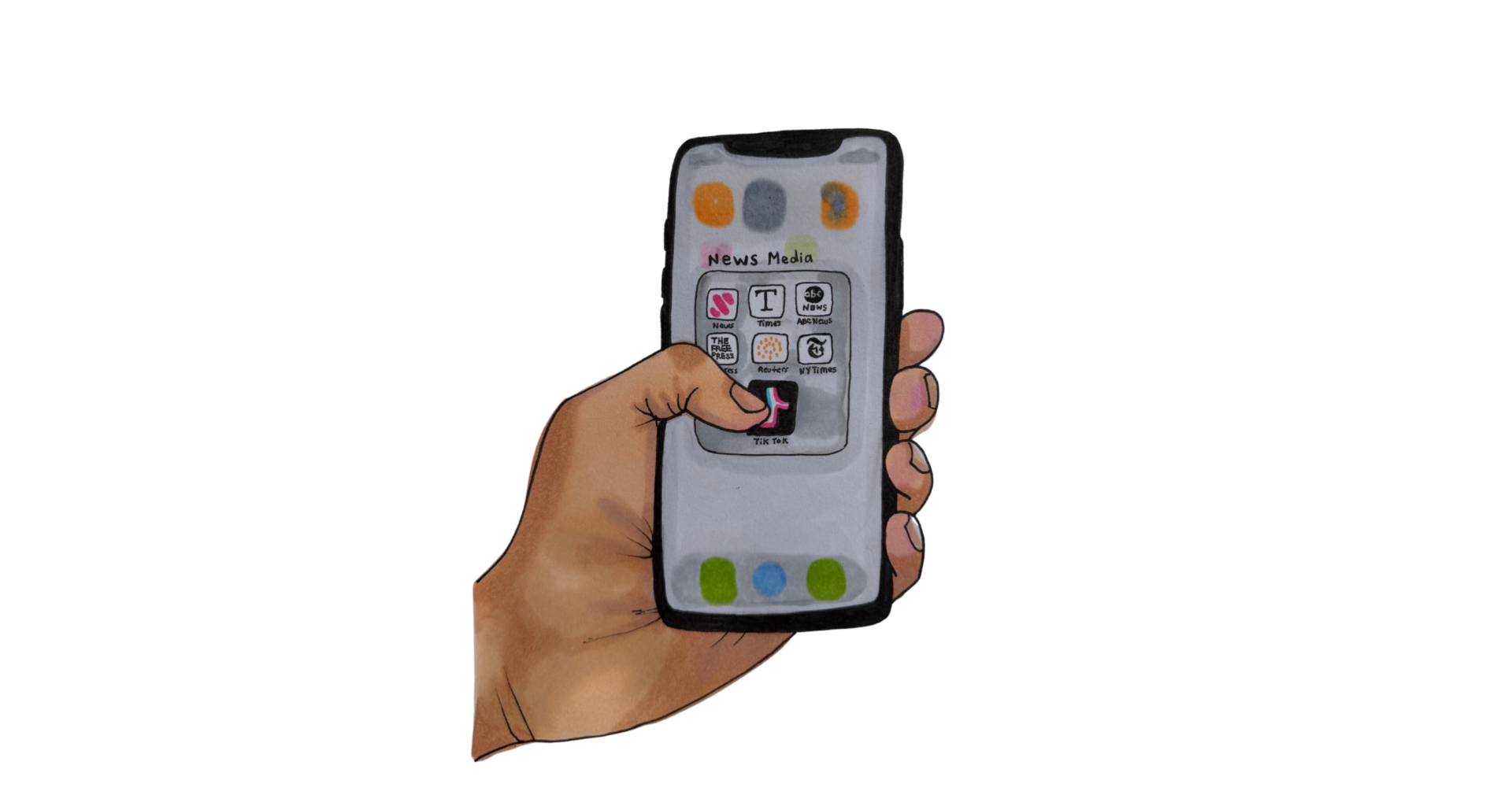
Scrolling through TikTok has become second nature for many students. It’s a digital space where students procrastinate, doomscroll for hours and, increasingly, “learn” what’s going on in the world.
TikTok offers a quick, easy summary of a topic in under a minute, complete with captions and a trending sound. It feels like staying informed without trying too hard.
That convenience is exactly the problem.
TikTok has quietly become a primary source of news for our generation. According to the Pew Research Center, about half of TikTok users say they regularly get news on the app, and nearly 40% of people under 30 do the same. A significant share of students are relying on the app to understand what’s happening in the world.
The same study found that only a small fraction of the accounts users follow are verified journalistic institutions. The issue isn’t just that people are getting news on TikTok — it’s how they’re getting it.
Many users gather information from influencers, random creators and accounts that mix “news” with trending content. Most of the time, users aren’t even searching for the topic. Content simply appears on the For You page, which is TikTok’s algorithm-driven homepage tailored to individual habits.
At a school like Lehigh, this should matter more than it does.
If students are expected to think critically and understand complex, real-world issues, relying on a 30-second clip isn’t enough. Passive exposure isn’t the same as informed understanding, and confusing the two lowers the standard of what it means to be educated.
Lehigh gives students free access to verified publications, including The New York Times and The Wall Street Journal, along with other major outlets. These resources are neither difficult to find nor costly, they’re already paid for. There’s no barrier, only a lack of effort.
When credible information is accessible, settling for algorithm-driven summaries is a choice, not a limitation. Students should be doing more than scrolling. Accessing reliable reporting takes only a few clicks, yet many choose not to use it.
Instead, TikTok becomes the default because it’s convenient and fits seamlessly into daily routines. Over time, that convenience reshapes how people engage with information. Conversations become more surface-level, and references shift to things “seen on TikTok” rather than verified reporting.
The larger issue is that TikTok blurs the line between entertainment and information. A serious global issue can appear between dance trends and shopping videos, all presented in the same format. When everything looks the same, everything feels equally credible, even when it isn’t.
When news is delivered as entertainment, it loses depth and context. That has real consequences. It creates a false sense of awareness: users feel informed, but in reality, they’ve encountered a narrow — and potentially misleading — piece of the story.
An alarming number of young adults now treat TikTok as a primary news source. While the platform can introduce topics, it shouldn’t replace deliberate, independent engagement with credible journalism.
Students should treat TikTok as a starting point, not a destination. If something matters enough to watch, it also matters enough to verify.
Real understanding doesn’t come from mindless scrolling. It requires intention, skepticism and willingness to seek out the full story.