
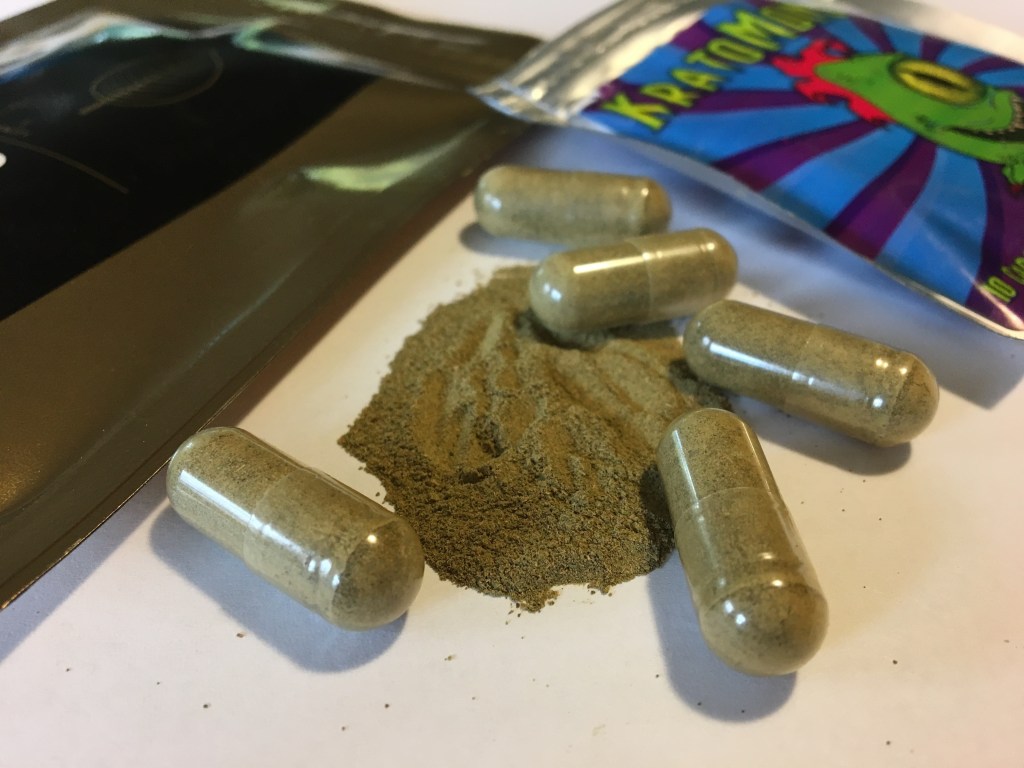
Called “gas station heroin,” kratom products have grown in use locally and beyond for pain relief and easing anxiety and addiction.
But officials and authorities worry that derivatives of the substance and synthetic forms sold in gas stations, smoke shops and convenience stores in forms that include vapes, powders and capsules are becoming more potent, addictive and potentially harmful.
Pennsylvania does not have any restrictions on sale, possession, manufacture or use of the substances and no minimum age for purchasing them.
Scranton took the first steps Tuesday to enact a citywide ban on the sale, possession, manufacture or use of kratom products. The initiative has spurred strong responses, including concerns from people who rely on kratom products for self-medicating, and others who think derivatives growing in potency are dangerously addictive, particularly for youths and even the elderly.
Scranton Councilman Patrick Flynn, a leading proponent of banning kratom in Scranton, sees the proliferation of kratom and stronger synthetic versions as a situation similar to the prior emergence of bath salts or the synthetic marijuana known as K2 or Spice and their negative impacts. The federal or state governments have not yet legislated any “meaningful regulatory framework” regarding kratom. There are no consistent manufacturing standards, no uniform labeling requirements and no clear dosing guidance, Flynn said. So, local governments must act on their own, and his push for a kratom ban in Scranton is a “proactive” move to prevent a proliferation of addictions and problems and even deaths, he said.
“My whole point here is we’ve had severe addiction issues and we’re not going to wait for the other shoe to drop,” in terms of growing problems, Flynn said.
Kratom use grows
A botanical native to Southeast Asia and with a scientific name of Mitragyna speciosa, kratom is a tropical tree in Thailand, Indonesia, Malaysia and Papua New Guinea. Long an herbal remedy in Southeast Asia, kratom leaves can be crushed and ingested via smoking, brewing or capsules. The leaves traditionally were chewed by farmers and laborers in Thailand and Malaysia as a stimulant for energy or relief from muscle pain.
Products prepared from kratom leaves are available in the United States through sales on the internet and at brick-and-mortar stores, according to the federal Food and Drug Administration. Kratom is often used to self-treat conditions such as pain, coughing, diarrhea, anxiety and depression, opioid use disorder and opioid withdrawal. An estimated 1.7 million Americans aged 12 and older used kratom in 2021, according to a Substance Abuse and Mental Health Services Administration’s National Survey on Drug Use and Health.
But the FDA has not approved kratom for any medical use. It is not controlled under the Controlled Substances Act, but there may be some state regulations or prohibitions against the possession and use of kratom, according to the Drug Enforcement Administration, which has listed kratom as a drug and chemical of concern. Kratom’s two main chemical components are mitragynine and 7-hydroxymitragynine (7-OH-mitragynine), according to the FDA.
According to the Associated Press: Nearly a decade ago, the federal government came close to banning kratom. In 2016, the DEA announced plans to add it to the government’s most restrictive Schedule 1, reserved for drugs that have no medical use and a high potential for abuse. But the plan stalled after a flood of public complaints, including a letter signed by more than 60 members of Congress. The FDA then began studying the ingredient, concluding in 2018 that kratom contains many of the same chemicals as opioids, the addictive class of drugs that includes painkillers like OxyContin as well as heroin and fentanyl.
Since then, FDA regulators have continued to issue warnings about cases of injury, addiction and death with kratom supplements, usually sold in capsules or powders. In recent months, the FDA has also issued warnings on other unapproved drugs sold as supplements or energy drinks, including the antidepressant tianeptine. Sometimes referred to collectively as “gas station heroin,” the drugs have been restricted by several states, but they are not restricted at the federal level.
Regulation efforts rise
Four bills pending in the state Legislature would create kratom regulations. Those involve establishing a regulatory framework, banning kratom sales near schools, requiring health warnings on packaging, and outlawing synthetic and 7-OH versions. But those bills are not yet laws.
“From a municipal standpoint, we simply do not have the authority to regulate substances like this in a responsible way. We can’t set dosing, can’t mandate manufacturing or packing labeling requirements,” Flynn said. “Until those standards exist, municipalities like Scranton are left with limited tools to address products that are widely available, increasingly potent and completely unregulated. We can put a ban in place or we can allow 7-OH sales and things like 7-OH to be like the wild west in our city.”
Scranton’s proposed ban follows a similar one that Doylestown borough in Bucks County enacted in March prohibiting the sale of kratom and hemp-derived cannabinoid products to people under age 21 or within 1,000 feet of schools and playgrounds. Violations of the Doylestown ban carry penalties of up to a $300 fine and up to 90 days in jail.
“It is the specific finding of Doylestown Borough that such substances may have a dangerous effect upon anyone using and/or ingesting said substances and that such substances should not be made available for retail sale to persons under the age of twenty-one (21),” according to the Doylestown ordinance, adopted March 16.
On April 1, the Pennsylvania Liquor Control Board issued an advisory notice to licensees clarifying that “unregulated, over-the-counter substances, (including but not limited to kratom, synthetic kratom/7-hydroxymitragynine, tianeptine, phenibut, kava/piper methysticum, amanita mushrooms, and nitrous oxide) are not approved by the board and are not permitted to be sold by retail licensees. The Board will not approve any application to license a location that sells such items, nor will it approve an interior connection with another business premises on which such items are sold”; and violations could result in citations issued by the PLCB.
On the federal level, U.S. Rep. Rob Bresnahan, R-8, Dallas Twp., on March 27 sent a letter to the federal Drug Enforcement Administration urging emergency scheduling of the 7-OH derivative of kratom that has opioidlike effects. The 7-OH substance can reach potency levels up to 50 times stronger than mitragynine, kratom’s primary active compound, and 13 times more potent than morphine, Bresnahan said. Emergency scheduling allows the DEA to temporarily classify dangerous substances as Schedule 1 when they pose an imminent threat to public safety. Bresnahan hopes such a move would stop the rapid spread of these “high-risk products” while permanent scheduling is evaluated.
“These products now commonly appear in fast-absorption formats such as sublingual and chewable tabs, rapid-dissolve tablets and gummies,” Bresnahan said in the letter. “These forms deliver 7-OH into the bloodstream within minutes, producing intense, opioid-like euphoria that dissipates quickly – encouraging compulsive redosing and dramatically increasing addiction liability … without swift action, the proliferation of these high-risk substances will continue exposing consumers to opioid-class dangers.”
Mixed opinions
Proponents describe kratom as a mild-acting pain reliever with potential to help reduce symptoms of opioid withdrawal. The nonprofit American Kratom Association, based in Virginia and established in 2014, advocates for protecting individuals’ rights to legally consume safe kratom, “to better manage (their) overall health and well-being,” according to the organization’s website. The AKA aims to support consumers, educate the public and raise awareness of kratom.
John Fedorchak of West Scranton came out to the Scranton City Council meeting Tuesday with a group of people “definitely not in support of a kratom ban,” according to an Electric City Television simulcast and video posted on YouTube. People struggling with issues of mental health or sobriety use kratom for relief and as an option to turn away from prescription street drugs, Fedorchak said. He would support banning the 7-OH form, which he agreed is much stronger than kratom.
“A total kratom ban would cause a lot of pain and suffering for people who have turned to this for positive outcomes,” Fedorchak told council.
Former Scranton resident Devin Refice of Doylestown, who still administers a Facebook page called the Lackawanna County Kratom Dependence Resource and Support Group, advocated in Doylestown for the limited ban there.
In recovery from opioid addiction, Refice said kratom led him to relapse about nine years ago. At that time, Refice was sober for over two years when he bought kratom in a convenience store, convinced it wasn’t addictive. It provided him with an increased amount of energy and feeling of well-being for a time, and he even suggested it to his mother as a nonopioid option to her pain medication. But within weeks, Refice developed a $100-per-day kratom habit that eventually led to his relapse into opioids.
Acknowledging that kratom can help some people, Refice believes it also often acts as a gateway drug to 7-OH and other opioids. A growing use of kratom cuts across all classes and ages, he said. For some white-collar professionals, kratom does not carry the stigma of illegal drug use, while older people struggling with pain will often get addicted and travel to find more potent forms of the substance.
A local recovery advocate, Frank Bolock, director of the peer-based Recovery Bank support center at 120 Wyoming Ave. in Scranton, doesn’t believe kratom has a place in recovery. He has seen an uptick in use among young people, although it’s generally not their drug of choice, he said.
“I don’t think there is any redeeming value in kratom or these concoctions they are selling,” Bolock said. “It’s definitely not conducive to recovery.”
For law enforcement, the use of kratom presents “real challenges,” Lackawanna County District Attorney Brian Gallagher said.
“It is widely available, largely unregulated, and marketed in a way that downplays its risks. Yet we are encountering individuals who are impaired, dealing with dependency or experiencing withdrawal tied to its use,” Gallagher said. “That creates real consequences not only for individuals, but for public safety.”
The substance also presents an obstacle to sobriety maintenance for those under court supervision, including those on probation, Gallagher said.
“We are asking individuals to remain law-abiding and substance-free, while a mind-altering substance remains legally accessible and difficult to monitor,” Gallagher said.
Local ordinances like those introduced Tuesday by Scranton City Council are important, but no substitute for comprehensive state or federal action, he said.
“We need clear, uniform regulation standards for manufacturing, such as concentration limits, labeling, age restrictions and enforcement, so that law enforcement, the courts and the public are all operating under the same set of rules,” Gallagher said.
Lackawanna County Coroner Tim Rowland agreed that a statewide ban would be better than individual municipal actions. Lackawanna County has had two deaths directly attributed to kratom in the past five years — a 38-year-old woman in 2022 and a 28-year-old man in 2023, he said. Multiple other deaths also had the substance present with other drugs in the systems of those who died, Rowland said.
Scranton’s proposed ban introduced Tuesday would prohibit in the city the sale, possession, distribution and manufacturing of kratom and its derivatives. Violations would carry penalties of up to a $300 fine and up to 90 days in jail. On Wednesday, Flynn said he hoped council would amend the two ordinances, one regarding adults and the other for minors, to remove the jail penalty.
Scranton resident Tom Coyne questioned the city’s intent to ban possession of a product that is legal. He said council should instead consider banning the sale and distribution of kratom, but not the possession of it.
“Are you going to ban cigarettes in the city of Scranton? Are you going to ban alcohol in the city of Scranton?” Coyne asked, and received a round of applause from many of the people in attendance at the council meeting.
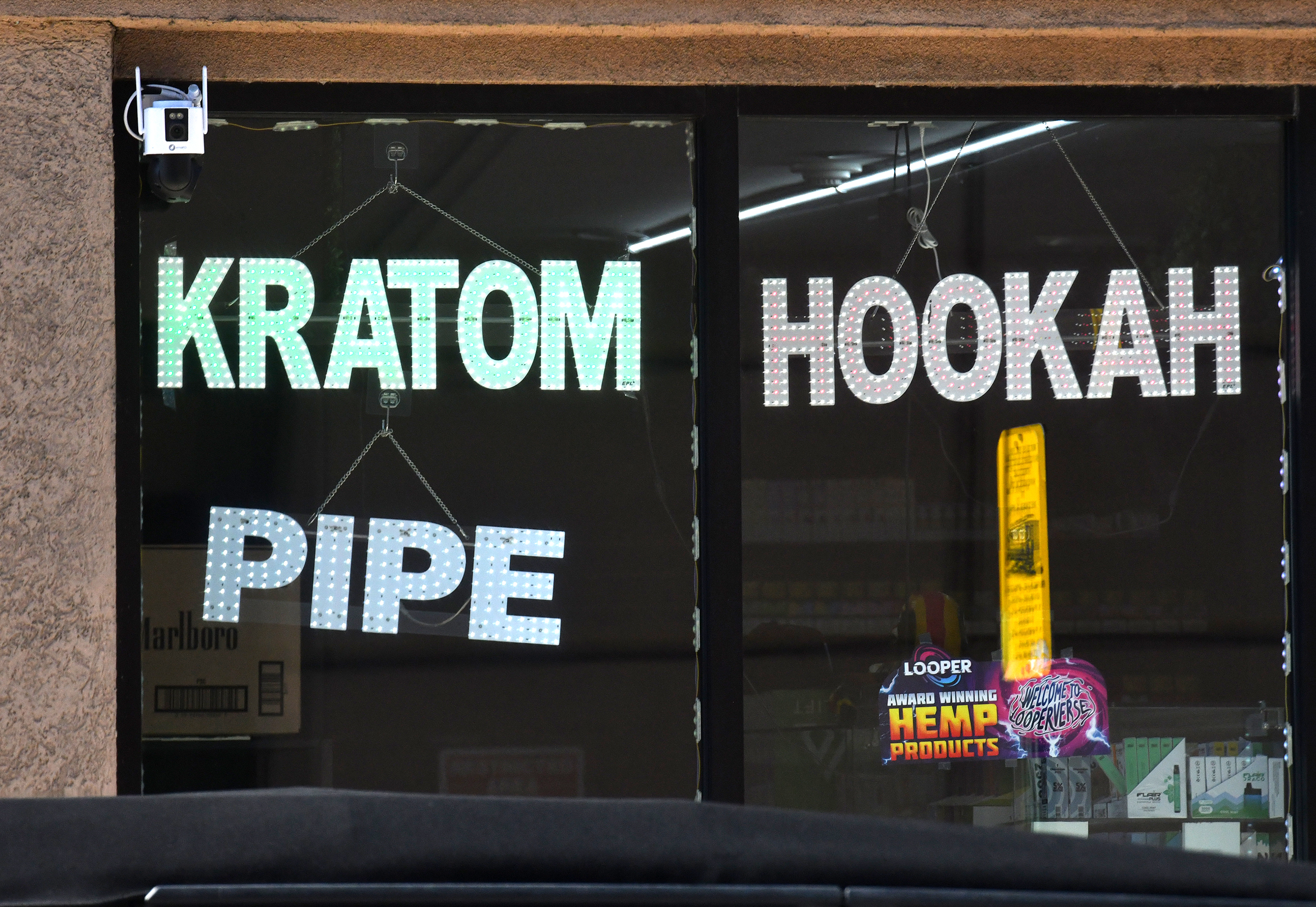
Signs on the windown of the Scranton Smoke Shop advertise kratom for sale on Biden St. in downtown Scranton Wednesday, April 8, 2026. (SEAN MCKEAG / STAFF PHOTOGRAPHER)
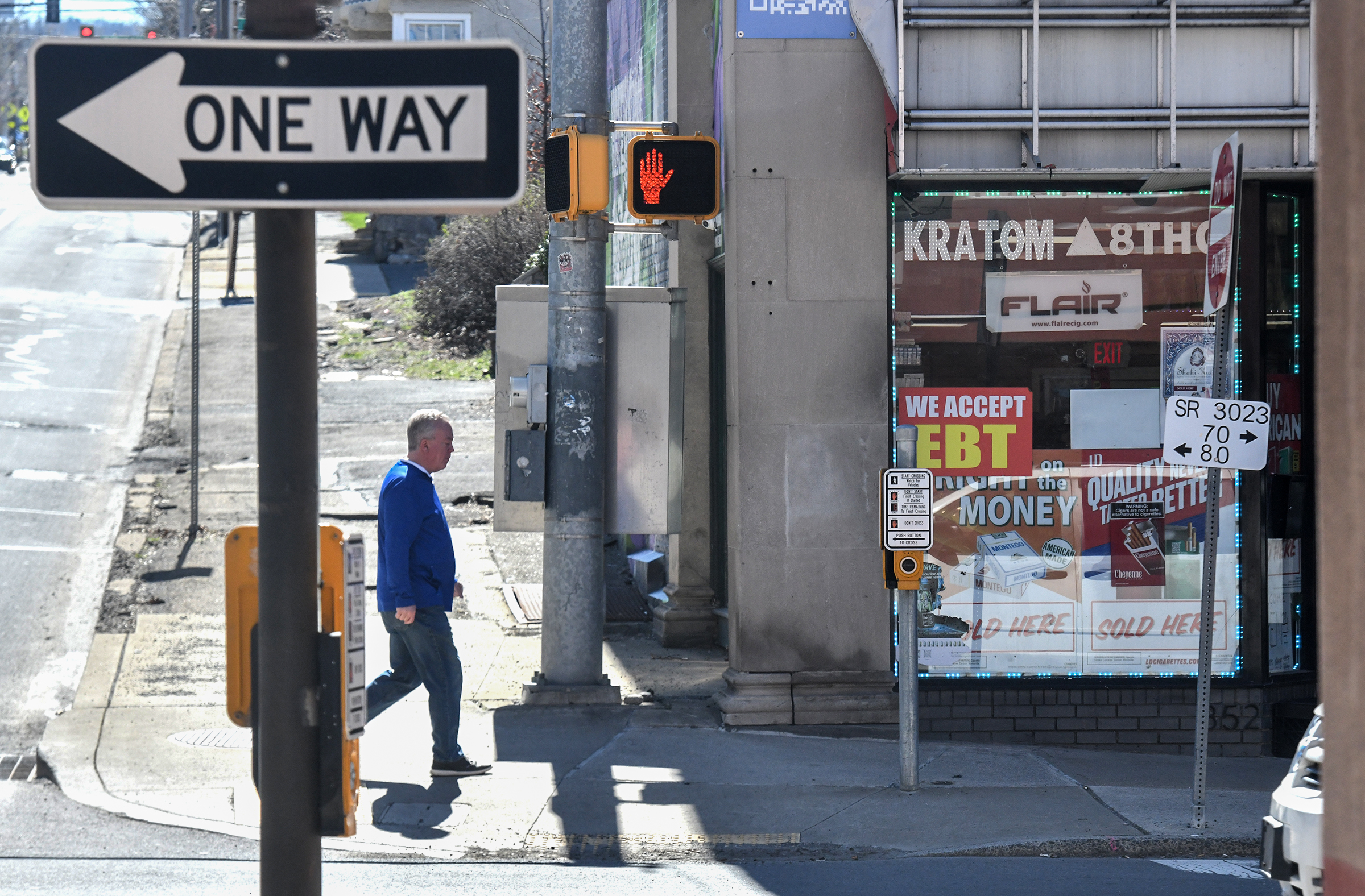
A pedestrian walks past a convenience store that sells kratom on Adams Ave. in downtown Scranton Wednesday, April 8, 2026. (SEAN MCKEAG / STAFF PHOTOGRAPHER)

Vehicles are parked in front of the Scranton Smoke Shop on Biden St. in downtown Scranton Wednesday, April 8, 2026. (SEAN MCKEAG / STAFF PHOTOGRAPHER)

Scranton City councilman Pat Flynn speaks during a press conference in the foyer of the Lackawanna County Courthouse in Scranton Monday, April 6, 2026. Standing behind Flynn are, from left, Owner and CEO of the Friendship House Joe Van Wie, Lackawanna County District Attorney Brian Gallagher, Scranton City council president Tom Schuster, Scranton City councilman Sean McAndrew and Scranton City councilman Mark McAndrew. (SEAN MCKEAG / STAFF PHOTOGRAPHER)
Kratom capsules (AP FILE PHOTO)
Show Caption
1 of 5
Signs on the windown of the Scranton Smoke Shop advertise kratom for sale on Biden St. in downtown Scranton Wednesday, April 8, 2026. (SEAN MCKEAG / STAFF PHOTOGRAPHER)