
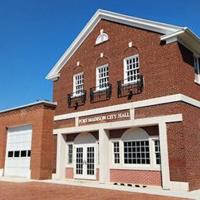
Fort Madison residents will soon have new rules and guidelines dictating how bonfires and leaf burning can be conducted within city limits.
The Fort Madison City Council voted unanimously to pass a first reading of an open burning ordinance during their meeting on Tuesday night.
Following concerns from the Fort Madison Fire Department in recent months with the city not having an open burning ordinance on the books, the department presented the council with a draft of the proposed ordinance during a meeting last month for the council to consider.
After seeking input from city administrators and the Fort Madison Police Department, that draft outlined a variety of definitions and new rules aimed at providing residents with guidance on how to safely conduct open burning for recreational and leaf disposal purposes.
“The ordinance is to give guidance for residents on proper means to enjoy a backyard fire pit, yard waste debris burning period of times of the year and protect our community at the same time with guidance,” the letter from Fort Madison City Manager Laura Liegois and Fort Madison Fire Chief Chad Hannum to the council last month wrote.
“There are sections of this code that allows for officials to have fires extinguished due to concerns and municipal infractions for offenders of the code.
“The purpose of this chapter is to regulate open burning within the City of Fort Madison to protect public health, safety, and property from hazards associated with uncontrolled fires and smoke.
“This chapter is adopted pursuant to the authority granted to municipalities under Iowa Code §364.1 and enforced as a municipal infraction pursuant to Iowa Code §364.22.”
The proposal defines “backyard burning” as the “disposal of residential waste by opening burning on the premises of the property where such waste is generated.”
“Open Burning” is defined as the “ burning of materials wherein products of combustion are emitted directly into the ambient air without passing through a stack or chimney from an enclosed chamber” but does not include road flares, smudge pots and similar devices associated with safety or occupational uses typically considered open flames.
The use of burn barrels for any types of burning, cooking, or recreational fires would also be prohibited under the proposed ordinance and defined as “any barrel, drum, trash container, approved or non-approved container specifically or not specifically designed to house a fire.”
“Recreational Fires” would be defined at “an outdoor fire burning only clean dry untreated lumber, dry seasoned wood, or charcoal where the fuel being burned is contained within a fire ring, outdoor fireplace, barbecue grill or barbecue pit, commercial fire unit or other approved container, and has a total fuel area of three feet or less in diameter and two feet or less in height for pleasure, warmth or similar purpose.”
The burning of leaves, refuse, grass, rubbish, rubber, garbage, tires, trade waste, locally recyclable goods, household waste, plastics, hazardous materials, or petroleum products would not be allowed under the parameters of the rules established for recreational fire.
Other rules related to recreational fires include the following provisions:
Fire pits shall not exceed 3 feet in diameter.Only clean, dry firewood shall be burned.Fires shall be located at least 15 feet from any structure, combustible material, or property line.Fires shall be constantly attended by a responsible adult.A means of extinguishment (water hose, fire extinguisher, or equivalent) shall be readily available at all times.Fires shall not create a nuisance due to smoke or odor.Burning shall not occur when wind speeds exceed 15 miles per hour.
The ordinance would also set the definitions for backyard burning, clean dry wood, combustible materials, disaster rubbish, garbage, landscape waste, outdoor cooking fires, persons, refuse, religious and ceremonial fires, residential waste, trade waste, training fire, and variances.
Seasonal leaf burning would be allowed without a permit during the fall, from Oct. 15-Nov. 15, and in the spring, from March 15-April 15, under the following conditions:
Burning shall occur between sunrise and sunset.Only dry leaves from the same property may be burned.Fires must be constantly attended.A hose or other extinguishment method must be available.Fires must be located a safe distance from structures.No burning on city right way or streets.Burning is prohibited during a burn ban.Fires producing excessive smoke may be ordered to be extinguished.
The proposed ordinance will also allow the fire chief to establish a burn permit system, prohibit open burning when the weather or drought conditions create an increased fire hazard, and the authority to suspend burning privileges (which would allow both the fire department and the police department to extinguish fires under specific conditions, including emergency situations or if a danger related to the fire has been identified).
The ordinance would allow the city council to establish penalties for any infractions to the ordinance by passing a resolution and outlines an appeals process for those who have had burning permits denied, revoked, or suspended, as well as for those who have had fires declared to be a nuisance.
The ordinance also states that “any fire producing smoke, odor, or airborne particulate that unreasonably interferes with a neighboring property owner’s use and enjoyment of their property shall be considered a nuisance and may be ordered extinguished.”
But the council passed the first reading of the ordinance with one caveat: a provision dictating that recreational fires not be allowed after 1 a.m. was stripped from the ordinance proposal.
Hannum said he was fine with the removal of the 1 a.m. rule, stating that he was comfortable not including the fire curfew in the ordinance and that he simply added it to the code proposal because other city codes he reviewed had the same cut-off time for recreational fires.
“I thought making it 2 a.m. But then I remembered how old I am and thought 1 a.m. was plenty late,” Hannum joked with the council.
When asked for his opinion on stripping the 1 a.m. cut-off time from the ordinance, Fort Madison Police Chief Cody Potthast said he did not believe law enforcement would have any trouble shutting down any problematic fires or fire gatherings if they receive any complaints.
“Most of the time, if you’re going to have an issue with a bonfire, it’s going to because either it’s getting out of hand and it’s a danger to society, or option two: it’s going to be a noise complaint, which is also covered in another city ordinance,” Potthast said. “So, I don’t see any issue with (letting fires burn past 1 a.m.).”
The ordinance will need to pass two more council reading votes before it officially becomes city law.