
KANSAS CITY, Mo. (KCTV) – A new study reveals a significant racial gap in reading proficiency across Kansas City metro classrooms, with Black and Hispanic students falling far behind their white peers.
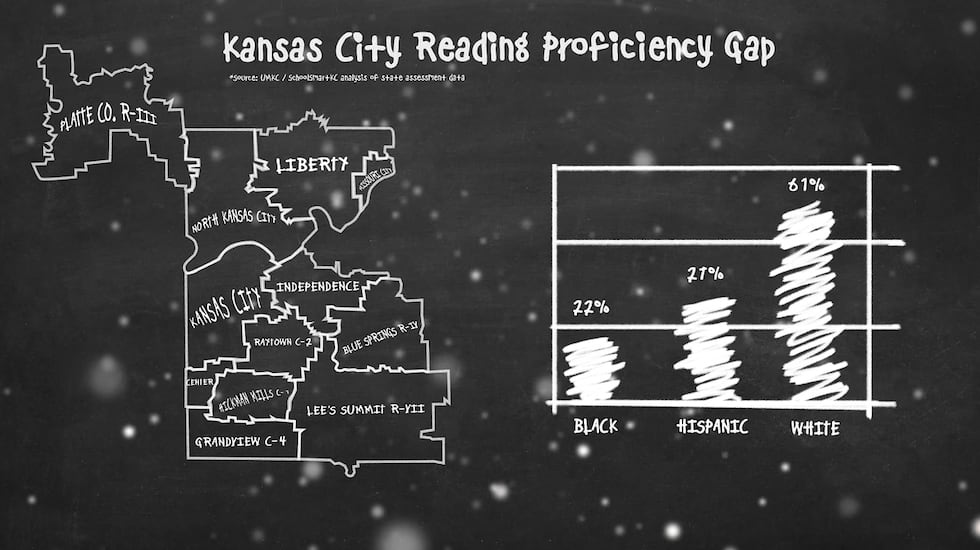
The study from UMKC and SchoolSmart KC examined all 17 districts in the Kansas City public education system, including public and charter schools.
 Kansas City schools face racial reading gap as Black, Hispanic students lag behind(KCTV5)
Just 22% of Black students are proficient in reading skills. Hispanic students fare slightly better at 27%, compared to 61% of white students.
Educators see the gap firsthand
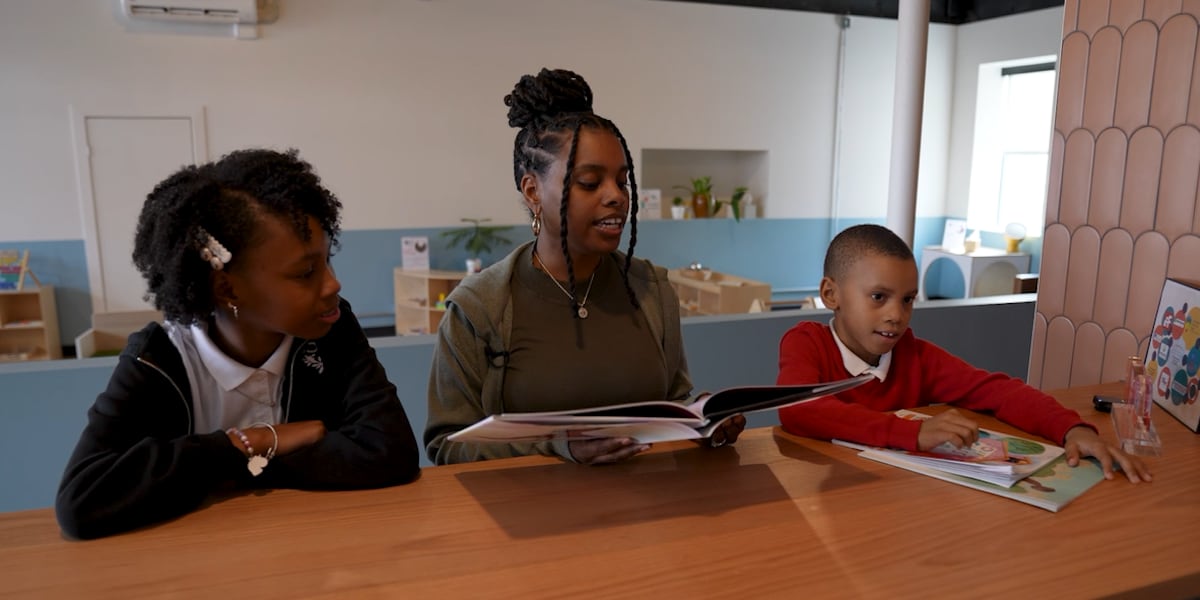
Ebony Hart, a paraeducator in a Kansas City school, sees the disparity every day in her classroom.
“It’s definitely disheartening, seeing this huge gap that there is, especially with my culture, Black people,” Hart said.
Her own children, Karli and Landon Hart, have become proficient readers, beating odds that work against many of their peers.
“They love to read and I think that started very early,” Hart said. “They both are very proficient in reading above grade level.”
But Hart sees another story daily in her classrooms.
“I see them kind of trying to cover it up by maybe you know laughing being a class clown you know,” she said.
Advocates call it a systemic crisis
Catina Taylor founded Dreams KC, a Kansas City nonprofit fighting to improve literacy. She said the numbers reflect a systemic problem, not a student problem.
“It’s not shocking,” Taylor said. “I saw it firsthand in the 15 years I spent in the classroom.”
Taylor said the gap means about three to five out of 10 Black and brown children in a classroom are struggling to read.
“The children aren’t the problem; it’s the system. At this point, we need to address the system,” she said.
Taylor pointed to decades of shifting approaches to reading instruction. For 50 years, the approach has moved back and forth. In the 1970s, schools taught reading through phonics, sounding out words letter by letter.
In the late 1980s, schools switched to the three-cueing system, teaching kids to recognize sight words from memory.
Then in the 2000s, educators returned to phonics, grounded in the science of reading. Taylor said the shifts shut out a generation of kids.
“Higher education, graduation rates, you name it. It’s impacted even while they’re in school before graduation.”
When asked if she would call it a crisis in Kansas City, Taylor said it has been a crisis, not just in Kansas City, but nationwide and statewide.
Nationwide, just 32% of fourth graders are proficient in reading, according to the Nationwide Report Card on reading.
State education leaders respond
Kelli Jones, deputy commissioner of learning services for the Missouri Department of Elementary and Secondary Education, said every child learning to read in Missouri is her responsibility.
Jones called the 39-point gap unacceptable.
“Anytime you have those gaps, I think you really have got to take a look at that and do what you can to really lessen the margin,” Jones said.
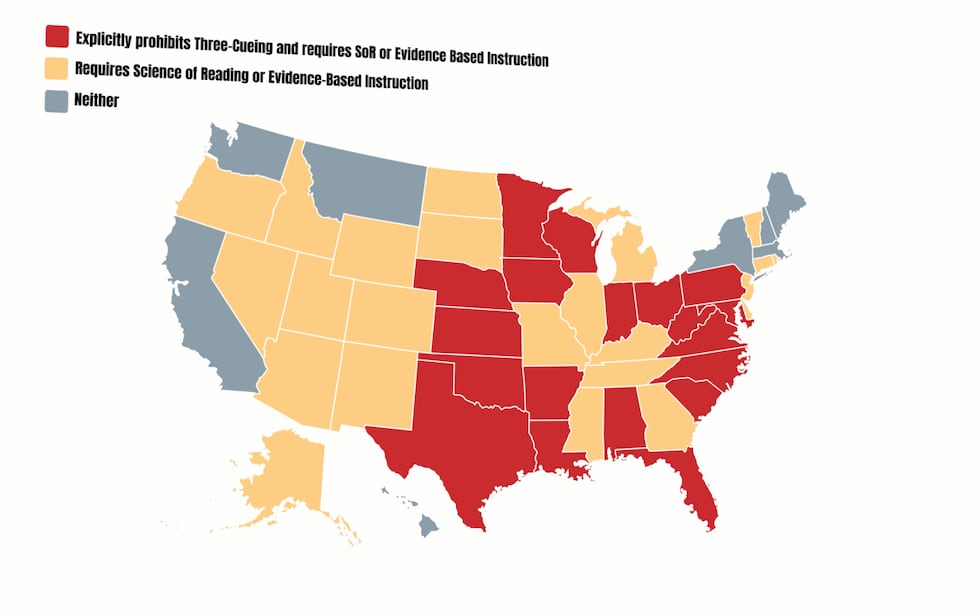
Jones said the state wants the science of reading in every classroom and has restricted three-cueing, but stopped short of a ban.
“I think the ones using a little bit of 3 cueing, I don’t think that’s their primary resource,” Jones said.
Ten other states have banned three-cueing outright. A Missouri Senate bill now aims to do the same.
 Kansas City schools face racial reading gap as Black, Hispanic students lag behind(KCTV5)
Jones said teachers are currently being trained in the Science of Reading approach through the LETRS program from DESE.
“So, they have to go through certain hours of training to even become a certified teacher,” said Jones. “We want those teachers that are actually in the classroom teaching literacy to be letter-certified if possible. Right now, that is the goal.”
LETRS is not considered mandatory training for educators.
“I think we’ve got to be very, very careful on putting certain, you know, a lot more restrictions and requirements on educators, because we need to retain and recruit as it is.”
Jones said $4.5 million in the DESE budget was allocated towards literacy for the 2026 fiscal year.
When asked what she would say directly to a Black or Hispanic family in Kansas City struggling right now, Jones said the state needs to put the best teachers in front of these kids and to keep community partners working with students.
Community programs fill the gap
Beatrice Henry created a free YouTube program called The Joy of Reading that teaches parents how to teach their kids to read.
“To kind of target the issue we’re having right now with low illiteracy rates in our area,” Henry said.
Each episode features a book reading along with a coordinating activity, and any materials are low to no-cost.
“I always say the programs I create for parents; it’s a seed,” Henry said. “I like to tell parents start here, you and your child bloom it and grow it from here.”
This year, Henry will also have a tie to the Parade of Hearts.
“I’ll have a heart sculpture, which is also called the Joy of Reading,” said Henry. “It’s to create literacy awareness in Kansas City.”
Through Henry’s program, success is growing in the Hart household.
“If our students are reading, that’s just going to bring more leaders in the community,” Hart said.
Parents have rights, too
Missouri’s Reading Success Plan requires schools to notify parents if their child is struggling and give them tools to help at home.
Jones said parent involvement is critical to closing the gap.
“Parents need to know what’s going on,” Jones said. “We in education welcome all parent engagement. We want parents to get involved. We want parent input. You’re just not seeing that sometimes out of families nowadays.”
“They’re doing that in the Kansas City region,” Jones said. “It’s about giving these kids an opportunity.”
Jones said reading is the foundation for everything that follows.
“If we can give the child that gift, the gift of reading, we’re going to give them a gift that’s really going to take them to have a successful life,” she said.
Copyright 2026 KCTV. All rights reserved.