
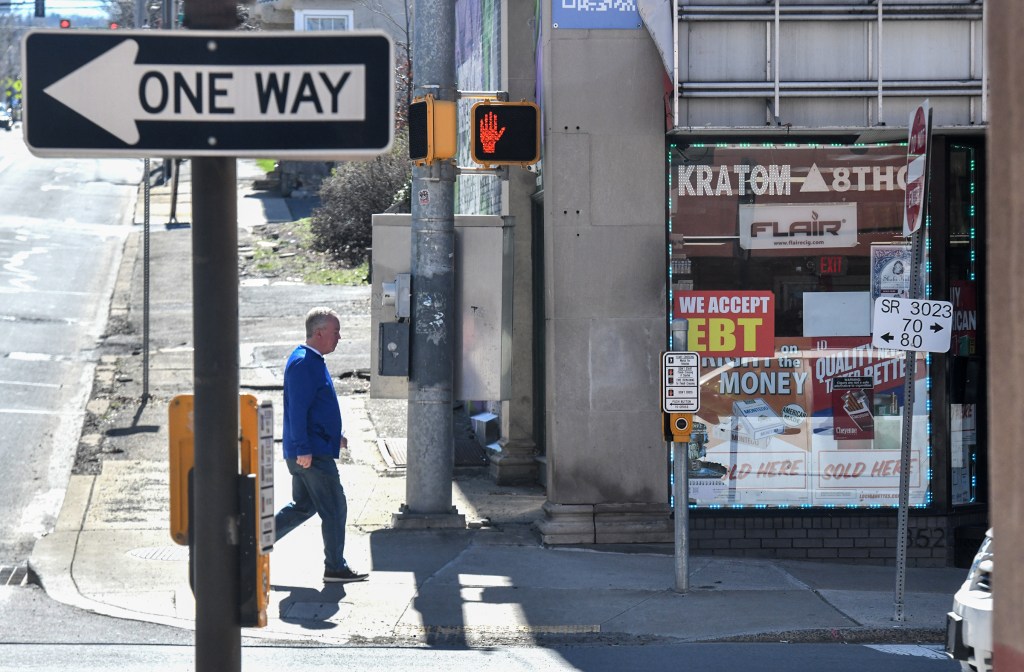
During Scranton City Council’s meeting on April 7, concerned citizen Tom Coyne asked whether city officials might consider banning the sale and possession of cigarettes within city limits.
He asked about an alcohol prohibition, too. While he didn’t mention them, it would hardly be a stretch to consider he might pose similar similar questions about making it illegal to sell a pellet gun within city limits, or carry a pocket knife down Lackawanna Avenue, or produce commercial-grade fireworks somewhere in the Hill Section to set off at your best friend’s Fourth of July celebration in Hazleton.
All of those things, after all, could potentially — in the most rare of circumstances — cause lasting harm to any number of people in the community.
The questions he did ask were ridiculous and, obviously, Coyne knew it. That was his point, after all. Still, those questions were legitimate given the circumstances and bring to the fore a serious conversation about the potential consequences of government overreach, even in situations where the attempt to overreach in protection of society is rather understandable.
Scranton City Council’s early steps to institute a citywide ban on the possession, sale and production of products that contain kratom highlight a need to research and legislate what seems to be a concerning and burgeoning problem throughout the nation that is beginning to show disturbing trends in our commonwealth.
However, we struggle to ascertain how a strict ban in one city — even the largest one in the region — would put anything outside of symbolic dent in any kratom-related issues described by the proposal’s most ardent supporters. While the spirit behind the proposal might be well-meaning, curbing the real problems brought about by the use of some forms of the substance will take a much more wide-ranging strategy that must emanate from debate in Pennsylvania’s General Assembly.
Derived from the leaves of a Southeast Asian tree, kratom has long been a controversial substance. The federal government considered banning it in 2016 and has issued myriad warnings on it since. However, as Coyne’s questions slyly pointed out, its use remains legal under federal and state law.
Some users insist it helps them relieve pain and cope with anxiety and addiction. Many others worry it, and its synthetic forms, are becoming more powerful and addictive; the Pennsylvania Department of Health said last fall that poison control centers statewide have seen a significant uptick in reports of overdose-like symptoms after using products that contain kratom and its derivative, 7-hydroxymitragynine (7-OH).
As written, the prospective law would prohibit the sale, distribution, manufacturing and possession of products that contain kratom in Scranton. Those who violate the law could face penalties of 90 days in jail and up to a $300 fine.
The proposal means well. But it seems ludicrous to think that a Dickson City resident who buys a vape legally at a gas station in Dunmore on her way to a hockey game in Wilkes-Barre could face three months behind bars if that vape gets found during a routine traffic stop in Scranton.
Councilman Pat Flynn, who introduced the ordinance, said he hoped the board would amend the proposal to strike the jail penalty. It would be best to remove any penalties for possession. It is a potential lightning rod for Scranton that could, potentially, drive visitors from the city and make potential criminals of residents who can legally purchase those items a few miles from their front porch.
However, prohibiting sales and distribution of kratom products, and certainly the manufacture of them, in the city seems perfectly reasonable.
This shouldn’t be a matter of Scranton taking the kratom problem into its own hands, one kratom user at a time. Taking a stand against it in a way that doesn’t harm passersby or residents delivers the proper message: That there is an issue brewing, that there is potential to hurt communities if something isn’t done, and that the best way to make sweeping changes comes through Harrisburg.