
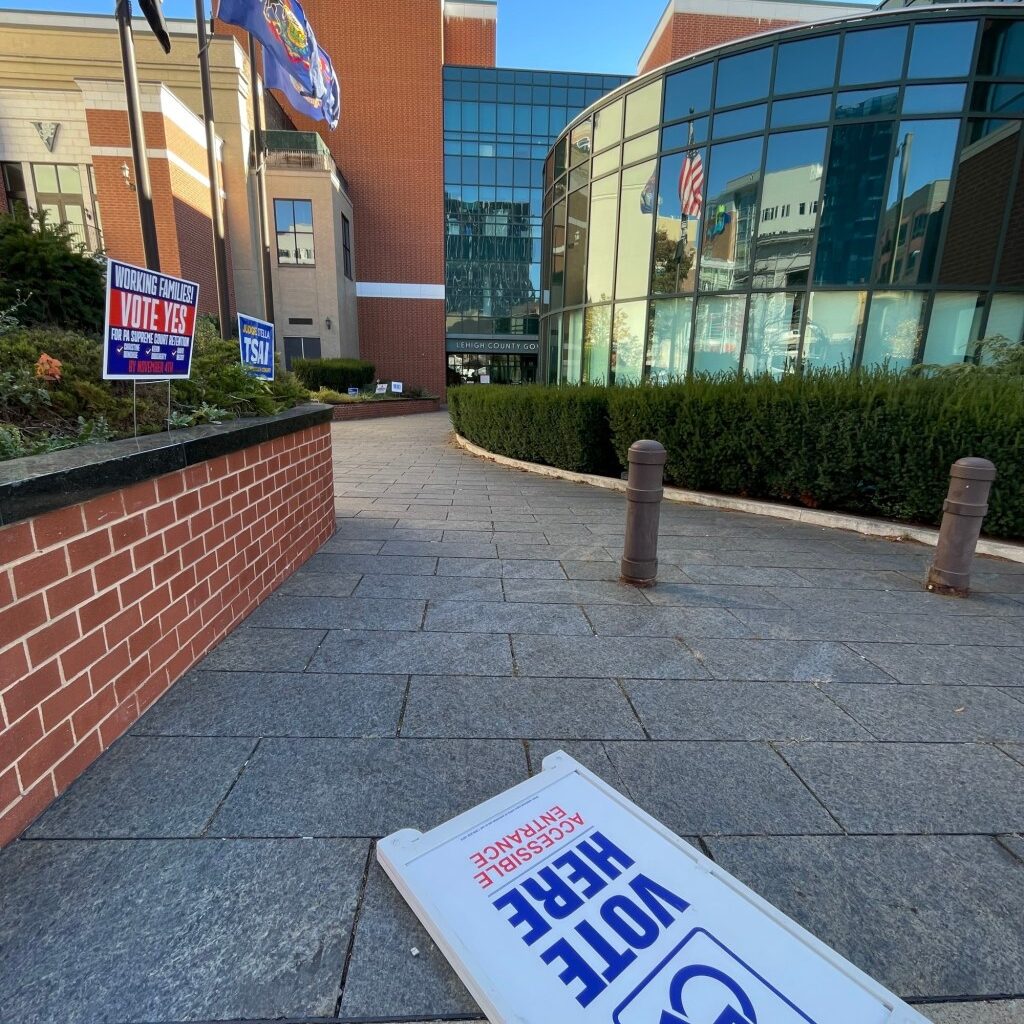
Lehigh County officials are poised to accept a plan to send children involved in the juvenile justice system to Bern Township in Berks County for incarceration. A one-sided presentation from Berks officials — and little visible due diligence — has provided the incomplete foundation for an action that could adversely impact our children for generations.
No input from the community was sought. Children involved in the juvenile system overwhelmingly come from the poorest parts of our community, where poverty rates exceed 50% and child poverty of 65.4% persists in some neighborhoods. And, predictably, children of color are disproportionately impacted by these policies. Yet there’s been no input from the families most affected by this proposal.
Children placed in Bern Township would be deprived of visitation from parents who cannot travel over an hour away for visits. Many families lack reliable transportation or flexible work schedules to make such trips. When children are placed far from home, they become disconnected from their community — effectively banished from the village that should help guide them back toward stability.
Moreover, studies are clear that visitation preserves parent-child bonds, fosters emotional stability for children, improves behavioral outcomes and enhances academic performance. Visitation also reduces anxiety and depression, likely to afflict a child incarcerated far from home.
Officials have centered discussion on the potential fiscal savings of this plan. However, deeper examination raises questions about whether any projected savings would remain once the long-term social, transportation, and systemic costs are considered.
Is it fiscally prudent to enter into a 20-year contractual obligation that will affect our children long after many of the officials supporting it have left office?
Lehigh County’s own history should encourage caution:
•In 1992, the Lehigh County Jail was built for $51 million with a capacity of 1,352 inmates, yet now is nearly half empty.
•In 2004 a Juvenile Detention Center was constructed in South Whitehall Township with a capacity for 48 children at a cost of $8.5 million, only to be closed less than a decade later.
Now officials are rushing to commit to this long-term contract that was not publicly revealed until just days ago, nor fully evaluated by financial experts. The legal and financial potential pitfalls are enormous.The Lehigh County controller, fiscal watchdog for taxpayers, has strongly criticized the proposal, recommending:
•Pausing any long-term commitment to a regional detention agreement until a full evaluation is completed.
•Assessing whether existing providers can meet county needs through negotiated service levels.
•Evaluating options that preserve proximity to families.
•Developing clearer projections of demand, cost, and outcomes before entering into any agreement that binds the county beyond the near term.
The Pennsylvania Juvenile Court Judges’ Commission agrees, reporting that: “Research demonstrates a positive link between family visitation and juvenile outcomes, with increased frequency of family visitation corresponding to improved juvenile behavior and academic performance … visits from family members demonstrated more positive behavior and academic success than juveniles who received infrequent, or no, visits from their family.
Children incarcerated in Bern Township would have to be transported for court appearances as manyas eight times, cuffed and chained, in a trauma-inducing dehumanizing ordeal. These are children — not numbers on a spreadsheet.
We are calling for this Berks proposal to be tabled until a complete and impartial evaluation is conducted to determine whether this plan — or alternative approaches — best serves our children and community.
The current proposal proceeds without sufficient evidence regarding long-term youth outcomes and offers limited discussion of alternatives.
For example, when detention beds were unavailable, some children were placed on house arrest instead of incarceration. The public has not yet seen outcome data from those placements. If some remained stable under supervision, that should be part of the discussion on alternatives. Maybe detaining at home is preferable.
Important questions remain, including:
•A complete list of offenses that resulted in detention.
•A copy of the “blue ribbon” report.
•How many children were released at the first hearing.
•What local alternatives were fully examined.
The good news is that due to the dedicated work of Juvenile Probation personnel, only around four to seven children are in detention on any given day. Still too many, but with such low numbers, a local alternative to distant incarceration is highly workable.
Honest self-examination and changes to prosecutorial and judicial practices might further reduce incarcerations, for example, avoiding over-charging, or employing a rapid system to evaluate juvenile petitions more carefully.
It just takes political will.
This is a contributed opinion column. Ettore Angelo is is a criminal defense attorney in the Lehigh Valley. Dr. Stephen Mory is a retired psychiatrist with decades of experience treating mental illness in correctional settings. The views expressed in this piece are those of its authors and should not be interpreted as reflecting the views of this publication. Do you have a perspective to share? Learn more about how we handle guest opinion submissions at themorningcall.com/opinions.