
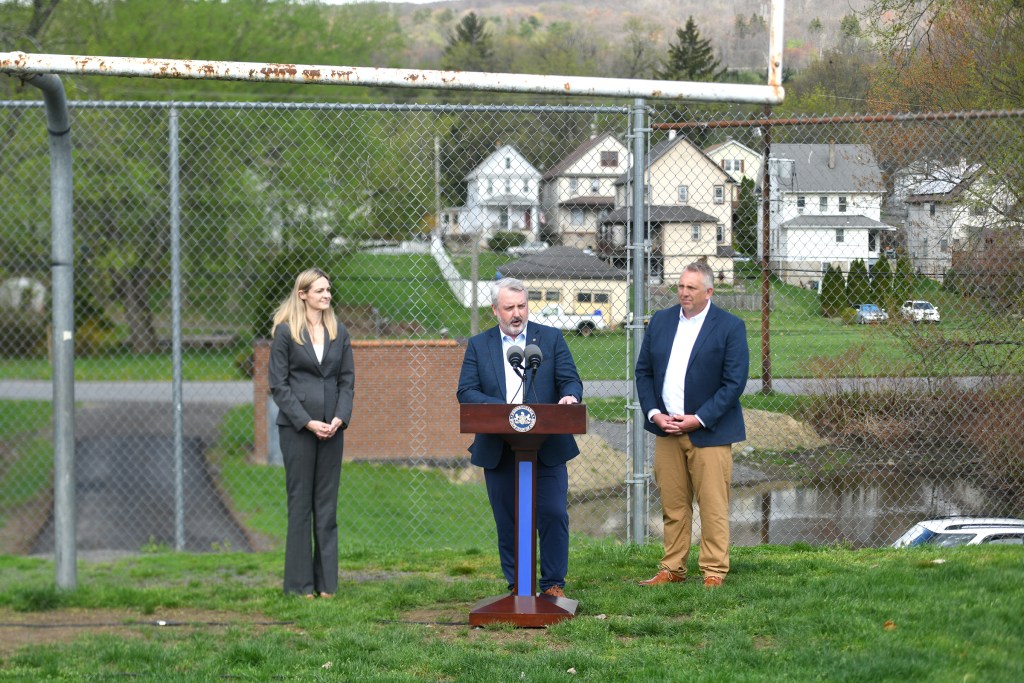
SCRANTON — Gov. Josh Shapiro proposes to maintain $5 million in the 2026-27 state budget for a 3-year-old emergency recovery program that fills financial gaps encountered by victims of disasters, officials said Friday.
The Shapiro administration also has expanded uses of Disaster Recovery Assistance Program funding to include county and municipal governments, Pennsylvania Emergency Management Agency Deputy Director for Recovery Larry West said Friday during a media event in Scranton held to highlight the funding.
Those local government activities might include restoring public infrastructure to pre-disaster conditions, removing debris or taking emergency protective measures not covered by insurance or other funding sources, West said. Established in 2023, the program has had $5 million allocated in each of the past three fiscal years and would maintain that amount in the governor’s next fiscal budget, he said.
As weather-event disasters generally have increased in recent years, state and local officials have recognized gaps in recovery assistance.
“The program has grown from a new idea to a critical lifeline for Pennsylvanians who find themselves facing the aftermath of a disaster where they have nowhere else to turn. At its core, D-RAP was designed to fill those gaps we saw in the recovery process of our neighbors who were most in need,” West said. “Those gaps could mean the difference between recovery and long-term hardship. D-Rap was built to step into that space and provide direct meaningful support for disaster survivors.”
For example, a homeowner’s insurance might not cover all damages suffered during a disaster, such as flash flooding, and the new program’s funding assistance could help financially struggling victims “get back on their feet” by repairing homes, restoring possessions or relocating, state Rep. Kyle Donahue, D-113, Scranton, said.
“This program has served as a critical lifeline for Pennsylvanians who might otherwise fall through the cracks — those who are uninsured, underinsured or simply unable to access other forms of aid. These are our neighbors, working families, who need a hand, not just to recover, but to rebuild with dignity,” Donahue said.
The program had just launched when the severe flash flooding event of Sept. 9, 2023, swamped parts of the Abingtons and Scranton’s Keyser Valley and North Scranton. The program provided $42,000 in grants to seven households in Lackawanna and Wyoming counties after that storm, West said.
Likewise, county and municipal governments might face similar gap situations from disasters, even relatively small-scale ones that don’t qualify for federal funding assistance but still cause lots of localized damage that can be very costly to repair, West said. The expansion to include local government applications was part of an evolution of the program based on feedback, he said.
“Expanding it to public (local governments) is vital for cities like Scranton, for townships and municipalities across Pennsylvania,” Scranton Mayor Paige Gebhardt Cognetti said.
They spoke at a football field overlooking the Merrifield stormwater pumping station along North Merrifield Avenue in Keyser Valley that was deluged during the Sept. 9, 2023, flash flooding. Several homes in that flood-prone area remain condemned as the city awaits word on $2.8 million from a Federal Emergency Management Agency program to fund buyouts of 21 flood-prone properties and the razing of 17 homes in Keyser Valley and North Scranton.
The Trump administration last April eliminated FEMA’s Building Resilient Infrastructure and Communities (BRIC) pre-disaster mitigation program, under which Scranton previously had the buyout funding advancing in that pipeline. In December, a federal court ordered reinstatement of the BRIC funding and issued an enforcement order last month. But it’s still unclear whether the funding that was cut will be reinstated or if Scranton will have to reapply for eligibility, as FEMA remains impacted by a partial federal government shutdown.
“I would be remiss if I didn’t touch on the BRIC program at the federal level,” Cognetti said. “We have gone through unfortunately an extra year of the BRIC program being canceled and then stalled and now it might be coming back online, but we can’t get answers from FEMA. We need to make sure that funding is restored.”
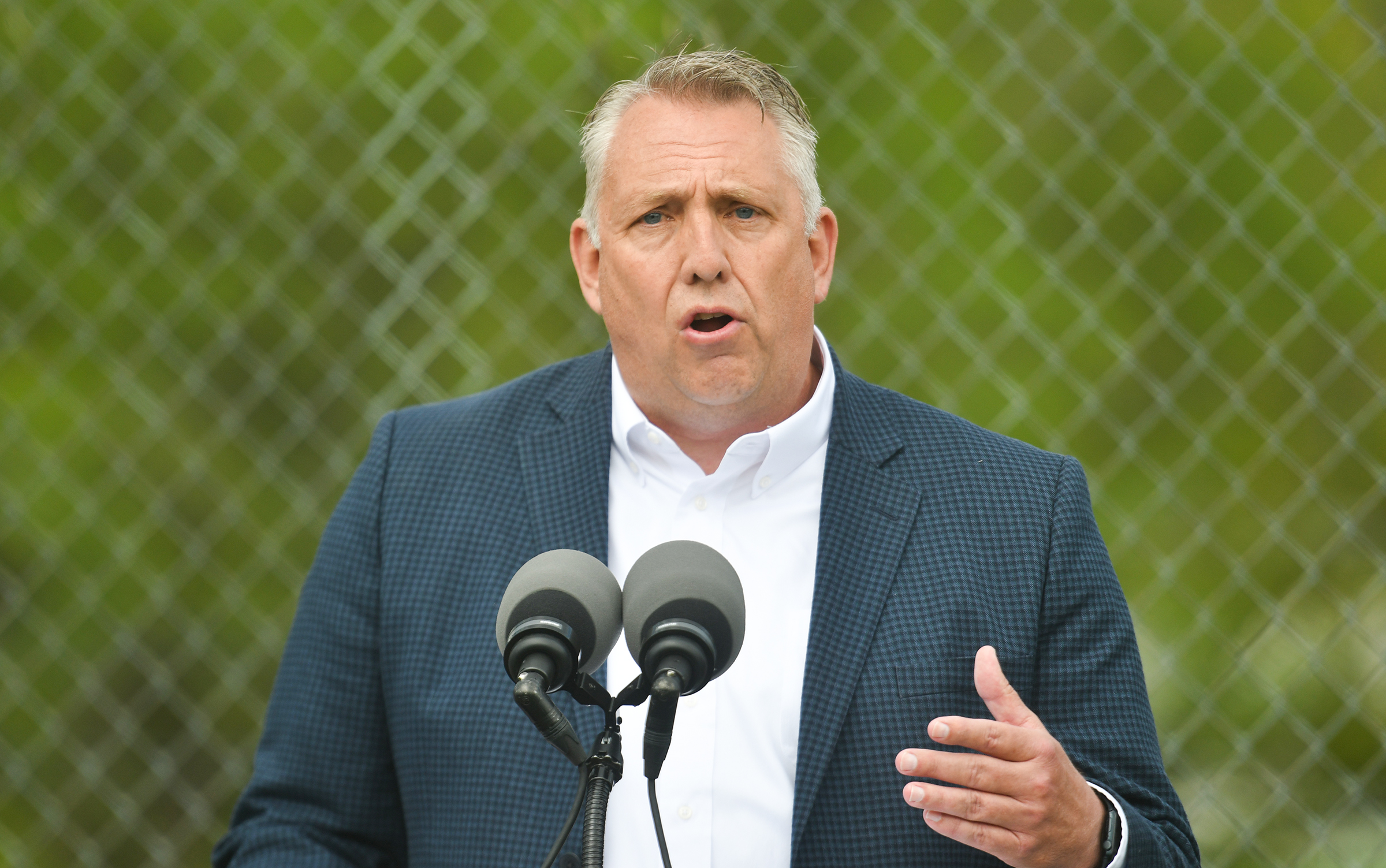
Pennsylvania Emergency Management Agency (PEMA) Deputy Director for Recovery Larry West speaks at the West Scranton Field Friday, April 17, 2026. (SEAN MCKEAG / STAFF PHOTOGRAPHER)
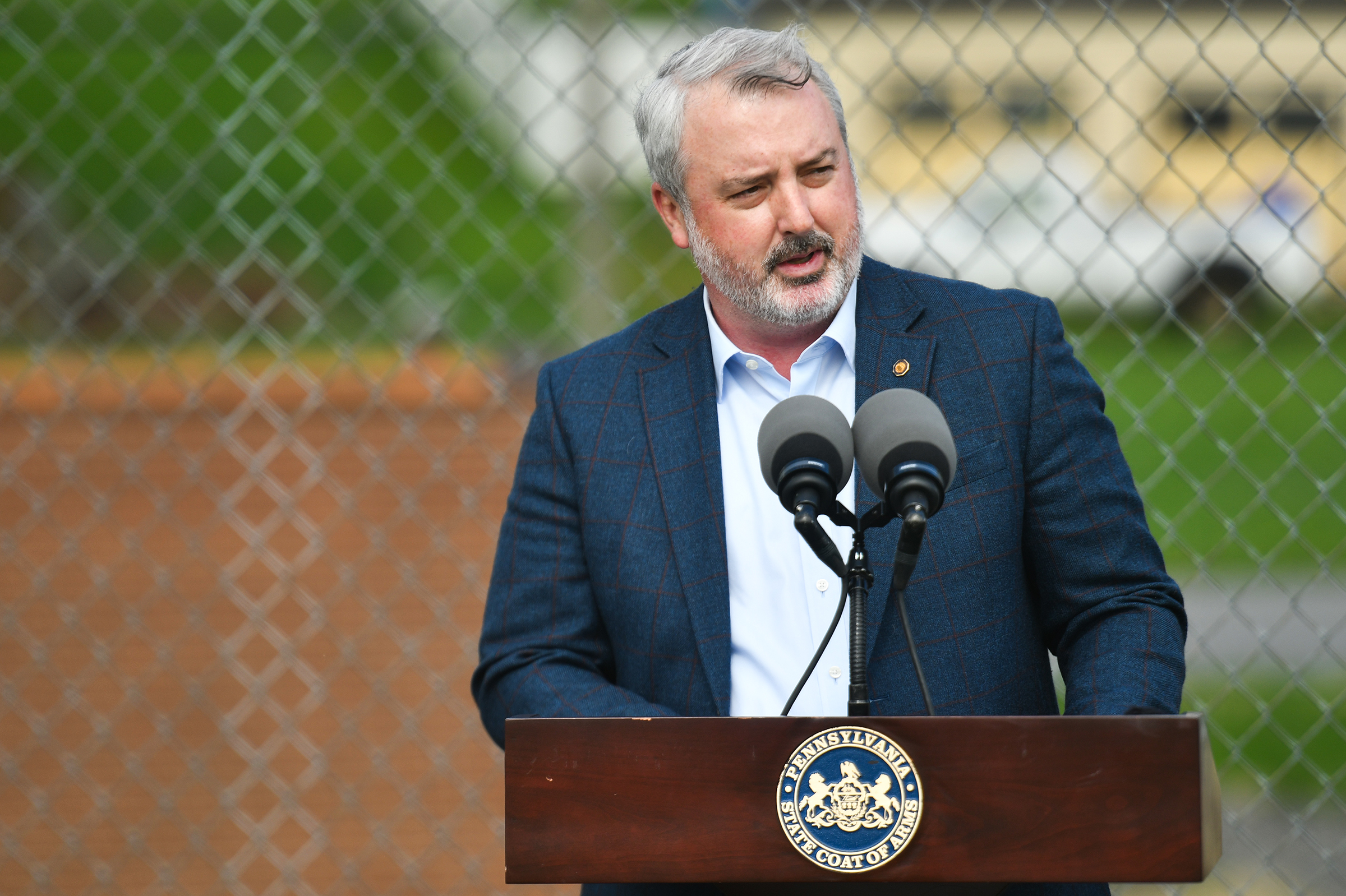
State Rep. Kyle Donahue speaks during a visit from Pennsylvania Emergency Management Agency (PEMA) Deputy Director for Recovery Larry West at the West Scranton Field Friday, April 17, 2026. (SEAN MCKEAG / STAFF PHOTOGRAPHER)
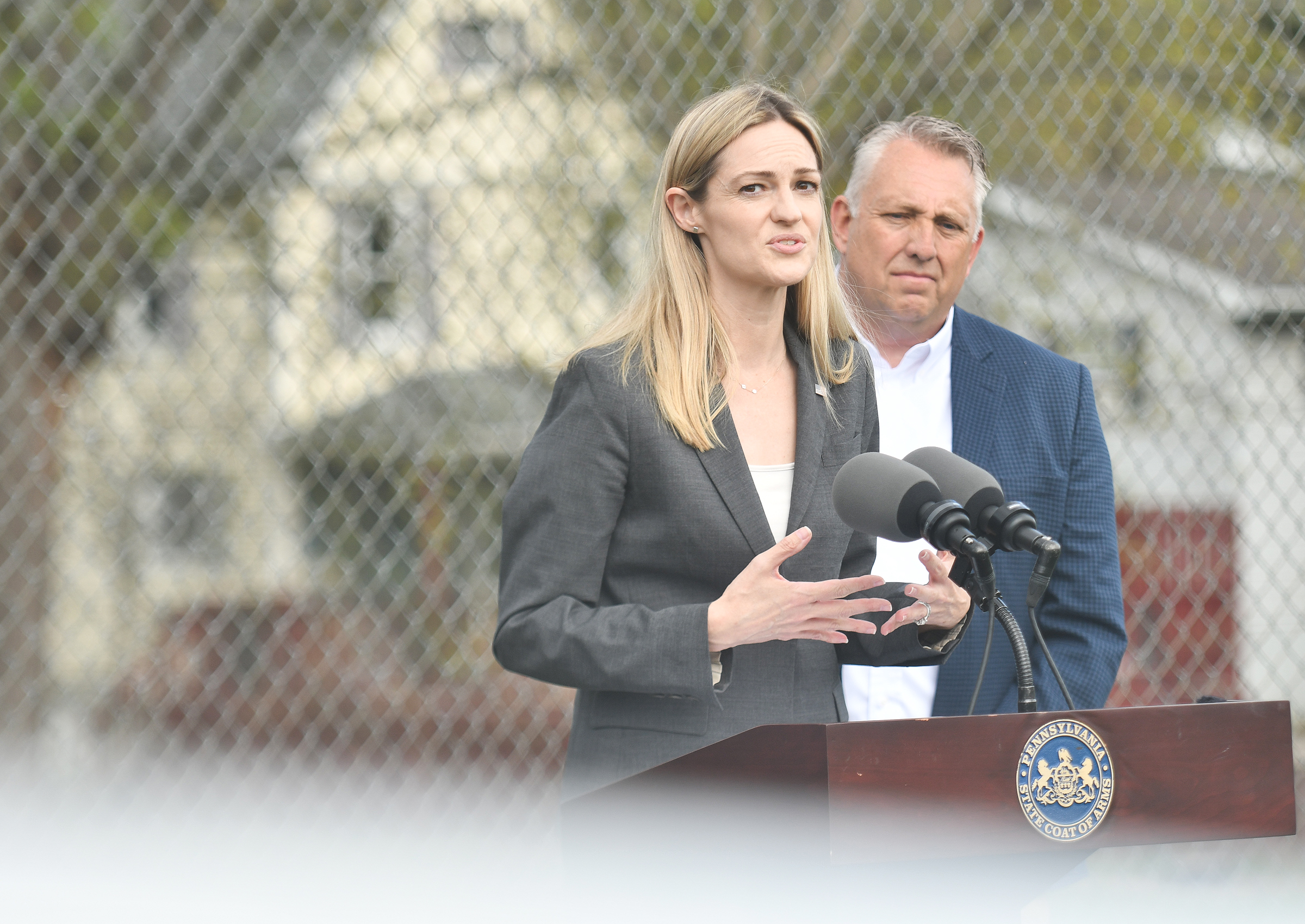
Scranton Mayor Paige Gebhardt Cognetti speaks during a visit from Pennsylvania Emergency Management Agency (PEMA) Deputy Director for Recovery Larry West, standing at right, at the West Scranton Field Friday, April 17, 2026. (SEAN MCKEAG / STAFF PHOTOGRAPHER)

State Rep. Kyle Donahue, center, speaks with Scranton Mayor Paige Gebhardt Cognetti and Pennsylvania Emergency Management Agency (PEMA) Deputy Director for Recovery Larry West at the West Scranton Field Friday, April 17, 2026. (SEAN MCKEAG / STAFF PHOTOGRAPHER)
Show Caption
1 of 4
Pennsylvania Emergency Management Agency (PEMA) Deputy Director for Recovery Larry West speaks at the West Scranton Field Friday, April 17, 2026. (SEAN MCKEAG / STAFF PHOTOGRAPHER)