
Adam Welsh
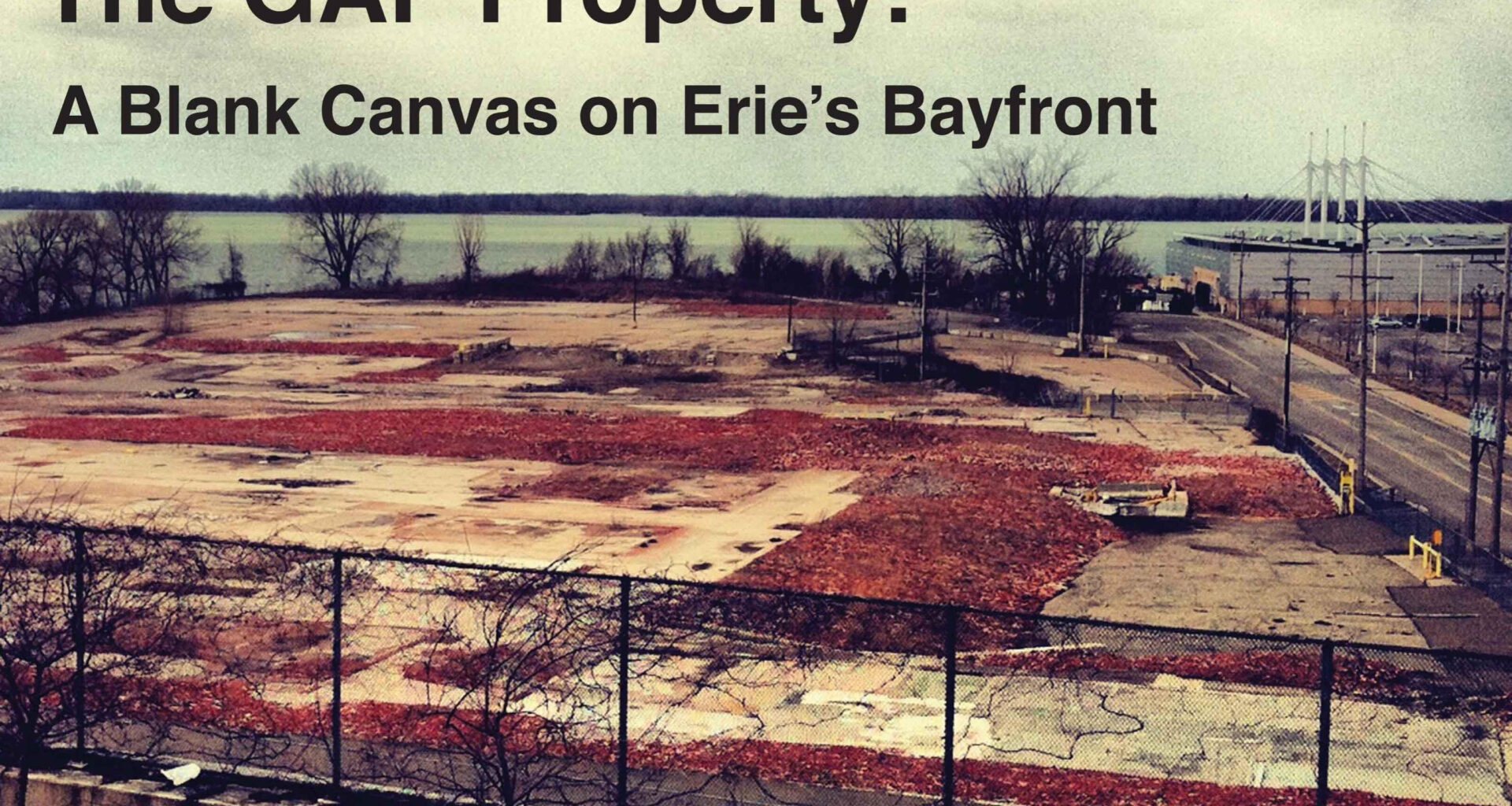
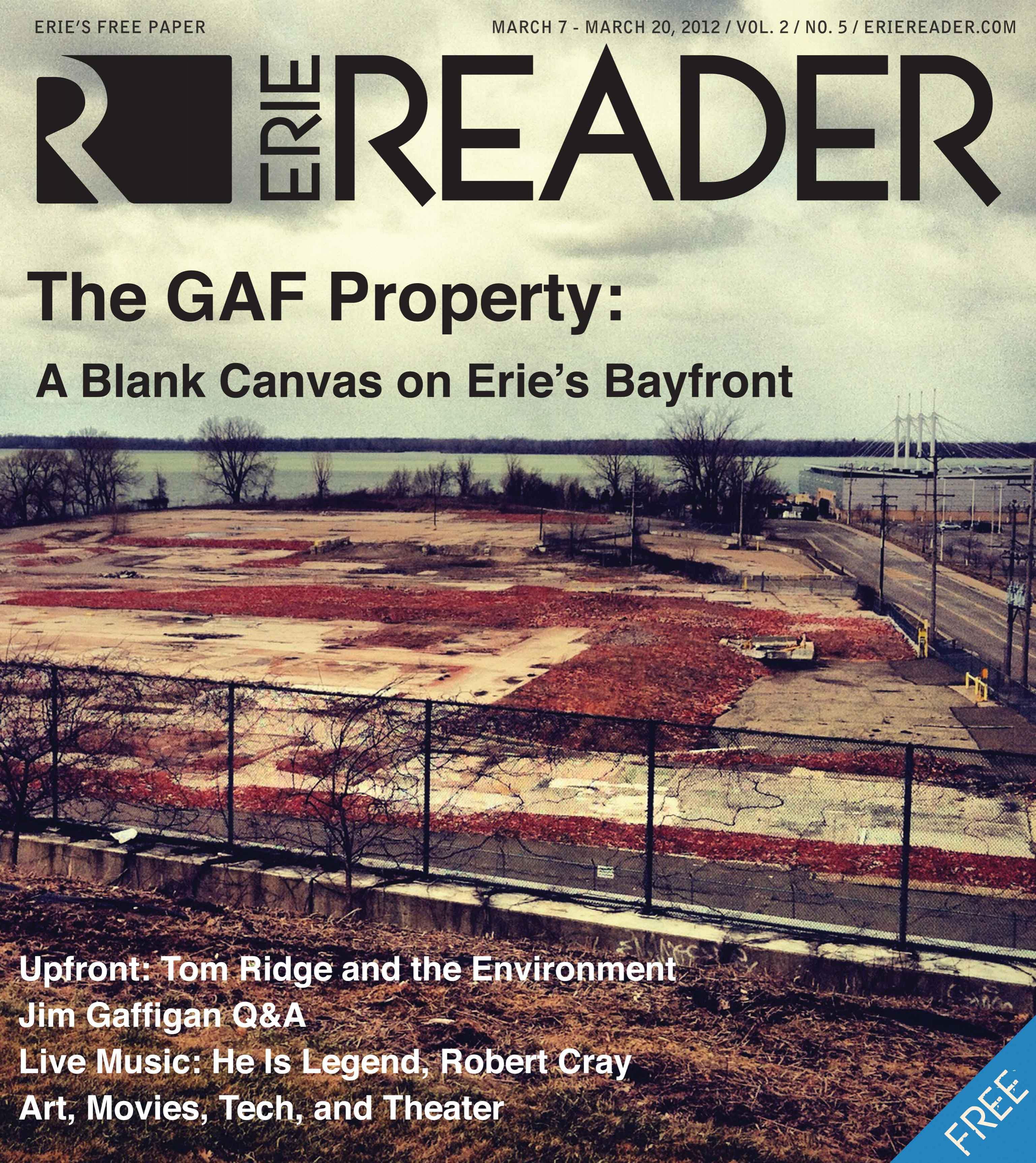
In an early issue of the Erie Reader, published in March of 2012 with this cover, Jay Stevens wrote a story initiating the conversation about the former GAF site and what the future of the Bayfront could look like. Fast forward to 2026 and plans are finally beginning to take shape.
After nearly 15 years of planning and false starts, the Bayfront Landing Market House will soon begin construction. The preliminary stages of the GAF site development were a big story at the Reader in 2012, and for good reason. The bayfront has gone through many changes in its lifetime, from being an industrial hub to becoming a destination for tourists, with a plethora of hotels and restaurants. The preservation of public-use spaces is a persistent topic in conversations about bayfront development. As Walter Rybka, senior captain of the Niagara, said to Erie Reader contributor Jay Stevens in 2012, “Once you decide to sell that land for private residents, you’ve basically given it away forever. You won’t get it back.” Over the past 15 years it appears the GAF site developers have been looking to create something that both Erie residents and visitors can enjoy.
“If you can create a destination that is attractive to both people visiting and is something that’s attractive to locals as well, that’s a powerful business model,” Executive Director of Erie Events Gus Pine said. “It becomes a keystone for the entire development of the bayfront.”
Located on a lot east of the previous GAF site adjacent to the Convention Center, the 7,000-square-foot public market will include Erie-made products and a variety of small vendors to make it what Pine calls, “authentically Erie.” I spoke to Pine about how the market house plan has evolved over time and what the Erie community can expect from the project.
The plan for the market house to be the cornerstone of the project wasn’t always popular. “Erie is a price-driven town,” Previous Chief Executive of Economic Development Corporation of Erie County John Elliott told Stevens in 2012, “and I’m not being negative. That’s just the way it is. This marketplace will have to be able to compete with Peach Street.” But it looks like Pine is not looking to compete with the big box stores of Peach Street.
Although the plans used to include a full-service grocery, Erie Events has since moved towards a public market that carries local products. “You’re not just relying on locals and you’re not just relying on visitors. You’re really attracting a huge demographic of people and we want to make sure it has connectivity.”
PennDOT plans to connect the bayfront and the city through their Parkway Project – these connections include an overhead pedestrian bridge from Holland Street and a sidewalk extension and improvement off of Sassafras Street, which will ultimately increase accessibility to the public market. Erie Events also decreased the building height from three stories to two, to help preserve the view of the bay. “It’s a natural environment that does not exist anywhere else in Pennsylvania, and you want to keep that in mind when you’re developing the bayfront,” Pine said.
Making it easier for small businesses to feature their products at the market is a priority. After touring the Meadville Market House, which has been open and evolving since 1870, Pine said he was inspired by their consignment model that includes shelf space for local products. The public market will follow a similar model. Instead of having the businesses occupy individual stalls in the space, they will rent out shelf space, eliminating the need for overhead costs and staffing. “We want to be more of a conduit for local products where the local business owners simply have to provide and update their inventory,” Pine said.
Erie Events is also interested in hosting farmers markets in all four seasons through partnering with local farmers and established local markets. “I [don’t want to] take away from what currently exists, but maybe make it a little more accessible to people who live downtown,” Pine said. The consignment model, Pine hopes, will also make the products more accessible in terms of price without the burden of overhead costs on the small business owner.
The second story, which will include 5,000 square feet of indoor space, is projected to be a rentable space for the community or local organizations for a “deeply discounted price.” Pine said that Erie Events aims to make it accessible and inclusive to the public. “We have to do a really good job of writing that policy so it’s very clear and very consistent.”
On April 15 the Bayfront Landing plan will be presented during the City Council meeting where constituents can share their input. In terms of what products will be available at the public market, the community will have a chance to weigh in as well. “The sky’s the limit,” Pine said.
Alana Sabol can be reached at alana@eriereader.com