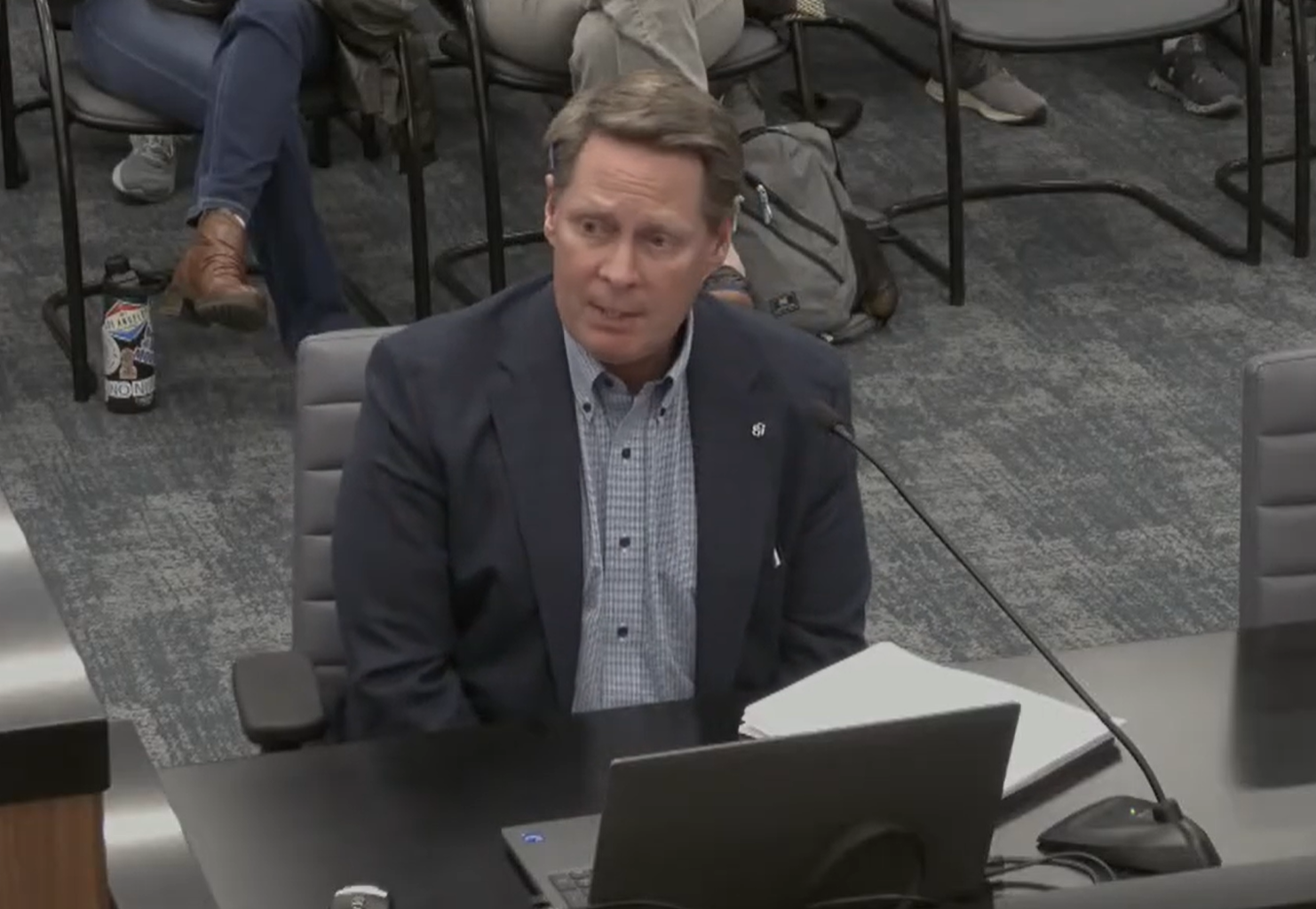
The Erie Town Council considered a major residential development and heard concerns from residents about new event permitting requirements during its April 14 meeting.
Council members held a public hearing on the Spring Hill preliminary plat, a proposed residential development north of Morgan Hill that would bring 632 housing units to roughly 300 acres.
Town staff said the project includes a mix of single-family homes, duplexes and townhomes, along with open space, trails and a future school site.
“The project area is designated […] as low density residential,” said senior planner Harry Brennan, noting the proposal aligns with the town’s comprehensive plan and falls within expected density ranges.
Plans for the development include approximately 35 acres of public open space, additional private open space and trail connections throughout the site.
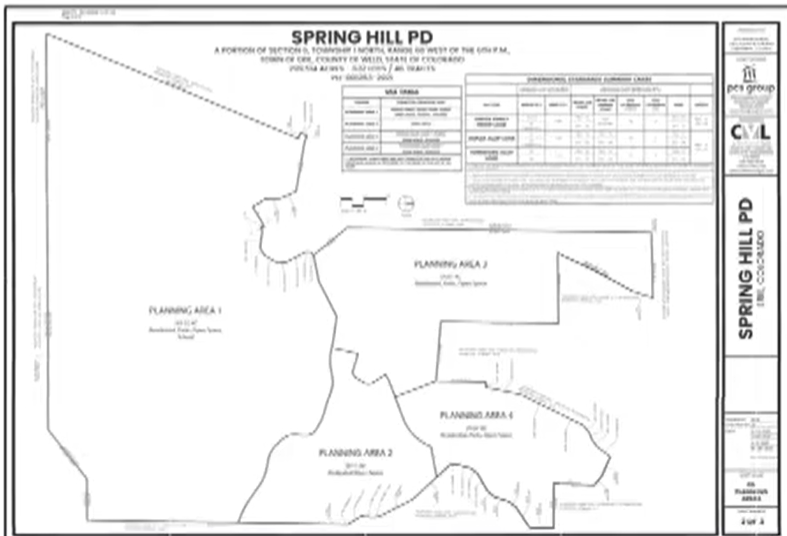
Planning Diagram Courtesy of the City
The project also requires continued remediation of at least one former oil and gas site before final approvals can be granted.
“The town would not be able to approve a final plat […] until the point where that cleanup is completed,” Brennan said.
The applicant, represented by PCS Group, emphasized that oil and gas operations would be removed from the property as part of the project.
“There will be no more oil and gas operations on this property,” said planner John Preswitch.
Following the hearing, council is expected to consider the proposal as it moves through the approval process.
Earlier in the meeting, council members approved a consent agenda that included a series of routine but wide-ranging municipal actions.
Items approved included intergovernmental agreements, infrastructure-related contracts and updates to town code, along with appointments and administrative approvals tied to ongoing town operations. The consent agenda also covered agreements related to public works and utilities, reflecting continued investment in infrastructure and maintenance as the town grows.
Council additionally adopted proclamations recognizing community initiatives and observances, continuing a pattern of formal recognition for local programs and national awareness efforts.
The approvals were passed unanimously without separate discussion, a common practice for items considered non-controversial or administrative in nature.
During public comment, several residents raised concerns about new permitting requirements affecting community events, particularly the Erie High School senior parade.
Residents said they were recently informed of a 90-day permit requirement and changes to support from town departments, creating uncertainty for an event that has traditionally been organized by volunteers.
“We’re just asking for that to be waived so we can meet the requirements for the new permit,” said Adrienne Hillary, who is helping organize the parade.
Kate Arnold, vice president of the Erie High School Booster Club, said the changes have strained relationships between volunteers and town staff.
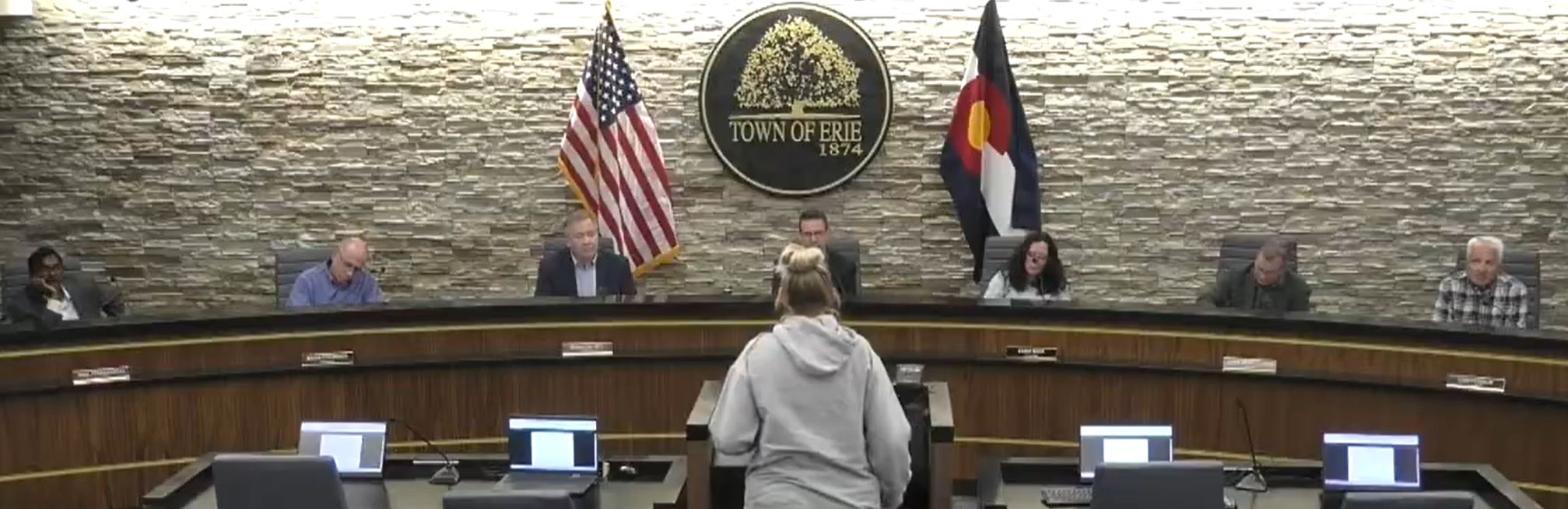
Kate Arnold addressing the council.
“The relationship between our town administration and the volunteers […] has become unnecessarily adversarial,” Arnold said.
Arnold added that increased requirements risk discouraging community participation.
“It feels very much like we are effectively being discouraged from building the community ties that keep our youth engaged,” she said.
Jessica Ferman, who is organizing the school’s after-prom event, said communication about the new requirements has been inconsistent.
“If you put these kind of processes in place, you need to advertise it and you need to let us know,” Ferman said.
Other speakers urged the council to waive the 90-day requirement for this year’s parade and provide clearer guidance for future events.
Additional public comment addressed broader concerns, including communication with diverse communities and the importance of multilingual outreach in the face of ICE presence in the community.
Like journalism like this? Consider becoming a sustaining supporter — and get our print edition delivered to your home each month.
Democracy needs journalism more than ever. For 25 years, we’ve told the truth — your support helps us keep doing it for the next four and beyond. Administrations come and go. Our team stays ready to lead, no matter who’s in charge.