
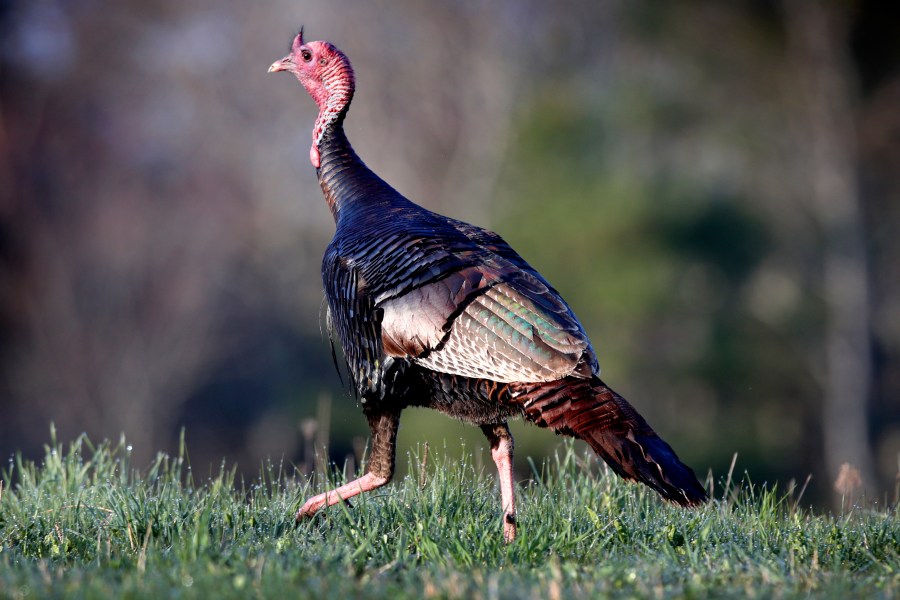
PENNSYLVANIA (WTAJ) — Pennsylvania’s spring gobbler season kicks off this May after a historic 2025 season that saw an estimated 42,543 birds harvested, the largest spring turkey harvest in the last five years.
The season starts on Saturday, April 25 with a one-day hunt for junior license holders and mentored hunters 16 and younger. The statewide spring turkey season opens a week later, with hunting hours from one-half hour before sunrise to noon from May 2-16 and one-half hour before sunrise to one-half hour after sunset.
Hunters are limited to one gobbler with a general license, though they can purchase a second spring gobbler tag by May 1 to take a second bird, but never more than one per day.
PA Game Commission announces 2026-27 hunting, trapping bag limits
There is no Sunday hunting for spring gobblers this year; however, the Pennsylvania Game Commission approved the 2026-2027 hunting seasons earlier this month, which will allow Sunday hunting in 2027.
Pennsylvania’s statewide turkey population has grown in recent years and harvests have risen accordingly. In 2025, the statewide average of 5.46 gobblers taken per 100 days was higher than both the latest three-year (5.21) and five-year (4.72) averages, demonstrating hunter productivity and a healthy turkey population.
The Game Commission tracks turkey productivity through a poults observed per hen ratio, measuring the number of new young birds produced. In 2024, every Wildlife Management Unit across the state saw a poult-to-hen ratio higher than 2.0, with a statewide average of 3.22
“Those males that hatched in 2024 will be 2-year-old gobblers this spring season, which should make for some great turkey hunting,” said Game Commission turkey biologist Reina Tyl.
Get the latest news, weather forecasts and sports stories delivered straight to your inbox! Sign up for our newsletters.
Nearly one in four hunters, 23%, harvested at least one gobbler last year. Tyl said hunters can increase their odds through scouting popular roost sites near field edges and forest openings like logging roads, which also increase their odds of being seen.
“Looking at topographic maps, land cover maps and satellite imagery can be a great way to identify possible roost locations and fly-down areas,” Tyl added. “But putting in the work on the ground to confirm where gobblers are roosting and to locate their preferred displaying areas will take guesswork out and increase your odds of success.”
Copyright 2026 Nexstar Media, Inc. All rights reserved. This material may not be published, broadcast, rewritten, or redistributed.
For the latest news, weather, sports, and streaming video, head to WTAJ – www.wtaj.com.