
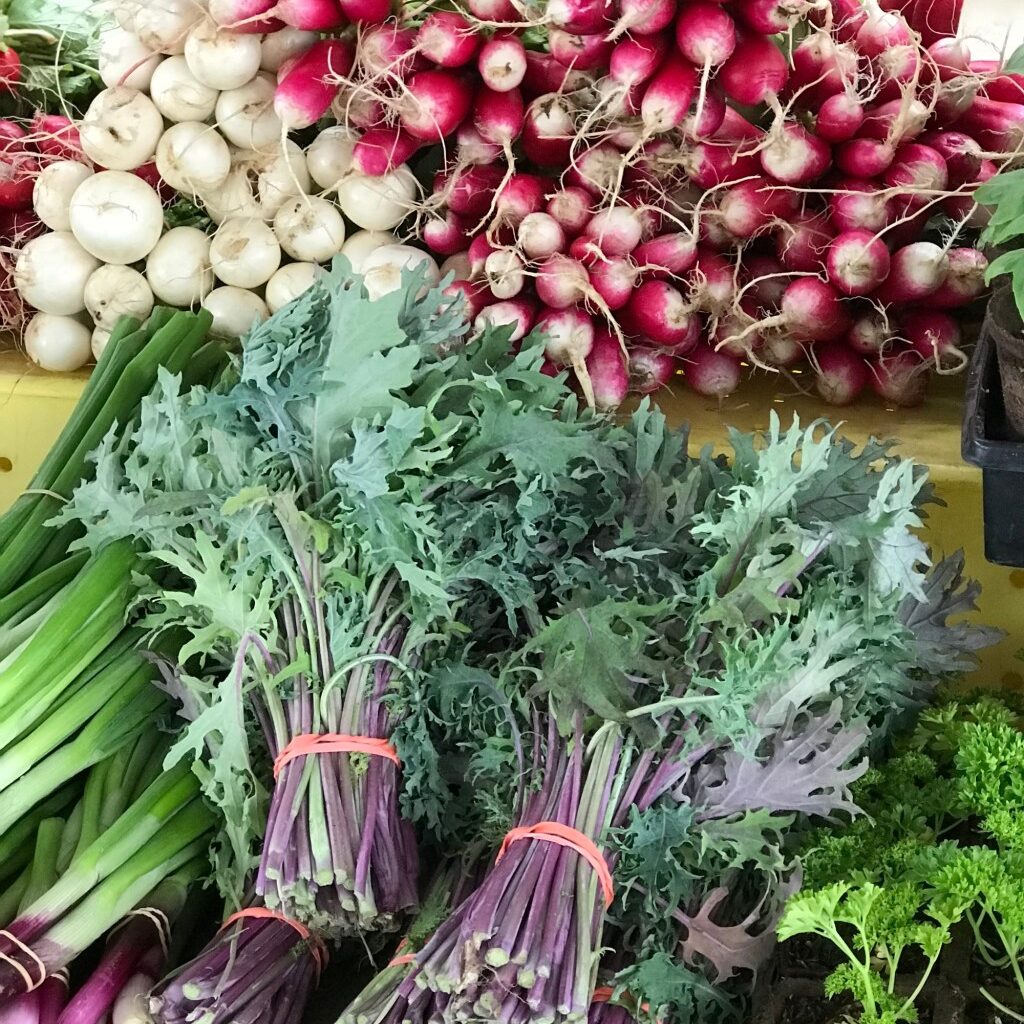
As Earth Day arrives, it invites us to reflect on the everyday choices that shape the health of our planet. One of the simplest and most impactful shifts we can make is where we shop for our food. West Reading Farmers Market offers more than fresh produce and handmade goods. We represent a powerful community-centered approach to sustainability that aligns deeply with the spirit of Earth Day.
At the heart of the West Reading Farmers Market is the concept of local food. All items sold at a market are grown or produced within a 50-mile radius of the market. We only host producers who grow, raise, or create their products. This drastically reduces the need for long-haul transportation, cutting down on fossil fuel use and greenhouse gas emissions.
In contrast, food in conventional grocery stores often travels thousands of miles before reaching the shelf. Choosing local means reducing your carbon footprint with every meal.
Farmers markets also support environmentally responsible farming practices. Many small-scale farmers prioritize soil health, biodiversity, and regenerative techniques over industrial methods. They are more likely to use compost, crop rotation, and natural pest management rather than synthetic chemicals.
These practices not only protect local ecosystems but also contribute to healthier, more nutrient-dense food. When you shop at a farmers market, you’re investing in land stewardship and the long-term vitality of the Earth.
Another key element of sustainability is reducing waste, and the West Reading Farmers Market excels in this area. Produce is typically sold without excessive packaging. No plastic clamshells or shrink wrap required. Shoppers are encouraged to bring reusable bags, baskets, or jars, creating a low-waste shopping experience.
Additionally, because food is harvested closer to peak ripeness and sold quickly, there is less spoilage compared to items that sit in storage or transit for extended periods.
Beyond environmental benefits, farmers markets strengthen local economies. Every dollar spent goes directly to farmers, growers, and artisans, helping sustain small businesses and family farms. This creates a ripple effect, as those earnings are often reinvested within the community.
Supporting local agriculture ensures that farmland remains productive and protected from development, preserving green spaces and agricultural heritage for future generations.
Farmers markets also foster a deeper connection between people and their food. Meeting the farmer who grew your vegetables or the baker who made your bread brings a sense of transparency and trust that is often missing in larger retail settings.
It invites conversations about seasonality, growing methods, and food preparation, encouraging more mindful consumption. This awareness naturally leads to less waste and a greater appreciation for the resources that go into each meal.
Earth Day is ultimately about recognizing our interconnectedness with the land, with each other, and with future generations. Shopping at the West Reading Farmers Market embodies this awareness in a tangible way. It transforms a routine errand into an act of care. Care for the soil, care for local livelihoods, and care for the health of our communities.
In a world where sustainability can sometimes feel overwhelming or abstract, farmers markets offer a grounded and accessible place to begin. This Earth Day, consider making your way to a local market. With each purchase, you’re not just buying food, you’re participating in a system that nourishes both people and the planet.
To bring the spirit of sustainability into your everyday life, consider spending your Sundays at the West Reading Farmers Market, located right along Penn Avenue. Open weekly, this producer-only market features farmers and artisans, offering everything from seasonal produce and pasture-raised meats to fresh flowers, baked goods, and handcrafted products.
Kendra Giangiulio is the manager of the West Reading Farmers Market.