
$40,000 in attorney fees and 20 visits from the PSPCA have not conquered the stench that is ruining their lives. “I don’t want to live like this,” says their neighbor, the cat owner.
Get a compelling long read and must-have lifestyle tips in your inbox every Sunday morning — great with coffee!
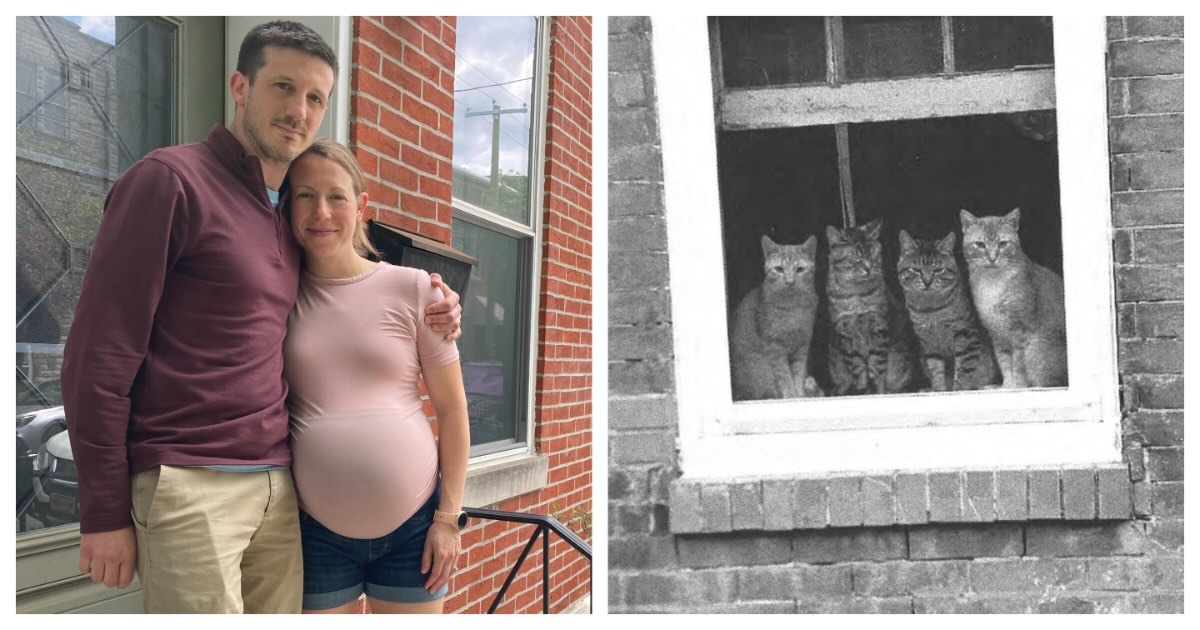
Left: William and Valerie Cowan outside their South Philadelphia home (photo by Victor Fiorillo) | Right: Just some of the cats next door (photo via court exhibit)
William and Valerie Cowan have a lovely home in the East Passyunk neighborhood of South Philadelphia. It’s tastefully decorated. It’s lovingly appointed. The three-bedroom house, which they share with their toddler and will soon share with a newborn, is immaculately clean. There’s just one problem: it smells like cats — a lot like cats, a lot like a lot of cats — as I discovered when I did a walk-through last Friday.
“It’s been quite horrible,” says Valerie, who works as a nurse practitioner in the medical ICU at Jefferson. “I’m trying to sleep at night, which is already hard enough at nine months pregnant, and the smell upstairs in our master bedroom has been unmanageable.”
It’s not much better elsewhere in the home, where that unmistakable ammonia scent (as well as some other animal-like odor that clings to your tongue) hits you as soon as you walk through the door. I could only last about five minutes before walking outside to get fresh air.
The source of the foulness is inarguably the cat situation next door to the Cowans. Their immediate neighbor to the south, with whom they share a wall, has a history of keeping numerous unspayed and unneutered cats inside in unsanitary conditions, a history that began in full force during COVID. They roam the streets, they pile into the windows, they make noises at all hours that the neighbors can hear and, yes, they pee and poop pretty much everywhere they can, leading to that aforementioned and most unwelcome aroma.
According to the Cowans, they didn’t notice anything odd in the air when they toured their house before moving from Queen Village in 2020. But that soon changed, and the scent became inescapable by the summer of 2024. The smell permeated their entire house, and flowed out freely onto the street. The Cowans soon noticed hundreds of flies in the neighbor’s windows. This fly problem quickly became their fly problem, and they estimate that they killed close to 850 inside their home during the summer of 2025. They actually used a white board to keep track:
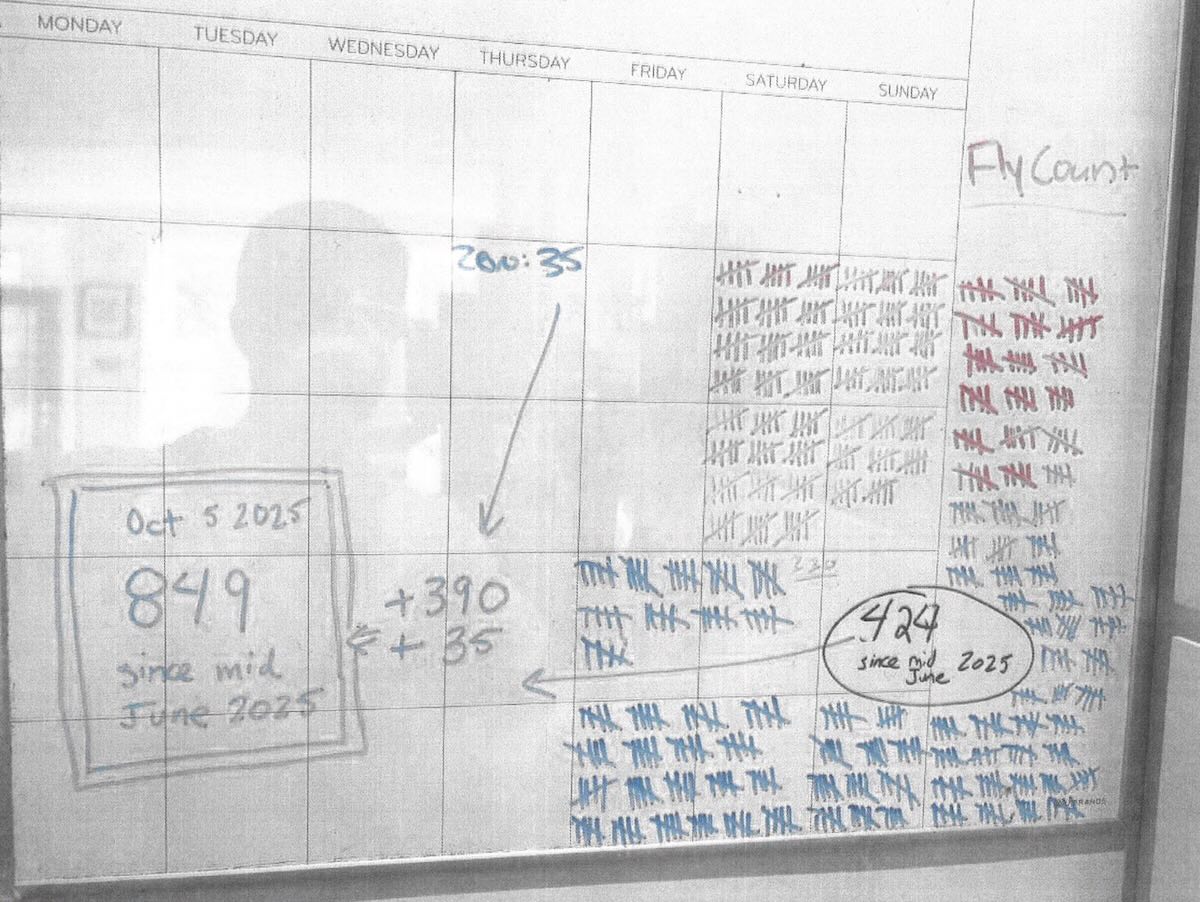
(photo via court exhibit)
The Cowans reached out to the neighbor to try to find a resolution. She was apologetic and told them that she was trying to come up with a solution. But the cats remained and seemed to grow in number. The stench persisted. In March 2025, the Cowans’ daughter, Clare, was hospitalized for days due to a bacterial infection; during her recovery at home she had a compromised immune system, which alarmed the couple given the unsanitary conditions next door, as they expressed to their neighbor.
As the neighbor (who we’re not naming) tells it, she began taking in cats during COVID and, at one point, agreed to take a pregnant cat from a friend. A series of deaths in her family and the sense of isolation during COVID led to the deterioration of her mental health, she says, and her home and housekeeping deteriorated right along with it. Things just unraveled.
The Cowans say they have lots of sympathy for her – it’s kind of impossible not to – but at the end of the day, their house stinks and they want something done about it. So the couple called the Pennsylvania Society for the Prevention of Cruelty to Animals (PSPCA). According to PSPCA spokesperson Gillian Kocher, the organization’s Animal Law Enforcement division has been out to the home 20 times and removed more than 40 cats.
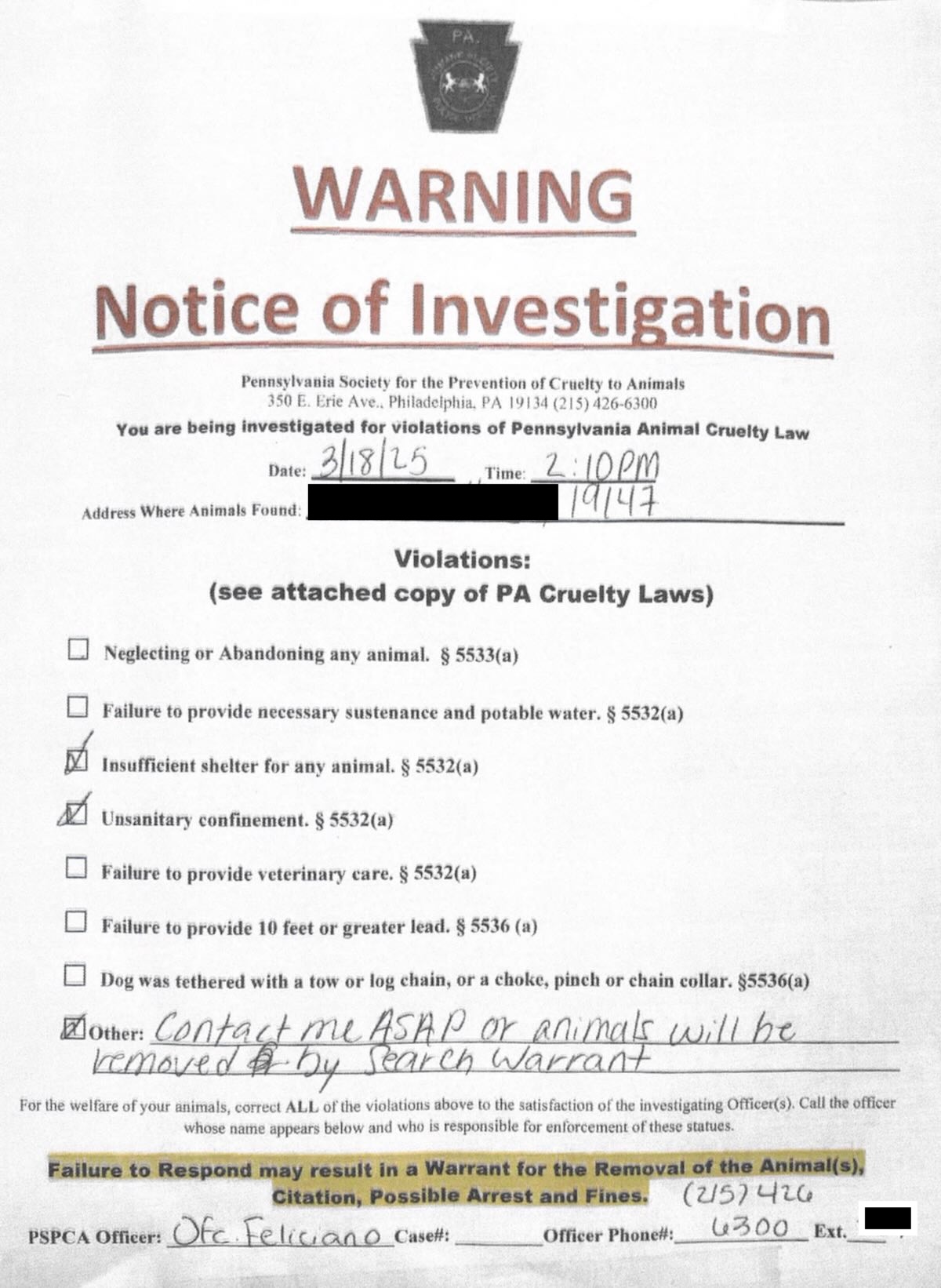
Screenshot
“However, due to the physical condition of the home and the cats’ ability to hide within the structure itself, we are unable to safely capture them without the owner’s commitment to using humane traps or making structural changes to prevent cats from moving between floors and wall spaces,” Kocher explains.
The cat owner concurs that there are holes and other problems with the home that make it possible for the animals to evade capture, but she insists that she’s been fully cooperative with the PSPCA officers.
The Department of Licenses & Inspections has also paid the home multiple visits, starting in the sticky summer of 2025. Since then, inspectors have issued more than 20 violations. In March, inspectors noted several issues, from the “storage of combustible rubbish” to the presence of “cat feces and urine” to “an unpleasant smell throughout the property… that is also affecting the neighboring properties” to structural problems.
Then there is the lawsuit. Last summer, the Cowans hired an attorney to take their neighbor to court; the neighbor is representing herself, telling me that she cannot afford to hire an lawyer. The suit, filed in Philadelphia Common Pleas Court in August, argues that the neighbor’s actions or lack thereof have made their home virtually uninhabitable, citing “noxious” odors.
“The odor and resulting conditions constitute a real, substantial, and unreasonable interference with [the Cowans’] use and enjoyment of their property,” reads the suit. “The harm suffered is more than a slight inconvenience or petty annoyance, and would be found offensive, seriously annoying, and intolerable to a normal person living in the community.”
The attorney also collected affidavits from three other neighbors attesting to the problems at the home.
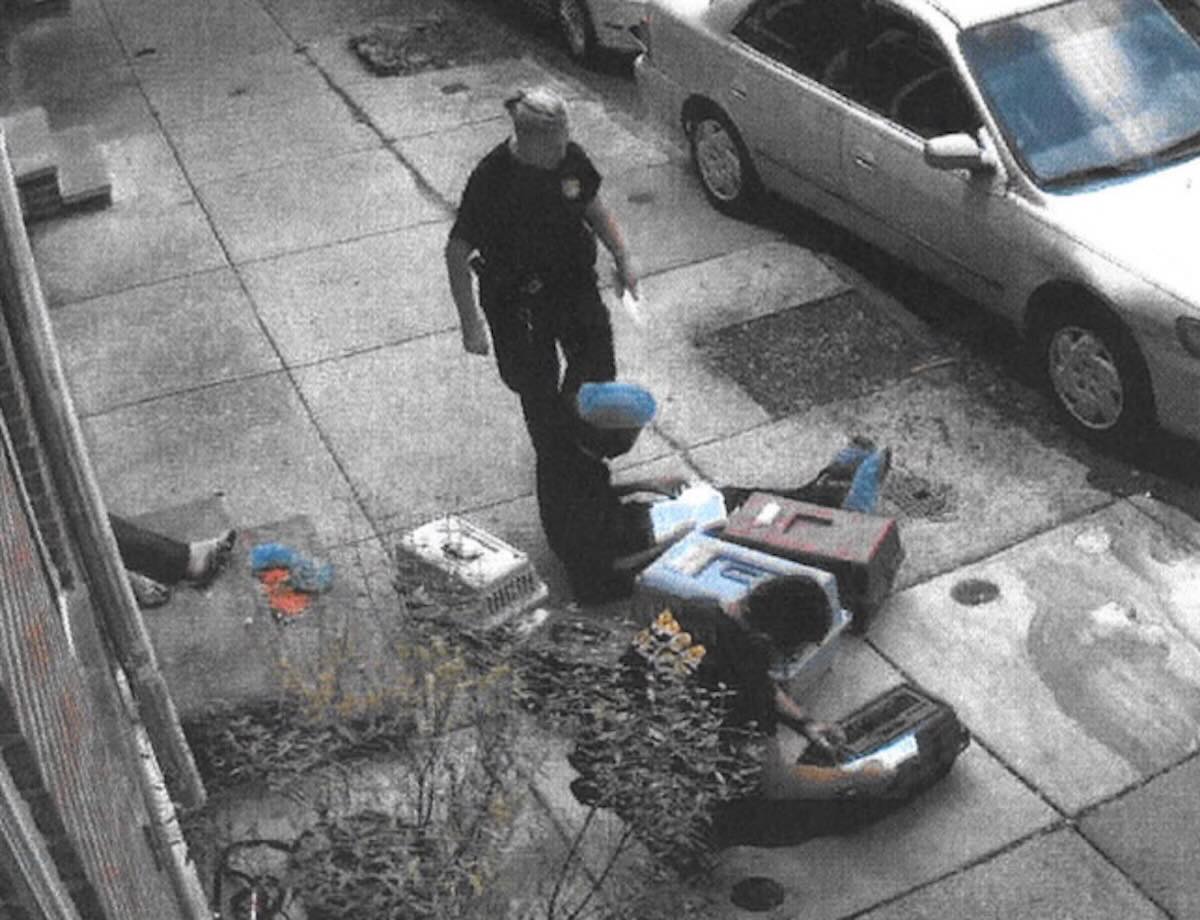
A PSPCA rescue operation at the cat owner’s South Philadelphia home (image via court exhibit)
One said that she could see multiple cats in the home’s windows “crawling on top of each other,” as the affidavit reads. “It seems to me like they were trying to access the fresh air … Kittens were continuously in the windows, which makes me believe that the cats inside were breeding.”
“I am concerned about my ability to sell my home given the persistent odor,” wrote another. “I am also concerned about the welfare of [the] cats. I do not believe that living in a row home in the city is a place where someone can keep 20 or more cats … or take care of them in a way that they deserve.”
The suit sought not monetary damages against the cat owner but rather an injunction against her, preventing the offending activity. On March 11th, the judge granted the injunction and ordered the neighbor to contact the PSPCA within five days to arrange for the surrender of all of the cats in her home. They also gave her 30 days to hire a professional cleaning company “certified to clean biohazardous waste” to properly clean, sanitize and remediate the property. After said remediation, the judge said that she could possess a maximum of two cats and that they must be spayed and neutered.
It’s been more than a month, and the Cowans’ neighbor still hasn’t surrendered all of the cats in her home. She tells us that she has eight. I saw two in her windows.
She also hasn’t hired a company to clean the house, claiming that she’s received estimates close to $10,000, money she says she just doesn’t have. (The Cowans say they have offered to contribute to the cost of cleaning.)
“I don’t want to live like this,” the neighbor says. “But I don’t know what to do. I have no one who can help me.”
I asked William how he plans to proceed, given that she’s in clear violation of the judge’s order.
“We can hold her in contempt, but like, what are we gonna do?” he said, noting that they’d already spent about $40,000 in legal expenses. “Fine her, and then she’s not going to pay? Our lawyer said, ‘You could pay for the cleaning,’ and I’m like, oh great, another $10,000? How do we even get into her house to clean. How does that even work?”
Valerie is due on May 14th and says she’s concerned about how the ongoings might be affecting her pregnancy. “I’m not having direct contact with the cat urine or feces,” she notes. “I think the biggest health concern is actually more the stress that the whole ordeal will put on my body and the baby, how the stress impacts the developing pregnancy.”
So what’s left to be done? Perhaps the only thing that can reasonably be done: move.
“We are considering leaving,” William says. “We’re meeting with a realtor to try to figure out our options. But we love our house. It’s a block away from the elementary school. Our plan was to raise our kids in the city. We don’t want to move, we’re trying to fight it as much as possible.”