
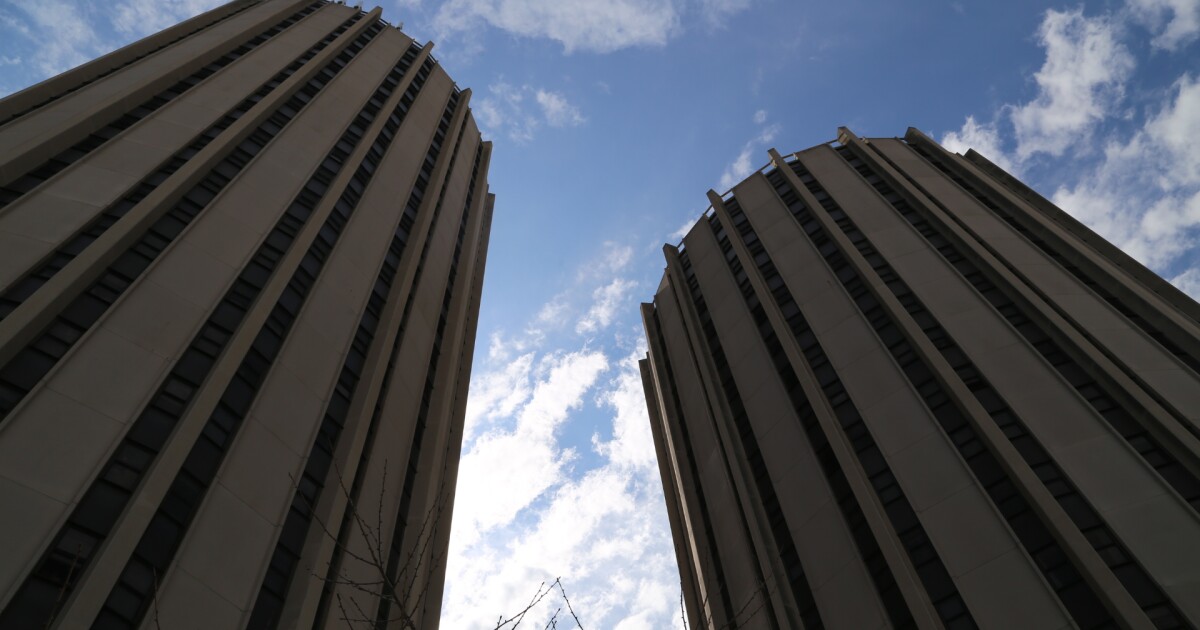
The recent enrollment increase at the University of Pittsburgh is squeezing the student housing supply.
Incoming first year students this fall will be guaranteed housing for two years. Previous classes were assured housing for three years.
The class that started in fall 2025 is Pitt’s biggest on record at 5,870. This fall could see 5,200 first year students at Pitt, still higher than the 4,589 who started in fall 2024.
This academic year, the university had to lease three buildings and reconfigure dorms to add 700 beds for students, bringing its total beds offered to more than 8,000.
Pitt is moving forward with plans to build a 400-bed dorm near its music building on Fifth Ave. If it gets final approval, the building could be ready to welcome students in 2028.
“We are trying to meet demand in a way that makes sense, that is sustainable for the university and that meets both our institutional goals, as well as what a student wants in terms of the type of housing and amenities they’re looking for,” said Pitt housing director Kathleen Kyle.
Kyle said the school is working to make sure students have a positive experience.
“ The last thing you want to worry about is where you lay your head at night,” Kyle said. “They’re here for academic pursuits and we want to support those academic pursuits.”
Gauging how many students want to live in campus housing is an art, not a science, Kyle said. All students eligible for guaranteed housing are given a lottery number, which determines when they can choose a room. A high lottery number is not necessarily bad, said Kyle, because it’s unknown how many of the students with lower numbers will actually complete their application for housing.
University housing options vary in cost, depending on location and amenities. Faced with a higher-priced room in Pitt housing, students may opt to rent off-campus, which comes with its own challenges.
Maryn Dubay, a junior who chairs the Renter’s First ad-hoc committee on Pitt’s Student Government Board (SGB), said the rental market is very competitive.
“I know people that were going on house tours in October of their freshman year,” Dubay said. “At that point, you barely have a group of friends, let alone people that you want to commit to living with for a year.”
Dubay said the competition for university and off-campus housing is not sustainable. It’s stressful, she said, and the quick turnover between tenants in rentals can lead to the properties falling into disrepair.
She said students who are navigating the rental market for the first time often don’t know what to look for and can be taken advantage of by landlords.
“ A lot of times people don’t know if they’re renting conditions or situation is normal because they don’t have a point of reference,” Dubay said.
The committee she leads offers advice and resources to students as they look for housing, such as a document that details how to read a lease. She also encourages students to talk to each other about what they pay in rent and to document all communications with their landlords in writing.
Kyle said Pitt’s Student Affairs Office also has resources for off-campus living. Panther Central has staff 24 hours per day who can answer questions about on-campus housing.
SGB launched the “Rate Yinz Landlord” website this year, to give students another tool when evaluating where to live.
Dubay said it’s meant to start a conversation about housing conditions and let students know they’re not alone.
“ Everyone deserves a safe and healthy place to live,” Dubay said.