
Philly Builds is a guest post series profiling local founders and sharing why they chose Philadelphia as the place to launch and grow their startups. This edition is by Erin Feeney, president and chief product officer of InContext Solutions and co-organizer of the workgroup Philly Tech & AI Alliance.
When Lilly Chen talks about building a tech company in Philadelphia, she doesn’t start with fundraising, disruption or scale.
She starts with bagels.
From her office, the founder of FSH Technologies can walk to a neighborhood bagel shop and point out businesses along the way that have used her company’s platform. She knows some of the owners. Sometimes they email her directly. Sometimes they share an observation she also feels: City government has never felt this easy to navigate.
For Chen, that’s the point.
“Getting your first government contract is a difficult task … nobody ever got fired for buying IBM.”
Lilly Chen, FSH Technologies
After moving her company from San Francisco to the Philadelphia region during COVID, the former Meta AI infrastructure engineer found more than proximity to family on the Main Line. She found a city whose startup culture felt more grounded, more civic-minded and more aligned with the kind of company she wanted to build.
FSH Technologies operates in the govtech space. It’s not an easy market for startups. Government contracts move slowly. Procurement is complicated. Institutions tend to trust established vendors over young companies.
“Getting your first government contract is a difficult task,” Chen said, “because nobody ever got fired for buying IBM.”
Chen said FSH’s early traction was shaped by a local network of civic leaders, public-sector veterans and advisors who did more than offer encouragement. “The advisors we got on our board were so hands-on,” she said. “We meet in person. They do legitimate work for us.”
That support helped FSH break into a heavily relationship-driven sector. But it also reinforced something Chen had already begun to realize: Philly was a better cultural fit.
Building for real people, solving real-world needs
When she was in big tech, Chen often felt like projects were driven by frontier technology for its own sake. The work was advanced, but the mission was fuzzier. She could help move a number up or down on a quarterly dashboard without feeling any real connection to what that change meant in people’s lives.
“I think the people here care so much about how we deliver better services to real people,” Chen said. “That changes the process of building technology.”
She also has a clear-eyed view of how AI is changing the startup equation.
“AI makes the coding part easier,” she said. “So really, the hard part is now the ‘company’ part of a tech company as opposed to the ‘tech’ part of a tech company.”
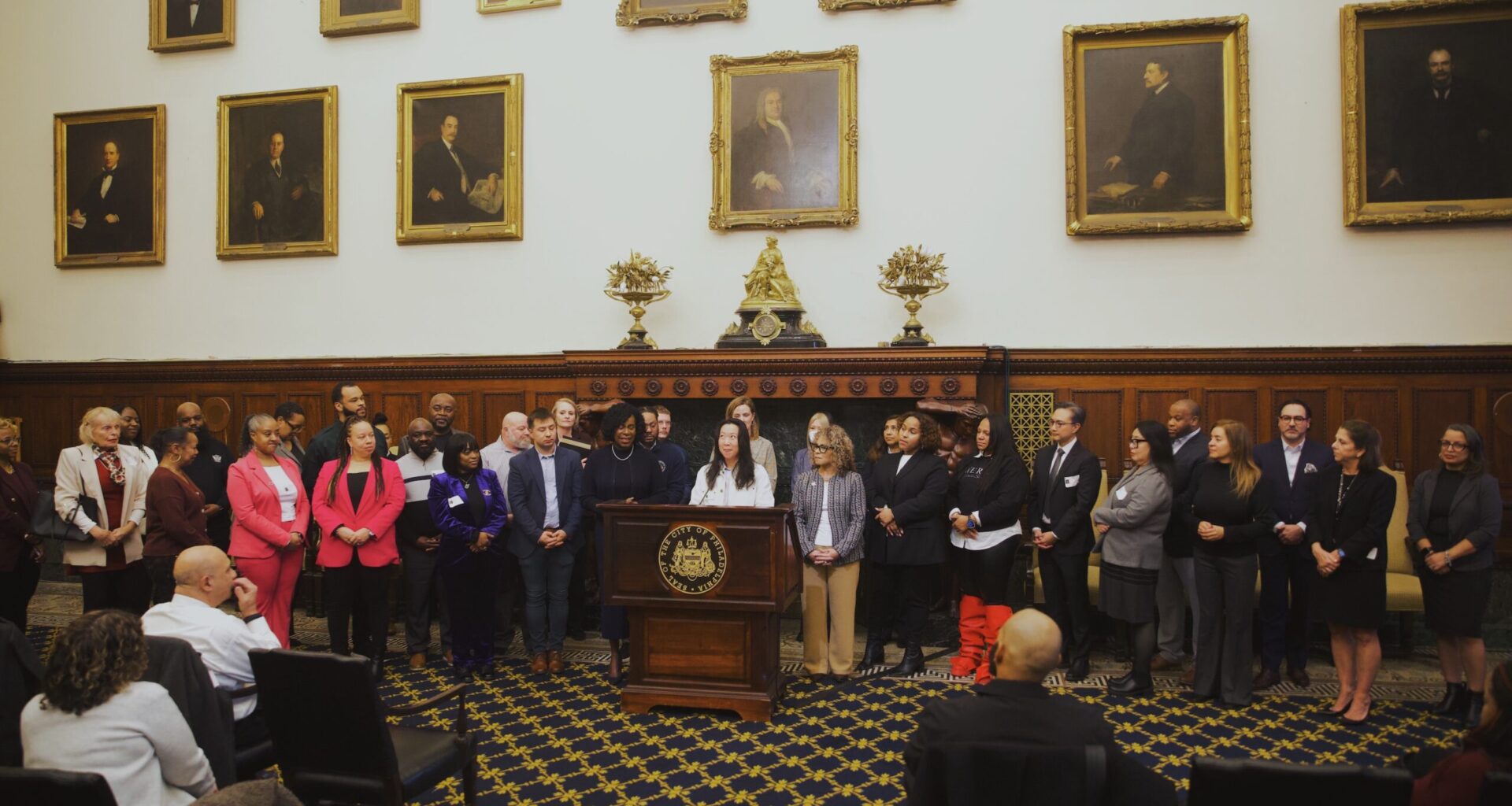
One of FSH’s projects supports the Philadelphia Department of Commerce’s small business programs as part of the mayor’s Open for Business initiative. When a law changed and required some local businesses to begin paying a city tax they hadn’t previously owed, the city needed a way to help owners adapt quickly. That was especially urgent for first-time filers, immigrant-owned businesses and operators who don’t speak English as a first language.
Chen said FSH and the city stood up a support program in just one month. Within the program’s first month, it served more than 1,000 businesses in 12 languages. More than 85.2% of those businesses were first-time filers. More than 73.1% were located in areas with low and moderate median incomes.
“Typically, for city services, your hope is that you can launch in your first year within 12 months,” Chen said. “You typically launch in just English. You typically launch on paper.”
For her, the point is not just that the program moved fast. It is that it moved differently.
At Meta, Chen said, success often meant improving a metric with little visibility into who felt the impact. At FSH, the connection is immediate. A small business owner avoiding a late fee is not a dashboard abstraction. It is rent. It is payroll. It is family stability. That closeness to the outcome is part of what keeps her rooted here.
“I’ve had people email me out of the blue and say, ‘I want you to know I’ve never had an experience with city government that was easy,’” she said. “There’s nothing more meaningful than that.”
She feels like Philadelphia is not obsessed with hype for hype’s sake. That it’s a place where a founder can be pushed to answer a harder question: Who actually needs this, and will it make their life better?
For Chen, that is the opportunity.