
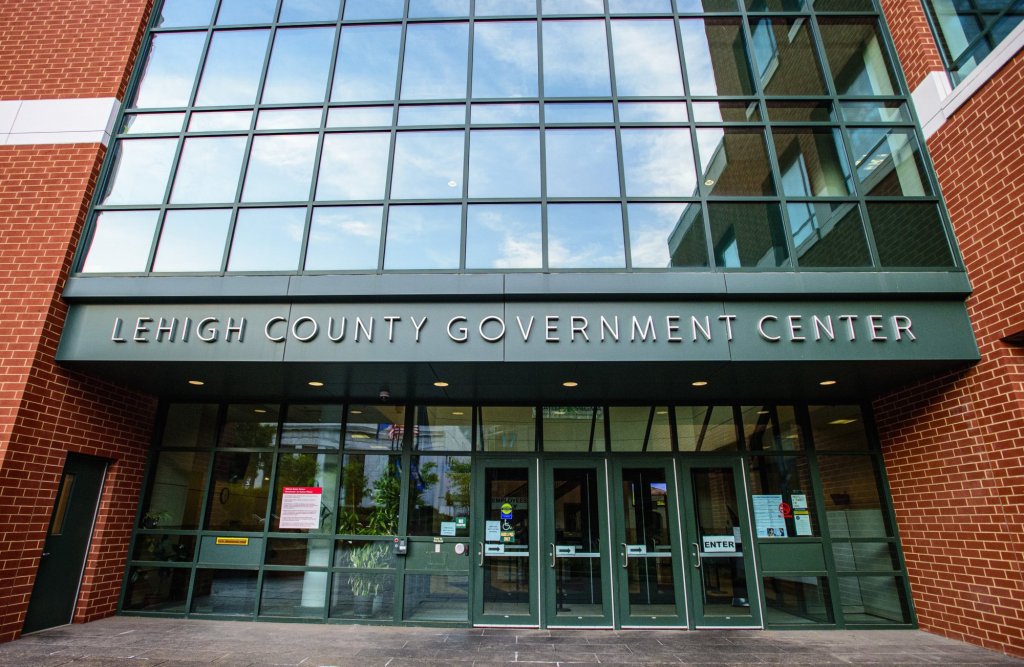
Lehigh County will enter a 20-year agreement with four other counties to create a regional juvenile detention center in Berks County.
County commissioners voted 6-3 in favor of the initiative Wednesday following a nearly 4-hour meeting in which some community members spoke out passionately against the plan, while others argued that it was needed.
The question of whether Lehigh County should enter into an agreement with other counties to create a regional youth detention center had been on the table for nearly two years, yet some complained that the contract was being entered into too quickly. Juvenile court officials and President Judge Douglas Reichley argued that the agreement, which would guarantee Lehigh County eight beds for detained juveniles, would solve an escalating problem of where to place teens accused of serious and violent offenses.
“The reality is that Lehigh County has a need for secure, reliable, responsibly managed, short-term detention bed facilities in order to secure youth who have been identified as committing the most serious kinds of offenses that are under our crimes code,” Reichley said Wednesday.
Opponents complained that the 20-year contract was too long of a commitment, was rushed to a vote and that the Bern Township facility was too far away from the Lehigh Valley for families of detained teens to easily visit. The plan was opposed by Lehigh County Controller Mark Pinsley, who urged the commissioners to delay the vote pending further financial analysis of the contract.
Enid Santiago, the co-founder of a reentry nonprofit whose son spent time in a juvenile detention facility, said no matter how well built and well run the Berks facility will be, it would not leave the youths who are locked up there better off.
“It does not fix them. It does not heal them. It does not protect our communities in the long run either. What it actually does is tear apart families. It exposes children to trauma, to violence and to division. More often than not it sets them on a path deeper into the system, instead of out of it,” Santiago said.
Under the agreement, five partner counties — Lehigh, Berks, Dauphin, Lackawanna and Delaware — would each pay one-fifth of the facility’s operating costs and construction debt. Delaware County joined the coalition this week, said Berks County Chief Operations Officer Kevin Barnhardt.
The center will have 40 beds, with eight assigned to each participating county. Planners estimate the center will cost about $10.5 million a year to operate, with each county responsible for about $2.1 million, which could be cut in half with state reimbursement. It will be open in about two years, following renovations.
A 15-member board, three members from each county, would oversee the facility.
Many of the people who spoke out against the plan urged the commissioners to funnel the money they would spend on the detention center into mental health treatment for juveniles. Heather Kasarda, a social worker and supervisor in the Lehigh County Juvenile Probation department, noted that youth will receive high quality mental health care in the regional facility.
Kasarda and other probation officers described calling numerous facilities, sometimes in the middle of the night, to try to find a place for teens who needed to be detained. She described recent cases that she and her coworkers dealt with, including youths accused of stabbings and sexual assaults.
“We have victims in our community that no one is talking about,” Kasarda said.
Voting yes to the plan were Commissioners Sheila Alvarado, Ron Beitler, Geoff Brace, Sarah Fevig, Dan Hartzell and Antonio Pineda. Commissioners Jon Irons, Zach Cole-Borghi and April Riddick voted against.
It was obvious that the decision was difficult for many of the commissioners.
“This is a moment of deep solemnity,” said Irons. “We are investing in state violence. You can’t call the separation of a child from society anything but violent. This detention crisis is not a new crisis. The crisis is poverty.”
Riddick said she was on the verge of tears in the moments leading up to the vote. She said she went out into her community and spoke to men who had been in juvenile detention as teens before making her decision. Every single one of them said they supported the plan, she said, which made her lean toward voting yes. But in the end she voted against.
“We have to do better by our youth,” she said, her voice shaking.
Many of the people who lined up to comment on the decision complained that the commissioners had already made up their mind before the meeting started. Irons made a motion to table the vote in light of Delaware County joining the group, as well as other questions he said remained in the contract. The motion failed.
County Executive Josh Siegel acknowledged that there could have been more community discussions during the two years leading up to Wednesday’s vote, but said he was confident that entering into the partnership was best for the juveniles and community.