
This is How I Got Here, a series where we chart the career journeys of technologists, entrepreneurs, tech workers, builders and people in the innovation economy. Want to tell your story? Get in touch.
David West started his first business as a teenager: TapeToDisc.net, a VHS-to-DVD conversion service. He didn’t make any money from it, but it hooked him on entrepreneurship.
“We were building these advanced models, but when you actually went into a pathology lab, so much of the work was still manual.”
David West, Proscia
Eventually, he was pulled toward healthcare. A Philly-area native who studied biomedical engineering at Johns Hopkins, West got interested in pathology while working at the intersection of machine learning and medicine. He found himself asking why one of healthcare’s most important specialties still relied on workflows that looked decades behind.
“I thought medicine was an area that so greatly needed technology,” West told Technical.ly.
In 2014, while still an undergraduate, West co-founded Proscia alongside Nathan Buchbinder and Coleman Stavish. Things took off from there: West now serves as CEO of the Philadelphia-based digital pathology software company, which aims to help pathology labs use technology to make testing more efficient and affordable.
This Q&A has been edited for length and clarity.
How did your interest in entrepreneurship turn to healthcare, and eventually pathology?
Part of it was personal. My mom is a cancer survivor, and that really inspired me to use technology to do good.
I studied biomedical engineering and focused on computational biology, and I was working with scientists on algorithms to predict cancer outcomes from images of tissue from a biopsy. That’s when I fell in love with the pathology space.
We were building these advanced models, but when you actually went into a pathology lab, so much of the work was still manual. Pathologists were using microscopes, working through cardboard slide trays, writing notes and tracking down clinical history. There was this huge gap between what was technologically possible and how medicine was actually being practiced.
How did that become Proscia?
I started the company while I was still in undergrad, and eventually it became my first full-time job.
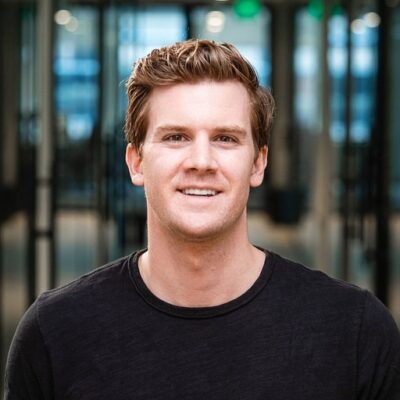 David West (Courtesy)
At the beginning, we really had no idea what we were doing. We just had a lot of passion for the space. We put a product out there that was basically free and let academic institutions use it. Places like Johns Hopkins and [University of Pennsylvania] gave us valuable feedback, and that helped us iterate toward product-market fit.
We also learned early on how many regulatory barriers there were to using this technology in clinical diagnostics. So in the first phase of the business, a lot of our revenue came from pharma, where there were fewer regulatory hurdles but still a heavy need for pathology.
For people outside the field, what does Proscia actually do?
Pathology is still one of the last major areas of medicine with a deeply physical workflow.
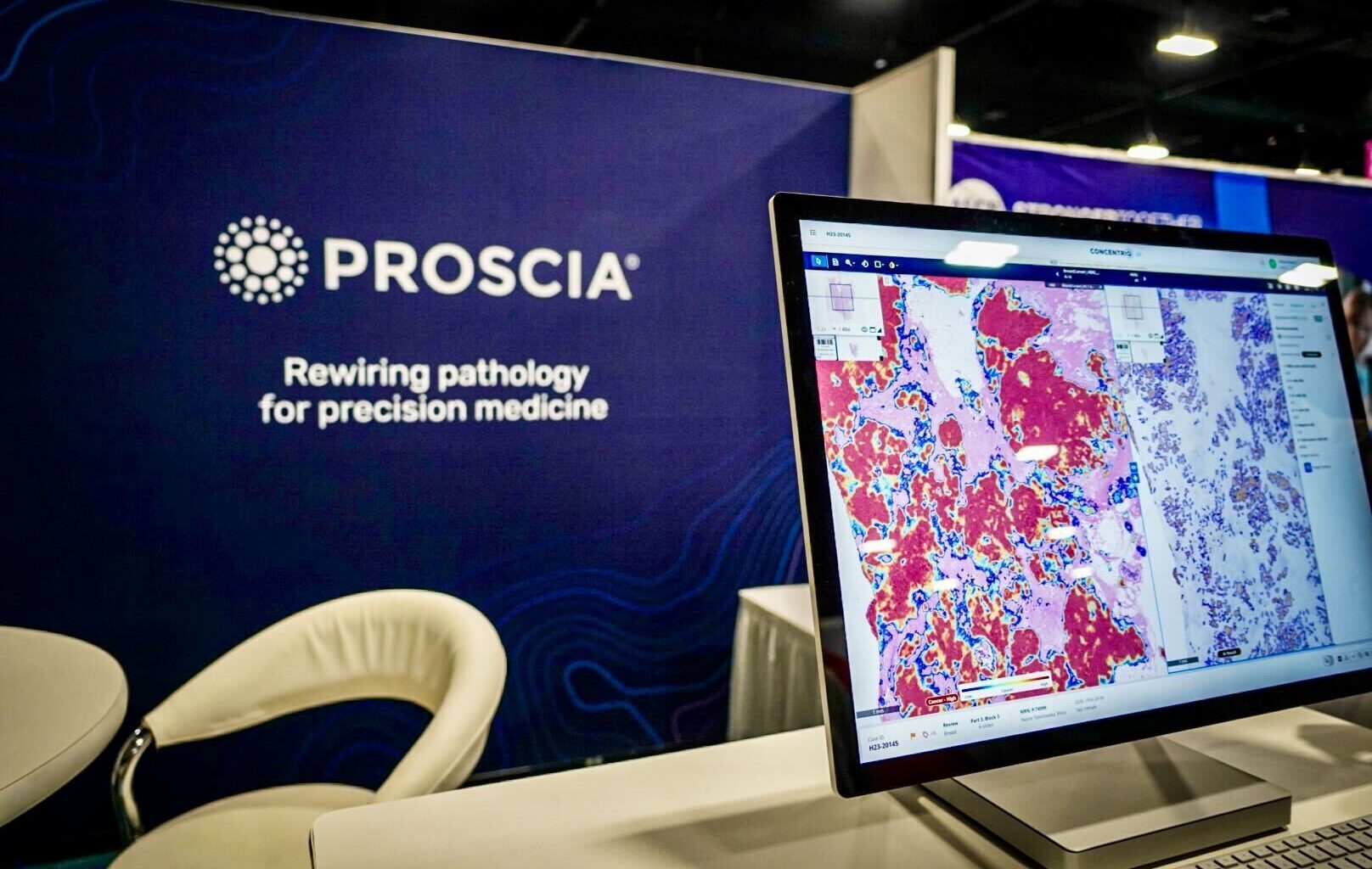
A biopsy gets turned into a glass slide, and a pathologist looks at it under a microscope. What we do is help labs digitize that process so those slides can be reviewed on a computer instead. Instead of physically receiving trays of slides, a pathologist can open a digital worklist, review cases, see patient history and use AI tools that help surface what might need attention.
There aren’t enough pathologists in the world right now, and that makes medical testing expensive. We think we can make diagnostics more cost effective for patients while letting pathologists go deeper on every single case. Less clerical work, more high-judgment expertise.
What has it been like building in healthcare instead of a faster-moving sector?
A lot of my friends went into finance or big tech — consulting, Google, Meta. I could have done that too. But healthcare felt like a place that really needed technology, even if it was much harder.
There are regulatory complexities. Clinical validation matters. Selling into the space is difficult. And because this is high-judgment clinical work, you have to be thoughtful about where AI helps and where the pathologist should be spending their time.
That was part of the appeal for me. I think doing hard things is important.
What’s changed most since you started the company?
For a long time, the technology just wasn’t ready at scale. These pathology images are enormous, and the infrastructure around storing, moving and working with them wasn’t where it needed to be.
Adoption also takes time in medicine. You’re not just introducing new software. You’re changing the way people work in a clinical setting.
Most of our growth has really happened in the last three or four years. It’s taken time, but the barriers have started to come down on the technology side, the cost side and the adoption side.
What’s next for you and for the field?
What’s exciting is that we were already building in this space before the current wave of AI really took off. In some ways, it feels like the party came to us.
Now the underlying AI models are getting better and better, so a lot of our focus is on how to bring those next-generation models into healthcare settings in a way that actually works — where compliance matters, regulation matters and clinical validation matters.
We think diagnostics can become more thorough, faster and more accessible, while pathologists spend less time on clerical and administrative work.