
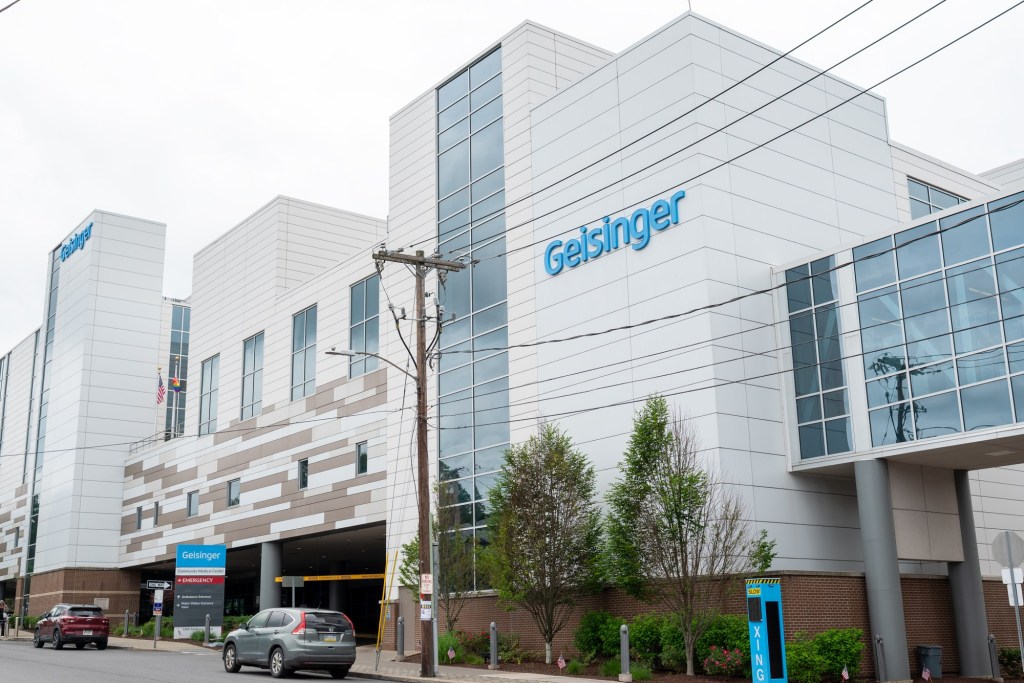
A request to relax certain financial conditions imposed on several Geisinger-operated insurance providers is prompting calls from a coalition focused on health care affordability to freeze or lower insurance costs and relieve pressure on patients and residents.
It comes after the nonprofit Risant Health completed in 2024 its acquisition of Danville-based Geisinger Health, closing a transaction the local health system and the California-based health care giant Kaiser Permanente announced in April 2023. The acquisition made Geisinger the first to join Risant, a nonprofit created by Kaiser Foundation Hospitals.
Shortly before officials announced the completed acquisition, Pennsylvania Insurance Commissioner Michael Humphreys issued an order in late March 2024 approving an application by Risant and Kaiser Foundation Hospitals to acquire control of the Geisinger-operated insurers Geisinger Health Plan, Geisinger Quality Options Inc. and Geisinger Indemnity Insurance Co. Among other financial terms, the order set “Risk-Based Capital” conditions requiring the insurers to maintain certain levels of capital reserves for solvency protection — levels Risant and the insurers now want lowered.
With that request pending before the Pennsylvania Insurance Department, members of the grassroots group Action Together NEPA and the SEIU Healthcare PA union are calling for a public hearing on the matter so individuals can testify to the financial burden posed by high insurance costs. They also want the department to “ensure that parent corporation Kaiser Permanente uses its $82 billion in net worth to freeze health insurance costs for working people struggling to afford care,” the coalition noted in a press release.
“Our request to the Pennsylvania Insurance Department is clear: we need transparency, clarity and accountability from Geisinger-Risant and Kaiser, and we need a freeze on healthcare costs for the hardworking residents of Northeast Pennsylvania,” Action Together NEPA Executive Director Alisha Hoffman-Mirilovich said in the release. “In the past decade, we’ve seen insurance and healthcare corporations become much bigger and more powerful, gaining a greater and greater ability to drive up prices. Working people are suffering right now, and the Insurance Department should step up to make sure that these huge corporations are using their vast resources to hold down costs, not continue raising them.”
Investments ‘at risk’
A state filing requesting the risk-based capital modification notes Geisinger committed about $2.6 billion in new capital projects, including the system’s roughly $880 million expansion of the Geisinger Medical Center campus in Danville and a $900 million investment in a new hospital tower at Geisinger Wyoming Valley Medical Center in Plains Twp.
But it also contends Geisinger’s “unprecedented investments in Pennsylvania’s rural communities are at risk due to the persistent underfunding” of the state’s HealthChoices Medicaid program, noting state payment rates for 2026 “fall meaningfully short” of what’s required to meet the cost of care for some 260,000 Medicaid beneficiaries served by Geisinger Health Plan.
It also notes the escalating cost and use of specialty drugs and surging Medicaid drug spending, as well as Medicaid changes included in President Donald Trump’s signature “One Big Beautiful Bill Act,” as factors that will “exacerbate the Medicaid funding crisis for years to come.” Geisinger Health Plan is estimated to lose as many as 38,000 members as a result of pending Medicaid work requirements and six-month eligibility reevaluations mandated by Trump’s OBBBA, “while the acuity of the remaining members materially increases,” per the filing.
The request to relax the risk-based capital or RBC requirements set in 2024 is made necessary by these “unforeseen and material adverse developments.” Doing so would free up about $100 million Geisinger could invest elsewhere in its operation, Geisinger CEO Terry Gilliland told the Philadelphia Inquirer newspaper last month
“While Geisinger Health has a strong balance sheet, its resources are strategically allocated to transformative projects and community investments that further its mission to provide quality health care throughout the underserved 23-county primary service area,” the filing notes. “Diverting these resources to cover Medicaid shortfalls and to satisfy the higher than necessary RBC requirements undermines these important community projects and permanently impacts the integrated system’s ability to meet the needs of the rural communities it serves.”
Reducing RBC requirements will allow the insurers to allocate more funds toward “delivering high-quality care” and “mitigate the impact of recurring annual capital infusions” made by Geisinger to the insurers, “empowering Geisinger Health to sustain its vital community investments.”
Cost concerns
Action Together NEPA and SEIU Healthcare PA both responded to Risant/Geisinger’s request for RBC relief in written public comments highlighting the cost of health insurance, with the former expressing a belief that “quality of care cannot be provided to the public if insurance coverage is unaffordable.” It also pointed to “substantial premium rate increases” Geisinger asked the state Insurance Department to approve last year for its Geisinger Health Plan and Geisinger Quality Options plans.
The department released in October final Affordable Care Act health insurance rates for 2026, noting new enrollment rules included in Trump’s OBBBA and Congress’ failure to extend expiring ACA tax credits “resulted in significant price increases for Pennsylvanians.” Approved average rate increases for Geisinger Health Plan and Geisinger Quality Options individual market plans were about 11.6% and 13.8%, respectively, slightly less than originally requested in both cases.
“If the rise in the cost of healthcare necessitated significant increases in premiums … then we do not believe that it is prudent to lower RBC requirements to support facility expansions,” Hoffman-Mirilovich, Action Together NEPA’s executive director, wrote in her public comment. “We would ask the (state Insurance) Department to deny this request, or predicate approval on a requirement that Geisinger (Risant) work toward reducing or freezing healthcare costs for northeastern Pennsylvania consumers in the coming years.”
SEIU Healthcare PA President Matt Yarnell’s written public comment also raises health insurance affordability concerns, arguing it’s “critical that health insurers use their reserves to lower or freeze costs so that people can access care now, which can lower utilization and overall costs in the long run.”
State regulators, Yarnell and the union contend, “should use their power to counteract distorted profits and prices caused by high levels of consolidation in health insurance and healthcare markets.”
Any state approval of Risant/Geisinger’s request for RBC relief “should come with clear commitment by Kaiser, Risant and Geisinger to reduce or freeze healthcare costs for residents of NEPA in the coming years,” Yarnell wrote. The department should also seek clarity on how Geisinger plans to reallocate released resources and “consider how to use its regulatory authority to prompt Kaiser to utilize its $82 billion net worth to invest in NEPA through Geisinger to increase healthcare access, freeze plan cost increases, and guarantee Geisinger’s insurance liabilities,” his filing notes.
The response
Geisinger declined a request for comment, but officials did file with the state a formal response to the public comments submitted by Action Together NEPA and SEIU.
“Both Mr. Yarnell and Ms. Hoffman-Mirilovich assert that affordability concerns have not been adequately addressed and suggest that changes to capital requirements should result in immediate premium reductions,” the response reads. “The factual record and approved rate filings do not support that conclusion.”
It notes, for example, that Geisinger Health Plan’s approved 2026 premium increases for individual market products were consistently among the lowest in the state across the rating areas in which it participates. It also notes that state law “prohibits the use of released RBC to directly subsidize or offset premiums,” but does allow the redeployment of capital toward “investments that indirectly and sustainably support health care affordability and access.”
Those could include provider network, infrastructure and technology investments and initiatives that reduce unnecessary medical expenses, per the response, which says the effectiveness of those investments depends on “an insurer’s ability to exercise informed judgement and operational flexibility in determining how capital can be deployed.”
“Health care affordability is influenced by numerous interrelated factors — including medical inflation, workforce shortages, pharmaceutical pricing, and utilization patterns — that vary over time and cannot be addressed through a single, static use of capital,” Risant/Geisinger maintains. “Imposing prescriptive conditions on how capital released through an RBC adjustment must be used is inconsistent with the purpose of the Commonwealth’s RBC statute.”
Review ongoing
For its part, the state Insurance Department told the newspaper it “does not have the specific regulatory authority to direct a company to utilize funds toward premium discounts on health insurance.”
“Under Pennsylvania law, insurance rates for a policy are required to be properly supported and reasonable for the benefits provided under that policy, which means rates may not be excessive, inadequate, or unfairly discriminatory,” it said. “PID will not approve rates above what is expected to be necessary to pay for the administration of benefits expected to be incurred during the policy period.”
Still, Action Together NEPA and SEIU contend in their press release that Risant/Geisinger and Kaiser “have more than enough resources to freeze residents’ health insurance costs.”
“Coalition members say that the rise in healthcare costs is being driven in large part by insurance and healthcare corporations’ relentless focus on profits and consolidation, which increases their market power,” the release notes. “The Scranton-Wilkes Barre metro area, which has the largest population in Northeast Pennsylvania, is the most consolidated health insurance market in the state. Coalition members worry that if the Insurance Department does not hold Geisinger-Risant accountable around its Request for Modification, the corporation could use the $100 million in additional funds to further consolidate its market power and keep increasing prices.”
In a phone interview, Hoffman-Mirilovich reiterated calls for a public hearing on the requested RBC relief.
“We want to know on the record … what patients and community members are feeling, how they’re struggling, and make sure that there’s more transparency,” she said. “I mean to me it’s a no-brainer to have a public hearing. It shouldn’t be too much to ask to have that. … Too often patients are the last voices to be heard.”
The state Insurance Department did not specifically address whether it would hold such a hearing in its response to questions submitted by the newspaper.
The department “is reviewing the modification request and public comments and will update its website when a decision or further action is taken,” it said.