
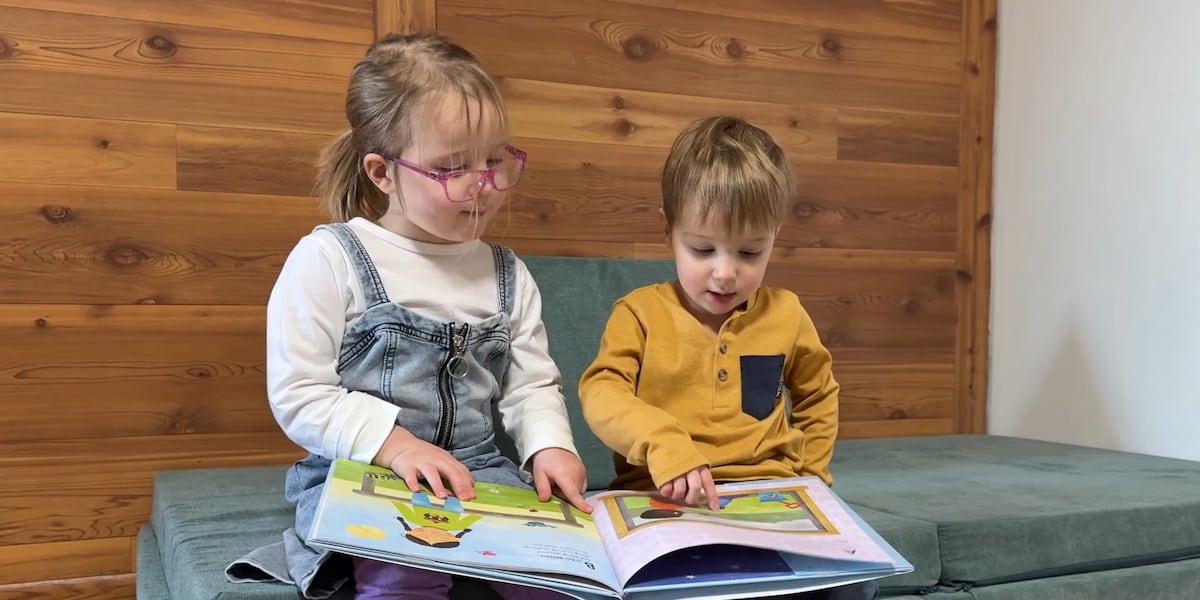
KANSAS CITY, Mo. (KCTV) – Think about how many times you read a day, from just a text message to street signs to your latest summer book.
Reading is how we learn, part of how we communicate and how we grow our brains. But, this lifelong skill is lacking in Kansas City schools, and it’s not sitting well with educators.
Seven-year-old Julian Munoz is a second grader at Crossroads Academy Charter School. He loves reading and learning about polar bears, but not so long ago, it was a challenge for him.
“It seemed like he couldn’t quite understand the rhyme or reason to world and letters put together,” Julian’s dad, Gabriel Munoz, said.
Julian isn’t alone in his struggle.
Shannon Reasby is the literacy coach at Julian’s school, where out of the 240 students, more than 60 percent need help with reading.
“About 80 students in our building right now,” Reasby nodded. “It’s based on need and where they’re falling on tests, we’re making sure we get every kid what they need.”
The problem is that the need is great.
Between the lines
Missouri state data shows that 23 percent of third-grade students in Kansas City’s district and charter schools can read at grade level.
That’s one in four. Statewide, that number is 43 percent.
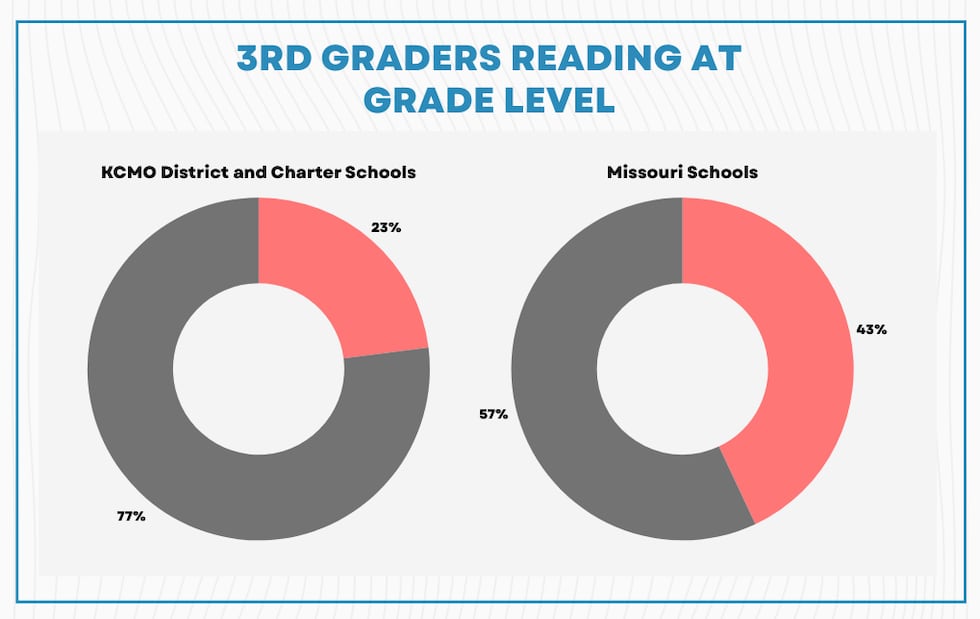 3rd graders reading at grade level(KCTV5)
Reasby agreed it is “absolutely” a crisis.
Dr. Robin Henderson is chief program officer at School Smart KC. The nonprofit organization works with local school districts and charters to help boost reading performance.
She said Kansas City and Missouri are not alone.
“That data actually references a national trend where we are seeing students struggle with reading,” Henderson said.
According to the latest national report card, reading scores among 4th graders in 2024 were lower than in 2022 and even lower compared to 2019.
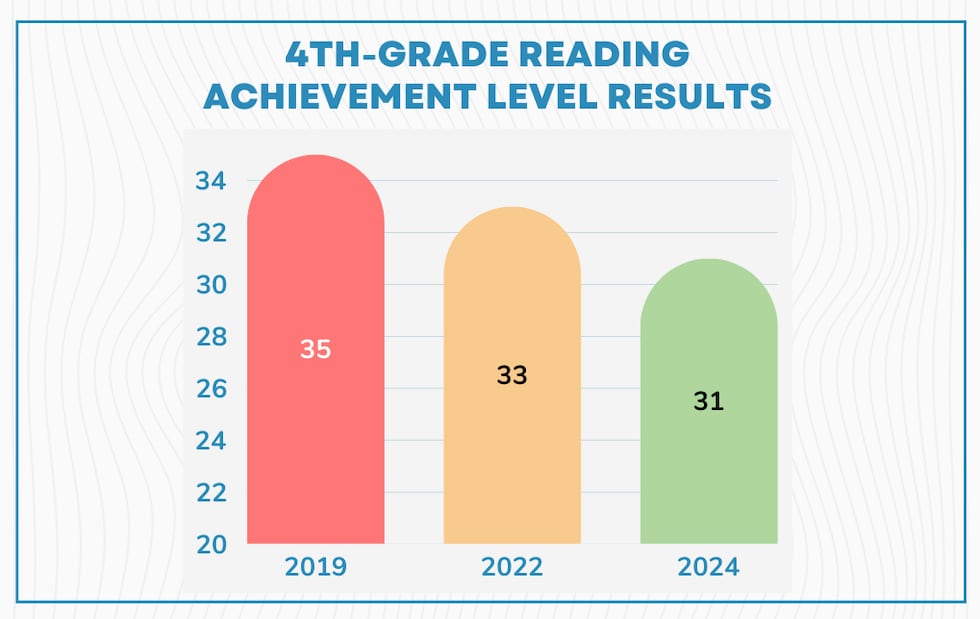 4th grade reading achievement level results(KCTV5)The science of reading
So the question is – what’s behind this literacy crisis?
“I think we as educators across the nation went through a phase where we really weren’t letting the science guide us in how we do instruction,” Henderson admitted.
There are five components to this science: Phonemic awareness, phonics, vocabulary, fluency, and comprehension.
“They are struggling, they are struggling in many components of reading,” Reasby said. “It breaks my heart that’s our future.
Henderson further explained the importance of improving literacy rates. She said it is a key predictor for both high school graduation and lifelong outcomes.
Even beyond that, research indicates 70 percent of the incarcerated cannot read above grade level.
Henderson said this data is a ‘heartbreak’ that must serve as a call to action for everyone.
“This isn’t about pointing fingers of blame at schools; this is about how are we, Kansas City, going to step up?”
In Kansas City, School Smart KC is stepping up across 40 elementary schools with programs like one-on-one tutoring. They hope to write a new chapter for area children and their path to literacy.
“He’s improved, he’s improved a lot, and he’s kind of given us the confidence as parents, he’s going to be ok, and he’s going to read just fine,” Gabriel Munoz said.
To read more KCTV5 Special Reports, click here.
*KCTV5 was notified after the story originally aired that a school spokesperson initially misquoted the number of students who attend Crossroads Academy. That number has since been updated to reflect the correct number of students.
Copyright 2025 KCTV. All rights reserved.