
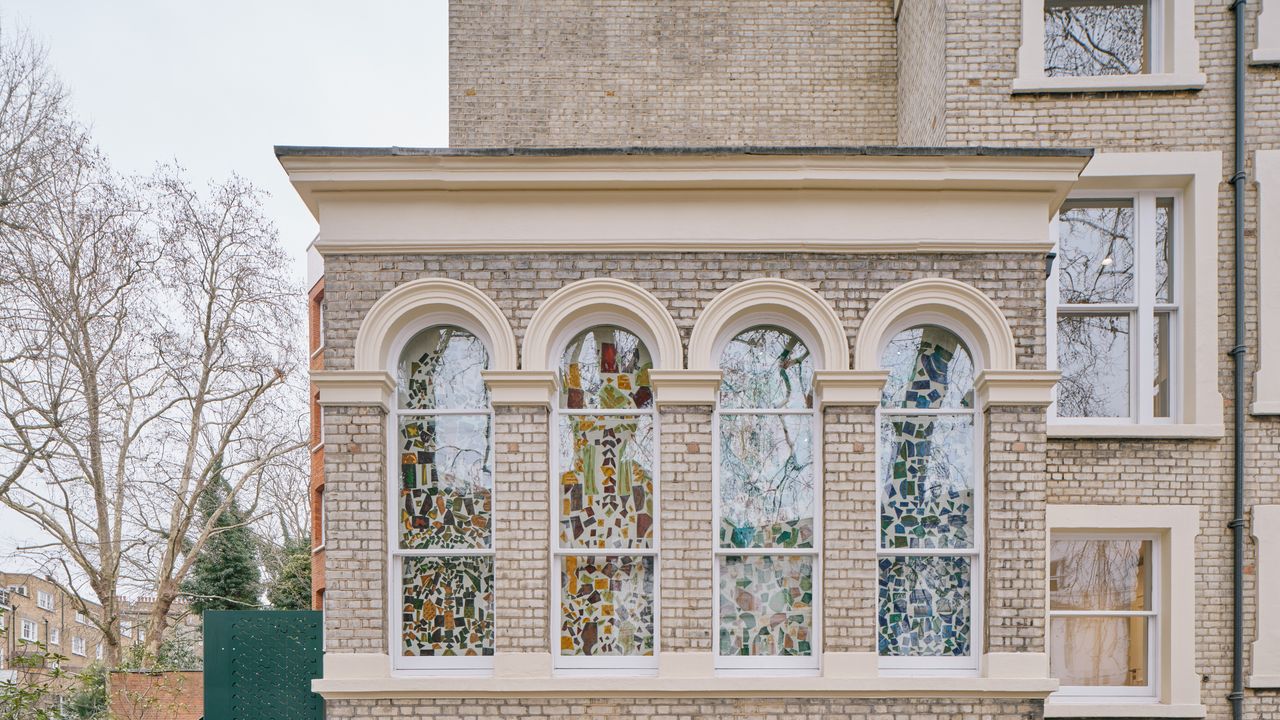
Founded in 2008 as a gallery dedicated to art and culture from the Arab world, The Mosaic Rooms has long held a central place within London’s creative landscape. This February, however, marked a turning point; the institution reopened following an extensive renovation, emerging as an independent art centre with an expanded programme and reimagined spaces.
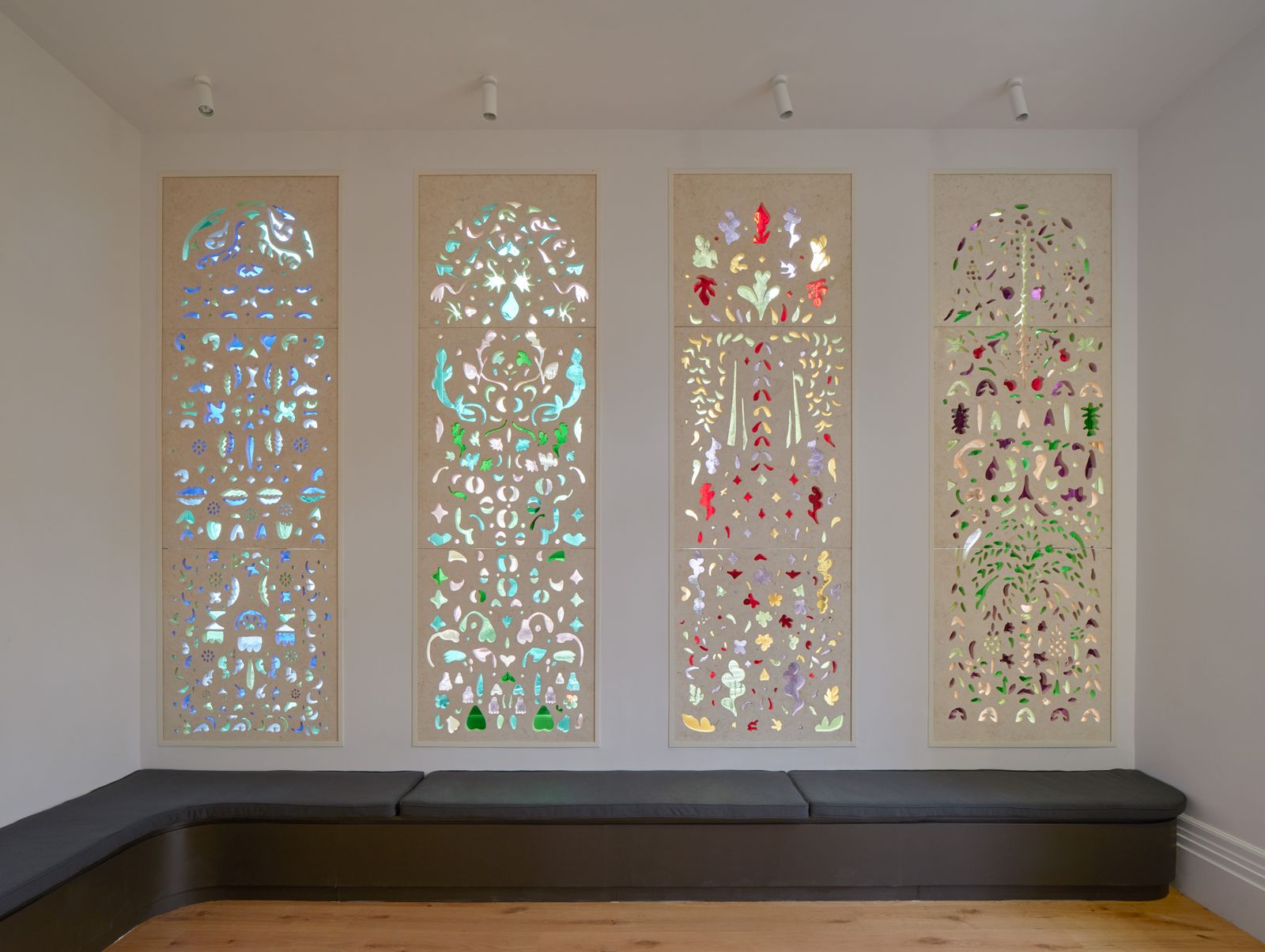
At the heart of this new chapter sits a large-scale installation by Dima Srouji. Spanning a series of stained-glass windows, the work brings together motifs drawn from Palestinian flora and fauna alongside traditional Qamariya forms. Each piece reflects a different season, the panels themselves set into Jerusalem stone carved by artisans in Bethlehem. As the sunlight seeps through the work, dappled shadows dance and drift across the entry hall below.
Srouji tells me that she first received an email regarding a commission from Rachel Jarvis, the previous Director and Head Curator of Mosaic Rooms, in September 2024. “Her idea was to leave a “trace and trail of those we have worked with before entering into this new phase,” Srouji quotes Jarvis directly. “At the time I didn’t imagine that the scale of the work would be what it became. I was just really happy to hear that she had considered me a member of the Mosaic Rooms community.”
The project soon developed into Four Moons From Home, a vast site-specific installation inspired by Qamariyas. A small, often arched or circular window, Qamariyas are filled with coloured glass set into intricate plaster or stone frameworks. Designed to diffuse light into soft, patterned illumination, they are popular across Yemen, Egypt, Syria, and Palestine.
For Srouji, Qamariya traditions first appeared in her research with Dr. Mariam Roser Owen and curator Fuchsia Hart during her Jameel Fellowship at the Victoria and Albert Museum. The artist went on to study them in depth, taking particular interest in Yemeni Qamariyas. “I wanted the designs to include the larger region,” she explains.