
PARC office
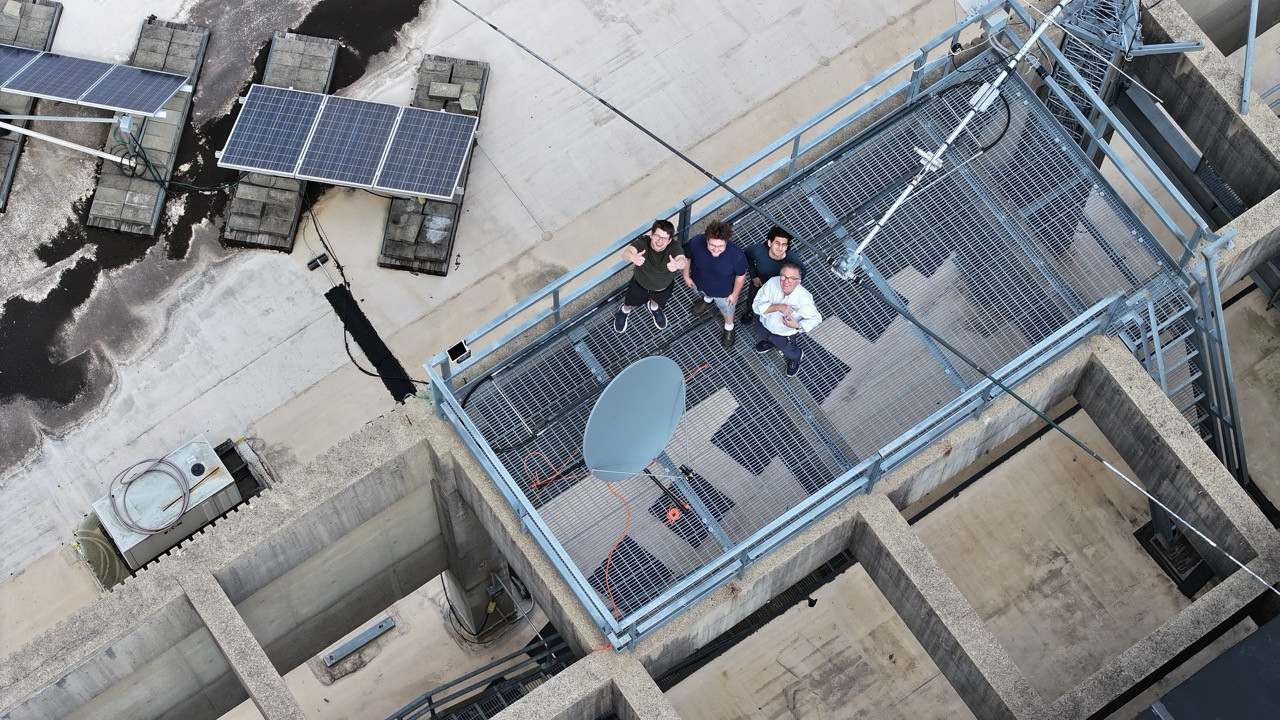
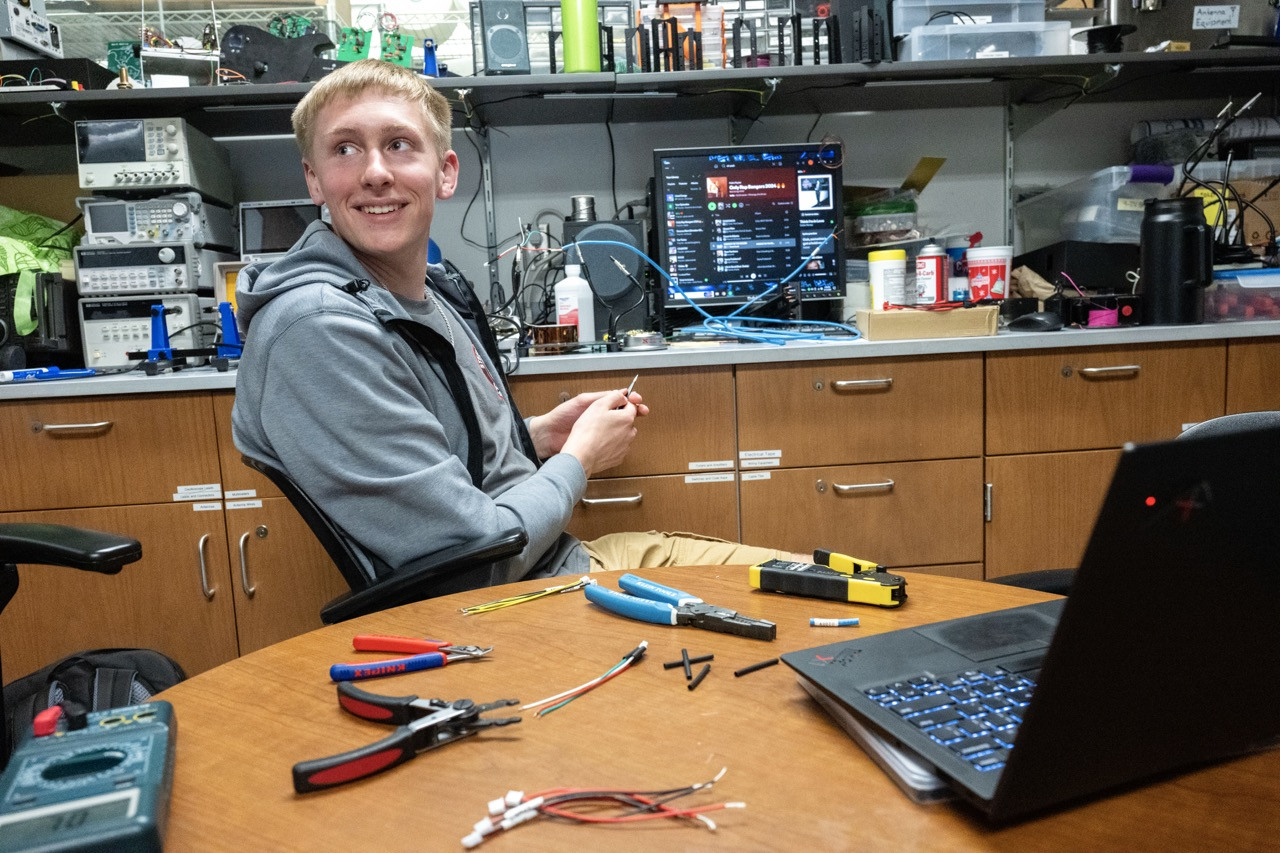
“For the past few months, we’ve been building the antenna, the dish, and the helical feed. We’ve been getting all the software to work with software-defined radios,” said Wendt. “It’s given us a chance to work with new equipment.”
The team has used AI to develop a tool to track Orion in relationship to Pitt and another to interpret any data they receive.
“The signal could be so low we won’t know if we’ve even received anything,” Shaffer said.
After the mission launched, PARC members and Pitt faculty would meet on the roof of Benedum Hall, sometimes in the early morning hours of 4:00 a.m. They would work to locate Orion and position the dish and antennas to receive a signal.
Beyond connections
“When you have a ham radio and a license, wherever you go in the world, you have friends,” Manfredi said.
When PARC members hear from people visiting Pittsburgh, they reach out. They’ve provided advice about places to stay and sights to see. Sometimes they share a meal.
“We never talk about politics. We never talk about religion. We talk about radios instead,” said Manfredi. “We talk about food.”
The club now has something else to talk about: the remarkable work Pitt students did to connect with Orion during its historic mission.
While Manfredi’s fascination with ham radios first led him to advise the club, it’s the students who keep him there. “I like to be surprised by the students,” he said. “And they are always doing something new and exciting.”
‘;