
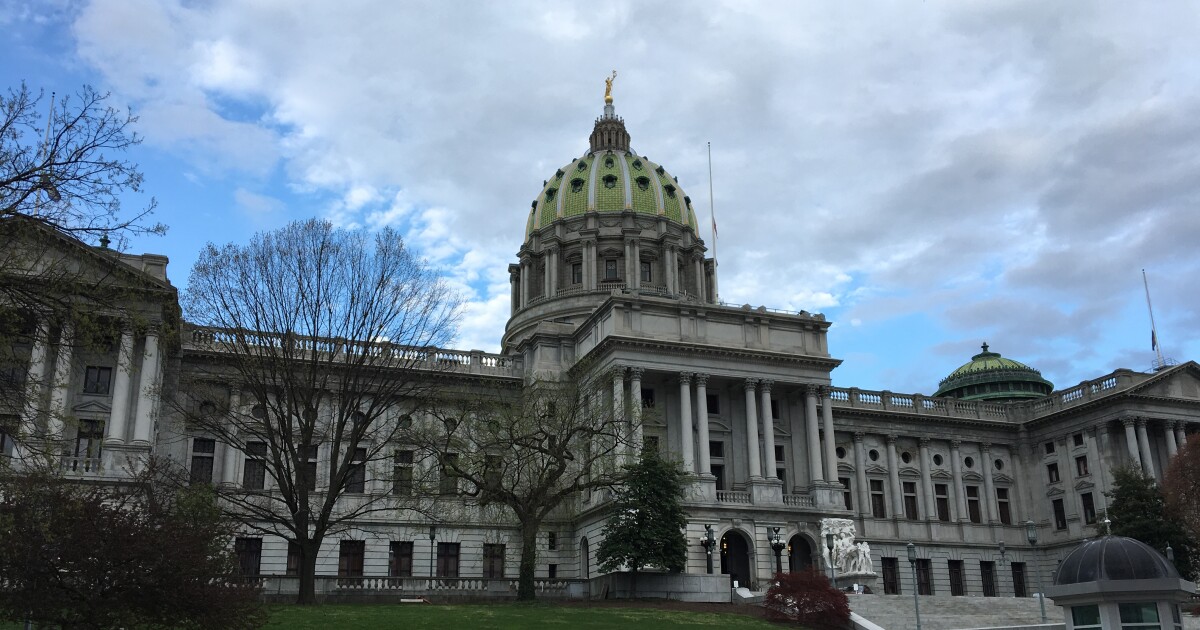
While some states are considering legislation that would challenge immigrant students’ educational rights, some Pennsylvania lawmakers want to make commonwealth schools more welcoming.
The “welcoming schools” legislation, introduced by Democrats in the state Senate and House this winter, would require school districts to adopt policies that protect students’ privacy and limit ICE enforcement on school grounds.
Speaking in Harrisburg on Monday, Pittsburgh 11th grader Aaliya Wafa urged lawmakers to consider the bill’s impact on students like her. Wafa is with the immigrant youth program ARYSE, and came to the U.S. from Afghanistan in 2022.
“When we feel scared, it makes it hard for us to focus, to learn, and to feel safe at school,” Wafa said. “School should be a place where every student feels safe and supported, and should not be a place where we are afraid.”
Fears that schools would be targeted for immigration first mounted last year after President Donald Trump rescinded Biden-era guidelines that prevented immigration enforcement actions from occurring in or near “sensitive areas,” including schools, hospitals and places of worship.
Earlier this year, educators at Pittsburgh Public Schools raised alarms about drops in student attendance as fears of immigration enforcement surged.
All children, regardless of immigration status, have the right to a free K-12 public education. But without birthright citizenship, access to schools and colleges could get complicated.
Shortly after, students at Taylor Allderdice High School in Squirrel Hill staged a walkout in solidarity with their peers at risk of being targeted by ICE.
Roughly 1 in 10 PPS students are English learners, according to district data. While the overall number of students enrolled in the district has steadily declined over the past several years, the number of English learners continues to grow.
Khara Timsana, executive director of the Bhutanese Community Association of Pittsburgh, said the legislation would provide much needed assurance to students in the region. The organization runs four after-school programs at schools in the South Hills.
“With the arrests of a few individuals, our kids started asking, is my parent or are my parents going to be picked up and deported?” Timsana said.
Several members of the state’s Bhutanese community — including at least one man from Allegheny County — have been detained and deported to Bhutan since January 2025.
NPR reports that, upon arriving in the country, many of Bhutanese deportees are then re-deported elsewhere, often without travel documents or resources.
Most of Western Pennsylvania’s Bhutanese community is made up of a Nepali-speaking ethnic group forced out of Bhutan in the early 1990s. The U.S. resettled more than 70,000 of these refugees between 2006 and 2016.
“There is already a lot of fear in our kids, and we all know learning cannot take place in fear,” Tismana added.
The legislation would require districts to prohibit staff and bus drivers from disclosing private student information, including a student’s name, bus stop or immigration status.
It would also require schools to train staff in the procedures necessary by law in the event immigration enforcement officials do enter school grounds. If passed, those steps would include providing the officer or agent with a copy of the district’s welcoming schools resolution, requesting official identification and contact information from the officers and photocopying them for district records.
The procedures outlined in the legislation largely mirror policies to which several school districts in the commonwealth, including Pittsburgh, already say they adhere.
Last year, attorneys with Weiss Burkardt Kramer, a law firm that represents more than a dozen school districts throughout the Pittsburgh region, issued guidance recommending several actions educators should take before permitting any ICE official onto school premises.
State Senator Katie Muth of Berks County, who sponsored the Senate bill, commended the districts that have already made an effort to make their schools more welcoming to immigrant students absent a state mandate.
“Having it as a state bill, it would take a lot of political pressure off of districts who may want to do this, but also fear having a lot of unnecessary and aggressive public comment at their school board meetings,” Muth said.