
A firm managed by Charles DeNaples challenged Olyphant’s decision to invalidate borough zoning, a move that gave the borough six more months to regulate data centers.
Triboro Commerce Park LLC, whose managing member is the son of Keystone Sanitary Landfill co-owner Dominick DeNaples, simultaneously filed a land-use appeal and a petition for an emergency injunction last week. The filings ask the Lackawanna County Court of Common Pleas to overturn Olyphant Borough Council’s April 14 decision to declare its zoning ordinance invalid for excluding data centers.
The filings also urge the court to honor an initial 4-3 vote from council on a zoning amendment that would have conditionally allowed data centers across about 1,000 acres east of the Casey Highway, including Triboro’s land. Council subsequently voted to reject that ordinance and instead seek a curative amendment, which gives the borough six months to regulate data centers without exposure to legal challenges for excluding them.
Municipalities in Pennsylvania have to allow for every type of lawful land use somewhere within their borders, and failing to do so opens them up to legal challenges over exclusionary zoning.
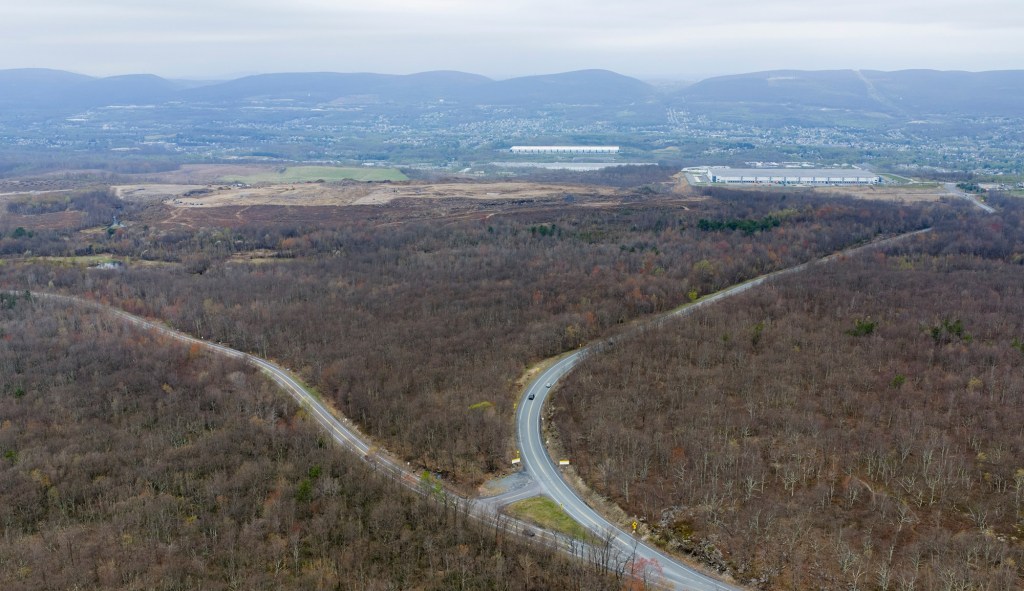
The Triboro Commerce Park encompasses just over 400 acres on the western half of the nearly 1,000-acre site in the middle of the Casey Highway, Route 247 and Marshwood Road. The eastern portion of the land falls under the Triboro Industrial Park.
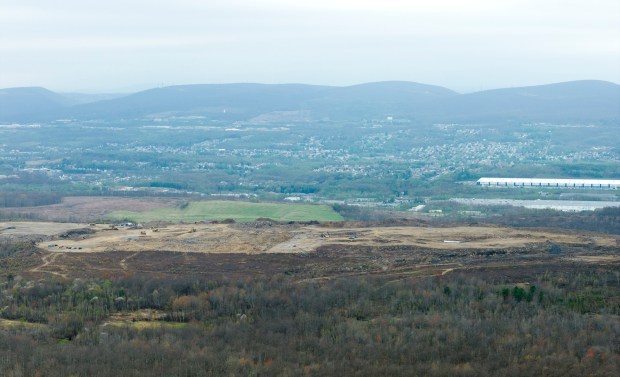 Construction is underway where data centers are proposed to be located at the Triboro Industrial Park in Olyphant Wednesday, April 29, 2026. (SEAN MCKEAG / STAFF PHOTOGRAPHER)
St. Louis-based real estate firm Sansone Group, operating through limited liability companies called “Ercor Triboro,” purchased four lots from DeNaples last year to build four 1-million-square-foot warehouses, totaling $80 million across all four transactions. DeNaples most recently signed an easement agreement dated Nov. 4 with Ercor Triboro firms as the managing member of Triboro Commerce Park, according to the document recorded Jan. 13.
Borough Manager and Solicitor C.J. Mustacchio previously pointed to talks of the Triboro Industrial Park pivoting from four warehouses to 12 data centers, though the borough did not receive any applications.
DeNaples divided his property between the commerce and industrial parks in 2021 when the Triboro Industrial Park transferred 400-plus acres to the Triboro Commerce Park across two $1 property transactions recorded with the Lackawanna County recorder of deeds on Dec. 29, 2021.
A Pennsylvania American Water map of Midvalley data centers from March depicts a large “Project Triboro” encompassing portions of the commerce and industrial park properties.
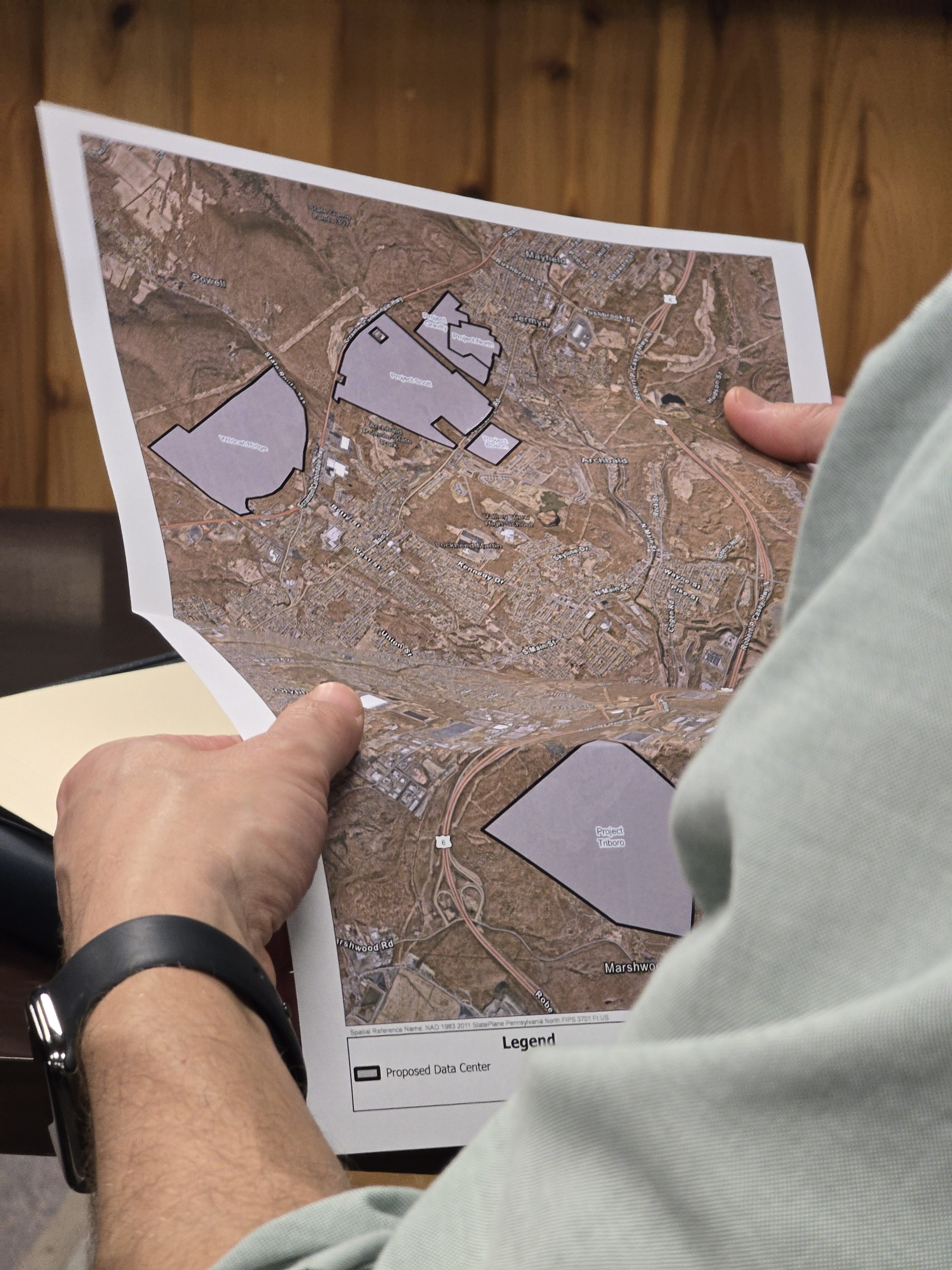
A Pennsylvania American Water employee holds a map of Midvalley data center projects during an Archbald council work session in the Borough Building on March 11, 2026. (FRANK WILKES LESNEFSKY / STAFF PHOTO)
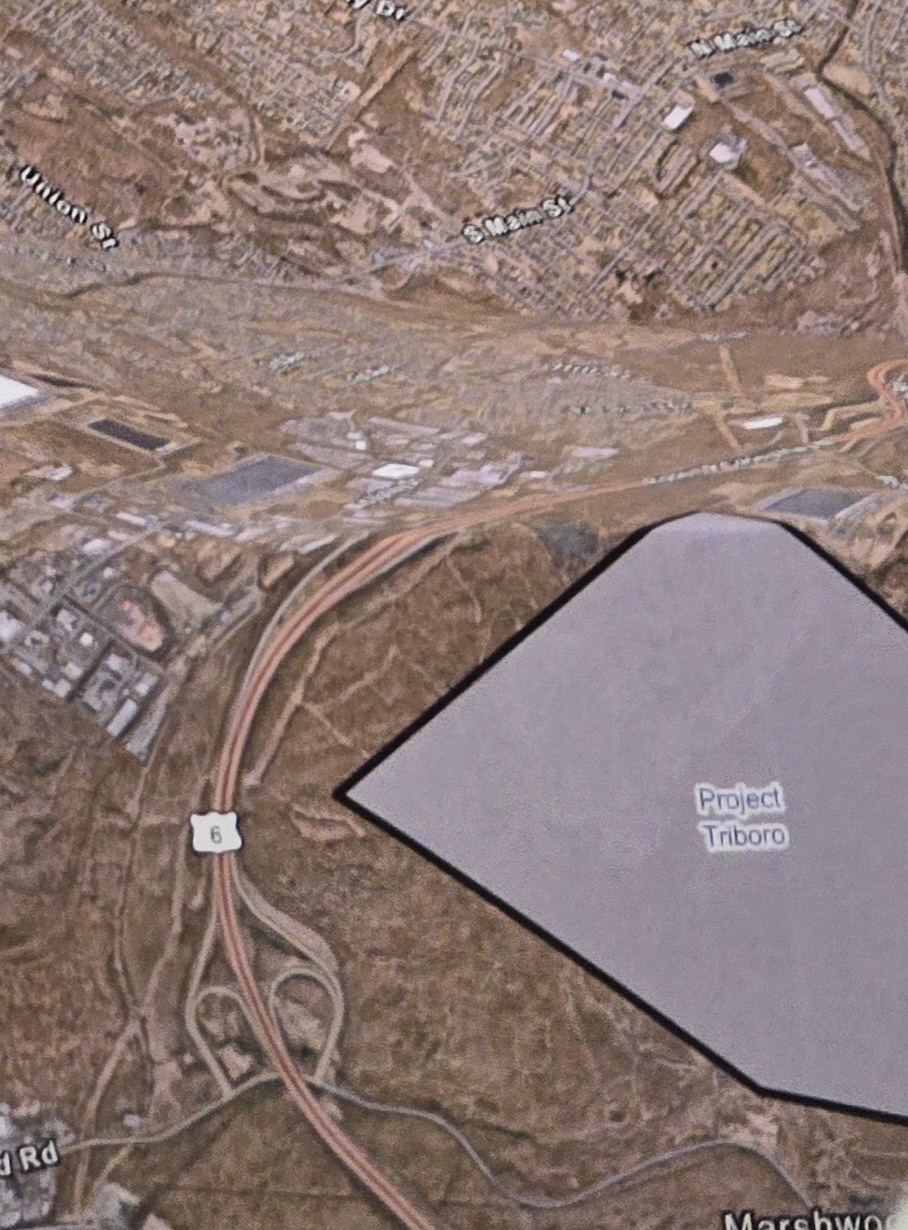
A Pennsylvania American Water employee holds a map of Midvalley data center projects during an Archbald council work session in the Borough Building on March 11, 2026. (FRANK WILKES LESNEFSKY / STAFF PHOTO)
Show Caption
1 of 2
A Pennsylvania American Water employee holds a map of Midvalley data center projects during an Archbald council work session in the Borough Building on March 11, 2026. (FRANK WILKES LESNEFSKY / STAFF PHOTO)
The land-use appeal stems from a procedural debacle April 14 as Olyphant council members considered a data center zoning amendment that defined data centers and associated uses while restricting them as conditional uses in the borough’s “large scale mixed commercial/manufacturing district,” or CM-2 zone, which encompasses the Triboro Commerce Park and Triboro Industrial Park properties.
However, after the amendment received a motion and a second — priming it for a vote — Councilman Joseph Collarini asked, “Would it be in our best interest to move for a stay similar to Throop to give us six more months?” The councilman referred to Throop council’s decision in January to declare its zoning exclusionary to data centers and seek a curative amendment remedying the defects.
Collarini’s suggestion immediately caused visible confusion as council members sought clarification on their next steps.
Olyphant’s special counsel, Isaac P. Wakefield of Camp Hill-based Salzmann Hughes PC, who was standing in for Mustacchio and is representing the borough against Triboro Commerce’s appeal, stepped in to explain and guide council through the legal process.
Before council could consider Collarini’s suggestion, it had to vote on the amendment because it received a motion and a second. The ordinance initially passed with a 4-3 vote, with council members Jimmy Baldan, Beth Frushon, Eric Hartshorn and Bob Hudak voting in favor of the ordinance, and Collarini, Michael Abda and Dina Harrington voting against it.
The vote drew an immediate uproar from residents in the crowd who opposed data centers. Amid the clamor, Bill Shigo, Olyphant’s zoning officer who was standing in as the secretary, suggested a revote. Wakefield echoed him, saying there was confusion about the vote.
“Too much noise,” Shigo added.
Council voted a second time, with Frushon changing her vote to make it a 4-3 denial. Council then voted to amend its agenda to add Collarini’s motion before finally voting to declare the borough’s zoning invalid and seek a curative amendment.
Triboro’s land-use appeal and injunction petition, signed by attorney Edwin A. Abrahamsen Jr. of Abrahamsen, Conaboy & Abrahamsen PC in Clarks Summit and attorney Patrick A. Walsh of Clarks Green, contends its property is “directly and substantially affected” by council’s decision.
The filings argue that Olyphant’s initial vote to adopt the data center zoning ordinance was official, but the second vote lacked “lawful procedural authority.”
Triboro’s attorneys allege the borough lacked the authority to negate the completed official action through a second vote because it was requested by a nonmember of council, and council did not make a motion to reconsider, rescind, defer or reopen it. They also characterized it as a violation of the Pennsylvania Sunshine Act, also known as the Open Meetings Law.
The first roll-call vote was conducted correctly, but by holding the second vote without a lawful procedural basis, Olyphant “impaired the openness, transparency, and reliability of the official action taken at the public meeting,” according to the land-use appeal.
The appeal asks the court to reverse Olyphant’s denial of the zoning amendment, declare the amendment was approved by the initial 4-3 vote or alternatively declare the subsequent vote null and void, and to prohibit the borough from taking any further action based on that second vote or the amended agenda.
In an emailed statement Wednesday, Wakefield stood by council’s actions.
“The Borough disagrees with the argument that anything improper occurred at the Council meeting,” the borough’s attorney wrote. “For that reason, the Borough is contesting the appeal.”