
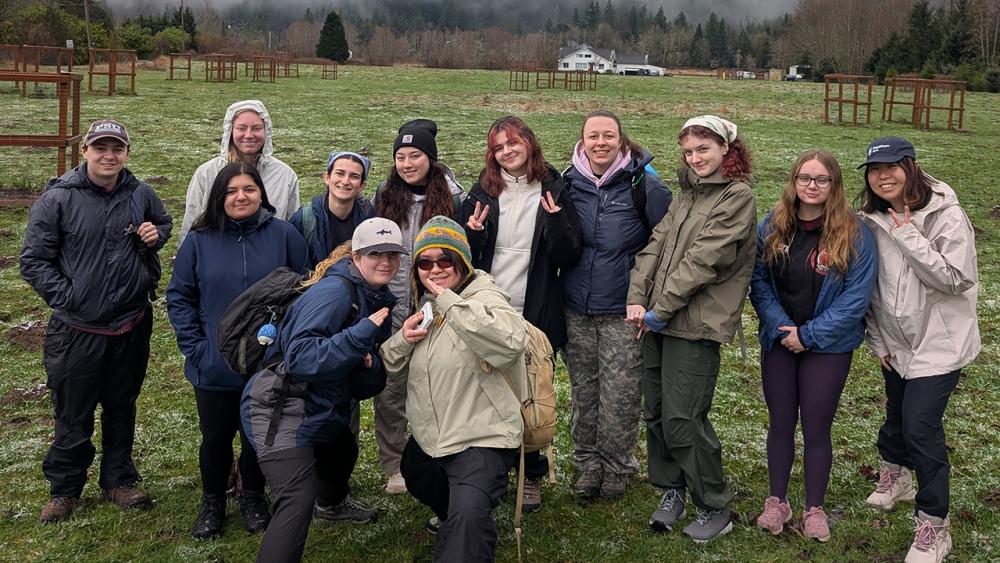
It wasn’t all work and no play: The students took nature hikes in areas such as Rattlesnake Ledge, a trail that includes a view of the Cascade foothills, giving them a sense of the impact of their work. After the hike, the group discussed how the trails are made and talked about the Indigenous people who lived on the land, who initially did such hikes without trails. They also hiked to the Snoqualmie waterfall.
While the group didn’t actually stay in Seattle for the experience, students had an opportunity to visit the city and take a break and interact with community members at a local coffee shop; visit one of the famous fish markets; and shop. With a newfound appreciation for the area, students said they made an effort to buy from local artists. They ended every day by sharing “good vibes,” a positive reflection on the day’s efforts and events.
Penn State Berks students who participated in the experience had to go through an interview process. They included: Madison Armstrong, Kaelyn Balbirer, Cassandra Barbounis, Litzuli Hernandez-Sanchez, Paria Khalili, Heather Hoffman, Evan Imschweiler, Lilith McHugh, Jada Savage and Emily Shugar.
They were accompanied by two staff members from Penn State Berks: Shuai Shao, associate director of student affairs, and Arianna Cruz, residence life coordinator, who helped lead the entire experience for the students. In total, five staff leaders accompanied 40 students. The participants commented that they were happy to build connections with the Snoqualmie Indian Tribe and with students from other Penn State campuses.
Cruz explained that the students stayed in a camp during the trip. “The majority of the week, we were working alongside the Snoqualmie river. Our camp was located in Carnation, Washington, about an hour away from Seattle. We stayed at the camp instead of a hotel to focus on giving back to smaller businesses and limit waste that is created by single-use items/materials used at hotels.”
About Alternative Spring Break
The Penn State Alternative Breaks program provides opportunities for students to learn more about themselves, others, and the world around them through service. The program offers service trips throughout the academic year including service weekends, fall alternative breaks, alternative winter breaks, and alternative spring breaks. Each program is designed to encourage personal growth and reflection, promote civic engagement around a social issue, and immerse participants in a new community.