
Coombs said he’s worked for PECO for 24 years, following the footsteps of his father and grandfather. He is one of about 1,400 workers represented by Local 614, which filed a petition Thursday with the Pennsylvania Public Utility Commission seeking an investigation into PECO’s repair and maintenance practices.
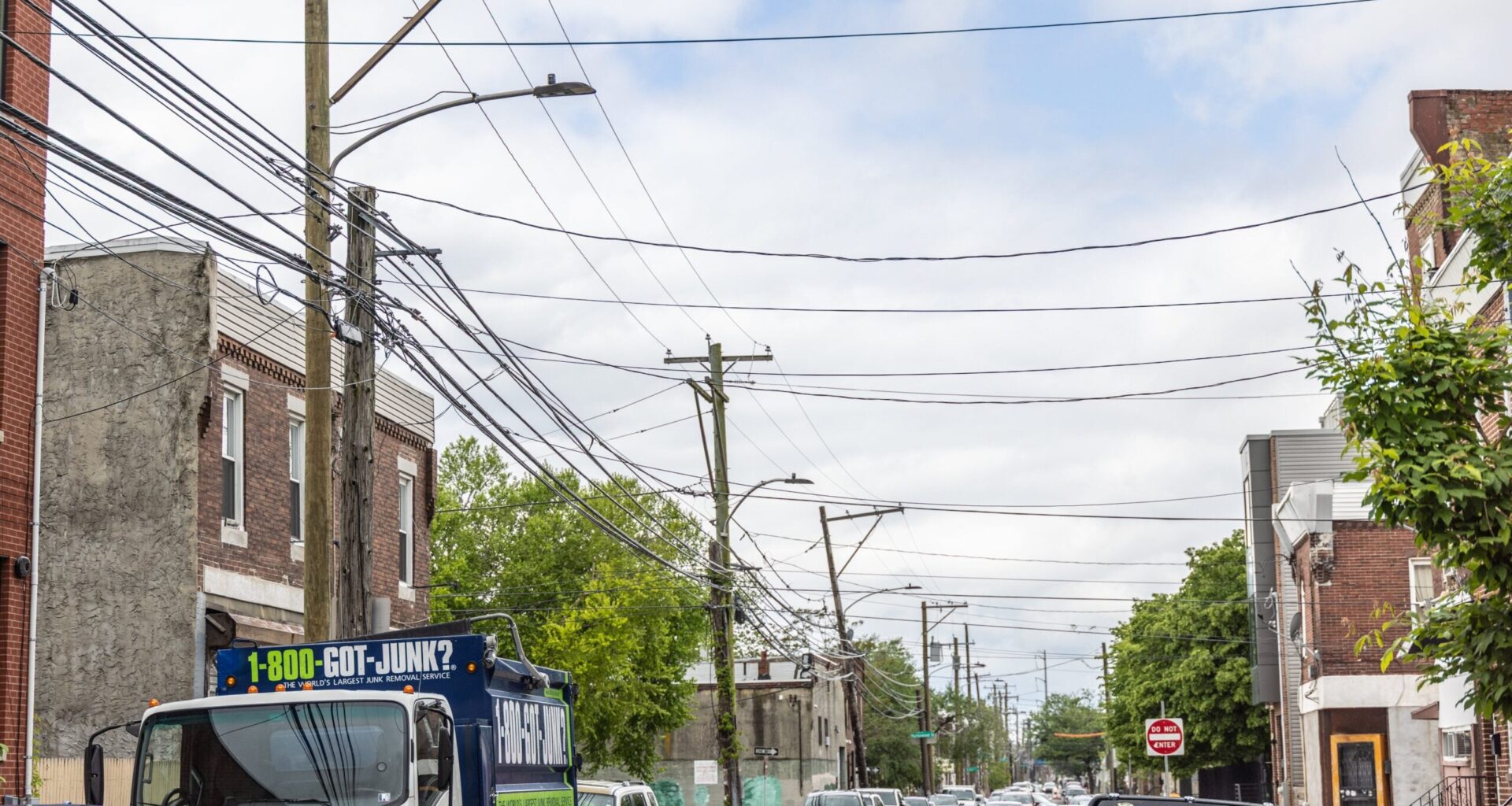
“We see it every day,” said Larry Anastasi, Local 614 president and business manager, who spoke at a press conference held in Grays Ferry on Thursday. “Crossbars, braces like the one behind me are splintered and rotting, frayed and damaged overhead wire, transformers that are not sufficiently secure, unstable utility poles, and more. These are obvious safety hazards.”
Anastasi said the company’s recent high profits should translate to better repairs, but he said that PECO instead allows outdated and dangerous infrastructure to go unrepaired in the region’s poor neighborhoods.
“This isn’t like this on the Main Line,” Anastasi said. “In the Main Line, every pole was brand new with aerial cable. In the poorest neighborhoods in the city, it seems to be that the infrastructure from PECO is the worst.”
“This is unacceptable for any company and any city. But it is especially sickening that these hazards are overseen by a company that posted a nearly 50% increase in profits,” he added.
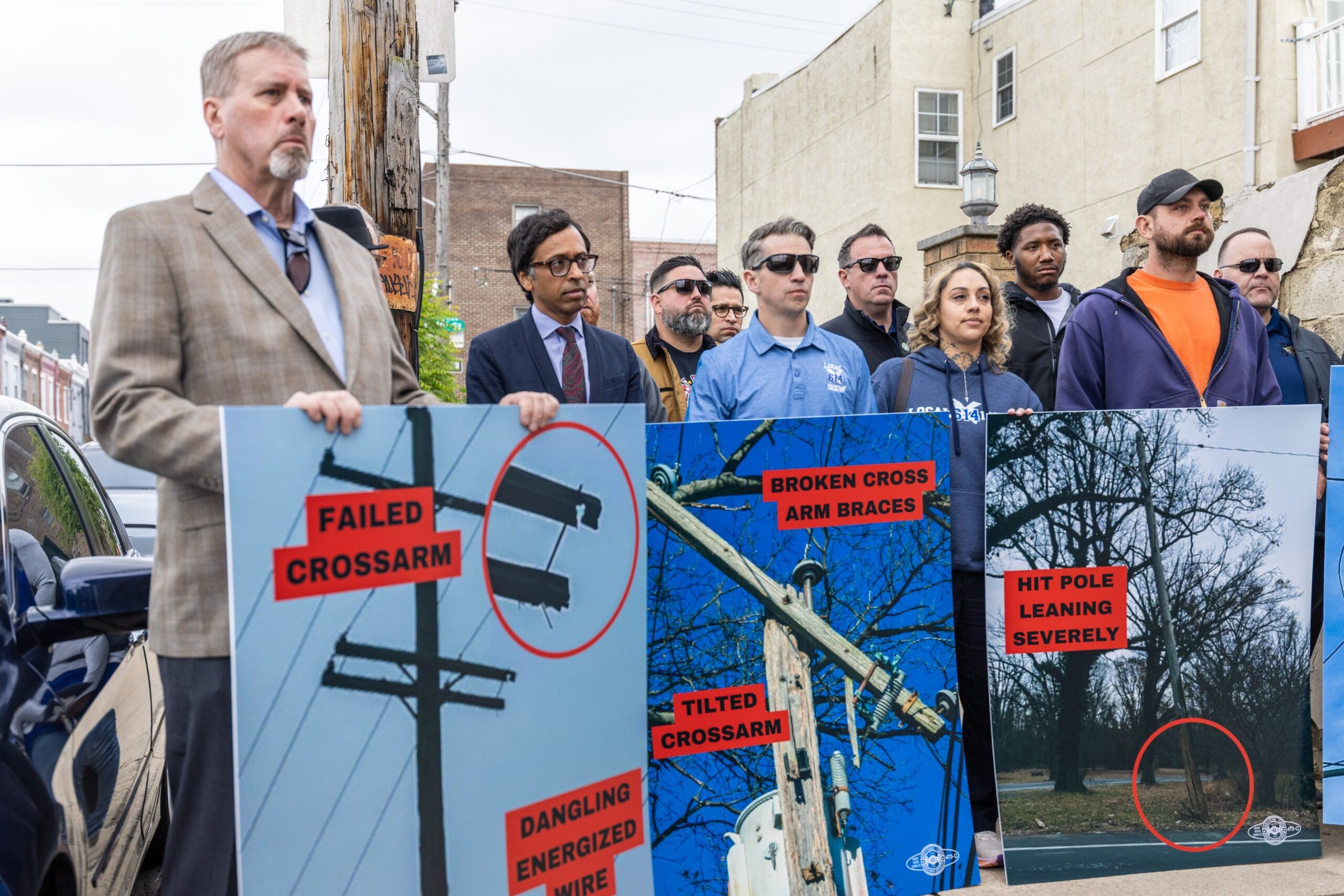 IBEW Local 614 members brought attention to a damaged electrical utility infrastructure at a press conference at 28th and Oakford streets in the Grays Ferry section of Philadelphia on April 30, 2026. (Kimberly Paynter/WHYY)
The petition includes about 100 photographs depicting faulty poles and lines in need of repair, including splintered, rotting, degraded or missing cross arms, as well as transformers that appear unsecured and leaning poles. The union is seeking state regulators to investigate because it does not have access to all the data necessary to assess the entire system. But it did do surveys in some Philadelphia neighborhoods and suburban communities.
“This disconnect between those profits and the apparent state of PECO’s infrastructure warrants further investigation,” said Joseph Richardson, an attorney for IBEW Local 614.
“It is the Local’s hope that the filing of its petition will present the Public Utility Commission with an opportunity for a full, impartial and public airing of those concerns.”
Of the 100 poles assessed by the union in Marcus Hook, Delaware County, the petition says 28% are “potentially hazardous,” while 50 out of 300 surveyed in North and West Philadelphia are hazardous.