
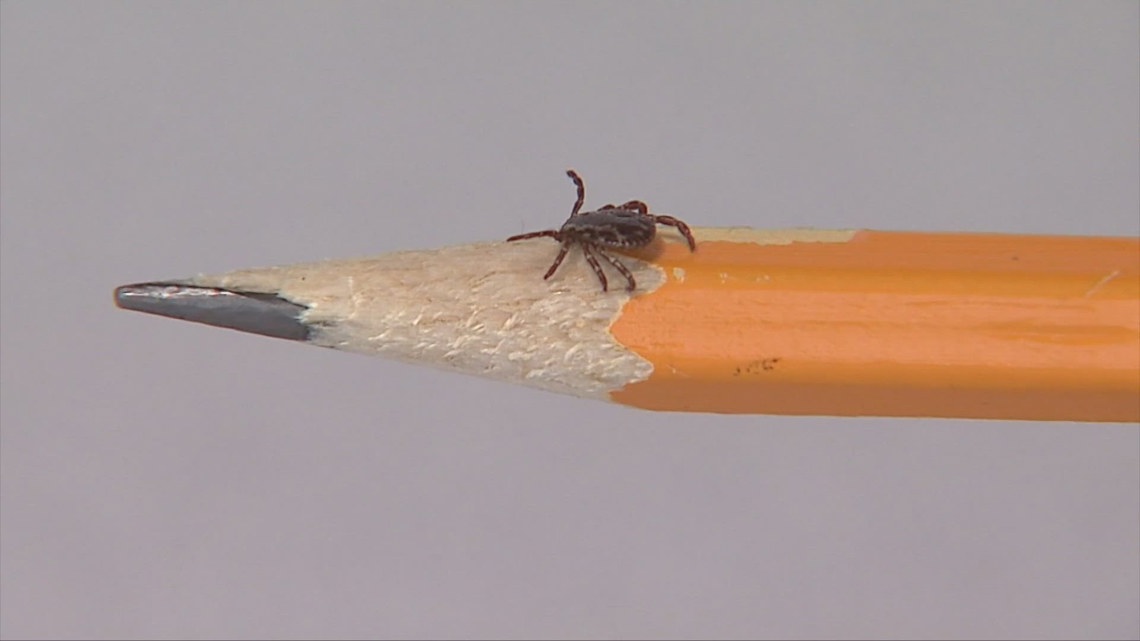
As Lyme Disease Awareness Month begins, experts are urging Pennsylvanians to stay informed when heading outdoors. What you need to know to stay safe.
As temperatures rise and more people head outdoors, health experts say tick season is already underway across Pennsylvania, a state that consistently ranks among the highest in the nation for Lyme disease cases.
Central Pennsylvania is very much a hotspot for the disease, according to Dr. Joe Irwin, a family physician with WellSpan Health in Ephrata.
Irwin says tick-related concerns are a frequent staple of his practice, and the trend has only grown in recent years. Because Pennsylvania’s abundance of wooded areas creates an ideal environment for blacklegged ticks, prevention remains the most critical defense. Experts recommend simple daily habits like wearing long sleeves, using repellent, and performing immediate “tick checks” after being outside.
The scale of the issue is reflected in the most recent state data. In 2024, Pennsylvania recorded 16,624 lab confirmed cases of Lyme disease, and while 2025 data is still being finalized, preliminary reports suggest numbers are trending higher.
Health officials and the CDC caution that these figures represent only a fraction of the reality, estimating that the actual number of infections could be ten times higher due to significant underreporting.
Surveillance has confirmed that ticks carrying the bacteria are now present in all 67 Pennsylvania counties, with some local sampling showing that approximately 50% of blacklegged ticks are carriers. Climate shifts are also playing a significant role in the surge. Milder weather patterns mean the tick die-off is not as effective during winter, allowing populations to emerge in larger numbers once the ground thaws.
While many associate Lyme with a bullseye-shaped rash, it does not appear in every case. Symptoms like fatigue and joint pain are common, but in some instances, especially in children, the disease can present as Bell’s palsy, a sudden facial droop caused by nerve inflammation.
Beyond human health, pets are a major factor in the seasonal surge. Dogs and cats often act as “taxis,” bringing ticks from the yard directly into the home. Because dogs do not develop the classic bullseye rash, owners should look for unusual lethargy or “shifting leg lameness,” where a pet limps on different legs at different times.
Experts recommend a “daily pat-down,” specifically checking between the toes, inside the ears, and under the collar. Using vet-approved preventatives is now considered a year-round necessity, especially as other threats like anaplasmosis are also on the rise, with cases in the state nearly doubling every year for the past five years.
There is significant progress on the horizon regarding medical prevention. In March 2026, Pfizer and Valneva announced that their Lyme disease vaccine candidate demonstrated over 70% efficacy in Phase 3 trials. While the vaccine is moving toward regulatory approval, simple precautions remain the most effective current defense.
This includes wearing clothing treated with permethrin, which causes ticks to fall off on contact, and tossing outdoor clothes in a dryer on high heat for 10 minutes to kill any hangers-on. According to Dr. Irwin, if you catch and remove an attached tick within 24 hours, the chance of it transmitting Lyme is quite low, making daily vigilance the most powerful tool for staying safe.