
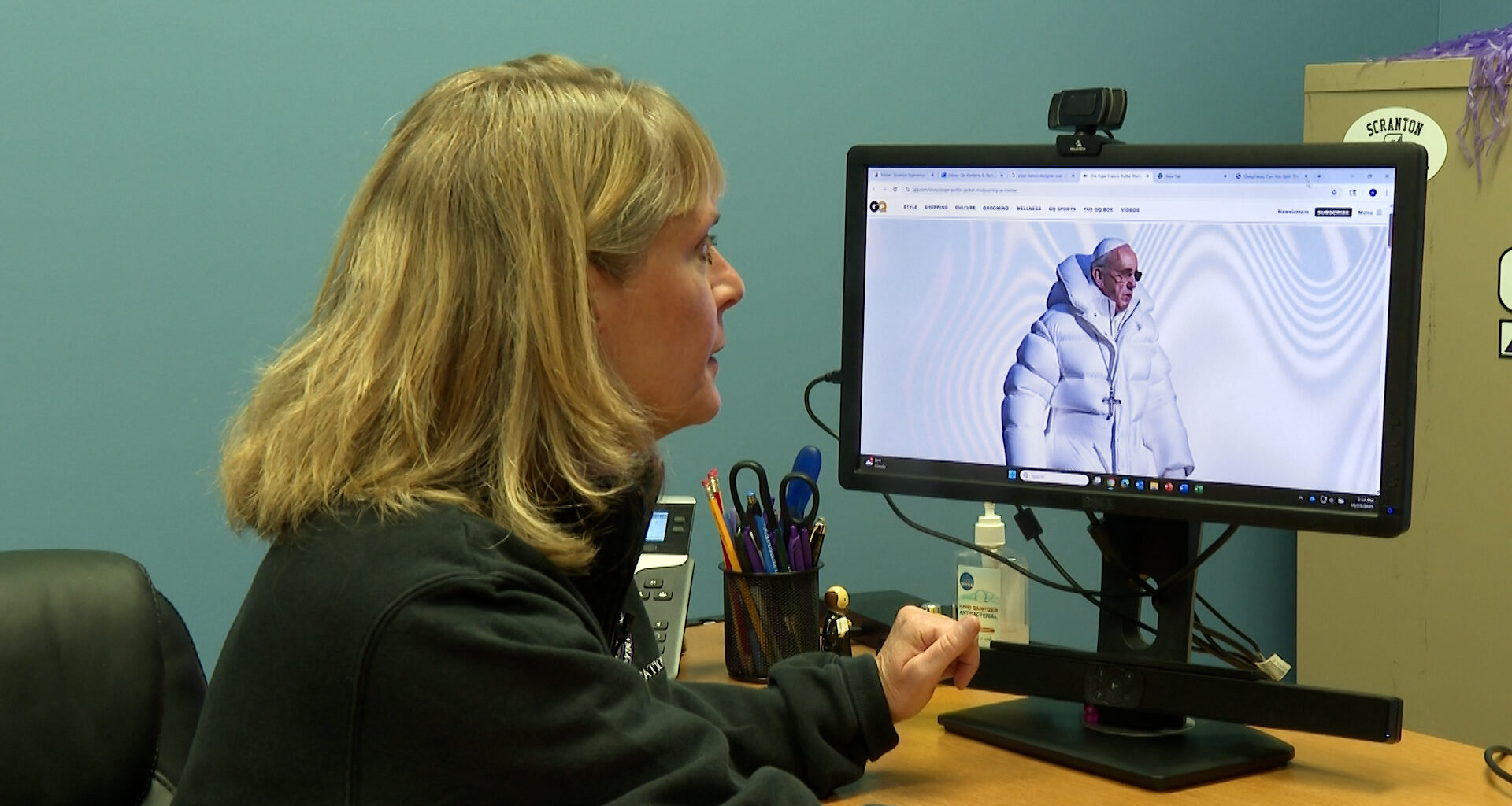
SCRANTON, LACKAWANNA CO. (WOLF) — When scrolling on social media, you’re likely to encounter a video made using artificial intelligence.
Many of these AI videos can be funny and entertaining, although experts like Dr. Kim Pavlick, a University of Scranton Communication and Media professor, warn of their dangers when misused.
“There’s so much content just bombarded at us all day, everyday, and there’s so much misinformation and disinformation across the internet, across social platforms,” she said.
It’s not unusual for Dr. Kim Pavlick to use AI during one of her classes.
Like a calculator, she says, AI is used as a tool by her students for checking spelling, grammar and punctuation, among other things.
“If you’re going to use it, you have to do it ethically, you have to disclose that information. You should use it for good,” she said.
When not disclosed, AI generated content can be harmful, especially for those who primarily digest their information on social media sites like TikTok.
“A study a while back found that about a quarter of TikToks were misinformation or disinformation. We as humans consume that information, we assume it’s true and we get down a rabbit hole. Depending on the algorithm and how you’ve trained it, you’re going to get into a confirmation bias,” said Dr. Pavlik.
To avoid this, Dr. Pavlick suggests fact checking your content.
“What is your source? Is it a peer reviewed academic article, did someone pay to sponsor that article. All of those are pieces of information that we must investigate, we can’t take anything at face value anymore,” she explained.
The first step of investigation is using context clues.
“Pope Francis was a Jesuit; he was very well known for being frugal. He issued a lot of the creature comforts of things in the Vatican. For him to be wearing a very expensive designer coat was out of character,” said Dr. Pavlick.
Closer inspection can provide more clues to the origin of the content.
“Count the digits, AI right now really struggles with certain parts of anatomy. Fingernails, looking for thinks like an elongated neck,” said Dr. Pavlick.