
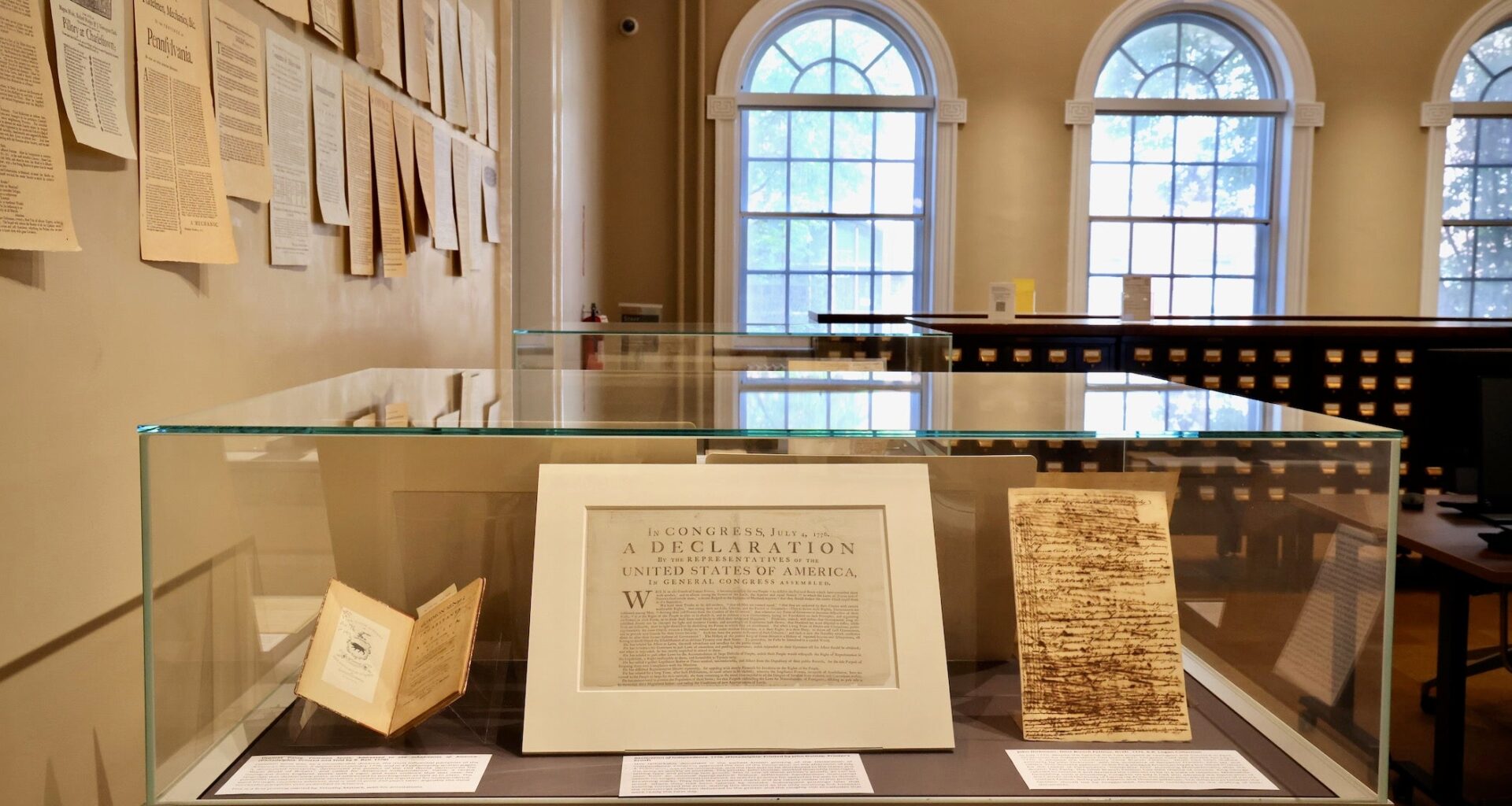
Franklin testified at Parliament that he remained loyal to the king but not necessarily to Parliament, saying the governing body had a right to impose external taxes, but not to tax internal transactions within the colonies.
“It was a somewhat incoherent position that he was taking,” said Ewald. “In the first place, distinguishing between internal and external taxation is really difficult to do. And there were plenty of Americans who said, ‘Look, what we object to is paying taxes. Full stop.’”
Further hedging his bets, Franklin assumed the Stamp Act would be enacted and recommended a friend for the job of collecting Stamp Act taxes in Philadelphia, John Hughes. The law was enacted and later repealed after fierce colonial resistance.
Tax collectors, including Hughes, became the targets of colonists’ anger.
“John Hughes feels the temperature rising in Philadelphia, and he writes to Franklin in London. He says, ‘Ben, you know, things are getting uncomfortable here,’” Historical Society president David Brigham said. “We have the letter that Ben Franklin writes back. He says, ‘John, you’re a loyal subject. Just do your job. Keep your head down. This is all going to blow over.’”
“Franklin is nowhere near ready to sign a Declaration of Independence, in 1766,” he said.
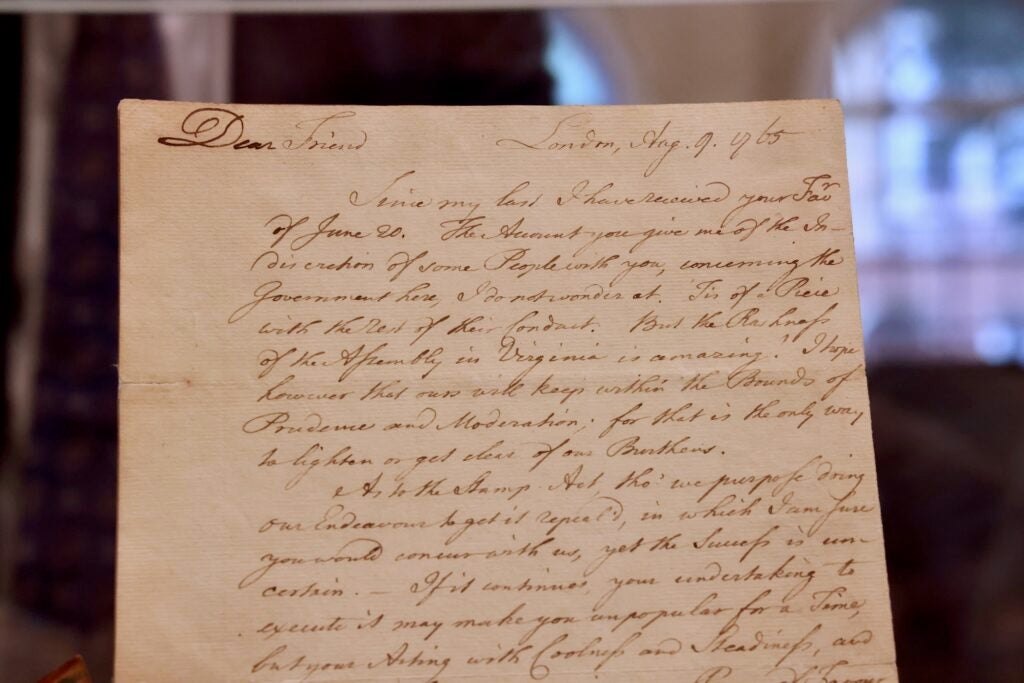 Benjamin Franklin, in London, writes to his friend John Hughes in America in 1765, urging him to remain calm in the face of rebellion against the Stamp Act. (Emma Lee/WHYY)
By 1775, a year before the signing of the Declaration, the colonists were still unsure about separating from the British empire. On July 5, six weeks after the Revolutionary War had already begun with the Battles of Lexington and Concord, congressional delegates sent the Olive Branch Petition to King George, describing themselves as “loyal colonists” seeking a resolution to hostilities.
The very next day, July 6, 1775, the same Congress issued the Declaration of the Causes and Necessity of Taking Up Arms, describing their intention to remain ready to fight.
Both documents were drafted by the same person, delegate John Dickenson, “which must have confused the British a bit when these two things arrived, essentially, simultaneously,” Ewald said.