
Allentown School District officials say a tax hike is likely necessary to fund infrastructure upgrades for aging buildings and outdated athletic facilities.
Preliminary budget projections call for a 2.9% increase in the property tax rate for district residents. Last year, an influx of state funds allowed Allentown to be one of only three Lehigh Valley districts that did not raise taxes.
The district’s latest facilities assessment study, conducted by Breslin Architects in 2025, identified $463 million in facility improvement needs districtwide.
The most immediate asks include $2.75 million in already approved funds for 10 modular classrooms at Sonia Sotomayor Dual Language Immersion Academy; fire alarm, clock and intercom updates at Central Elementary STREAM Academy, Mosser Elementary and South Mountain Middle; $350,000 to install a secure entrance at Mosser; and an additional $3 million for summer infrastructure updates districtwide.
Next summer’s plans include $8 million in heating, ventilation and air conditioning upgrades at Sheridan Elementary; $153,000 in boiler upgrades at Roosevelt Elementary; $382,000 for a secure entrance at Muhlenberg Elementary; and $437,000 for a secure entrance at the Ruby Bridges Early Childhood Center.
School officials are prioritizing all the infrastructure needs identified in the Breslin Architects study and figuring out how to generate a stable funding stream to support “critical, immediate” projects, short-term needs and long-term goals.
Potential projects designed to increase energy efficiency include $11 million for HVAC upgrades at Trexler Middle; $3.5 million for boiler upgrades at Dieruff High; $2.75 million for boiler upgrades at South Mountain; $1.75 million for boiler replacement at Mosser; $1.5 million for boiler replacement at Roosevelt; and $1.5 million for HVAC upgrades at Central STREAM.
The Breslin Architects study identified $26.9 million in “critical, immediate” needs and $86.8 million in short-term needs it says should be addressed in the next three years.
To finance those projects, district officials say they need $19.5 million a year. For the first year, that money would come from the capital reserve. In the second year, $15.8 million would come from the capital reserve and another $3.7 million would be transferred from the general fund.
In years 3-5 of the plan, $19.5 million would be transferred annually from the general fund to the capital reserve. The district calls this a “sustainable, pay-as-you-go” model and Chief Operations Officer Robert Whartenby told the school board at a recent meeting that those annual commitments amount to 4% of the general fund balance.
Some major renovations and expansions are already underway or at least approved. In addition to the modular classroom construction at Sonia Sotomayor, a project that caused tension with the Midway Manor community, expansion plans are underway at Bridgeview Academy.
The budget to convert the renamed Building 21 into an academy that features artificial intelligence, health care and computer science academic tracks is now $63 million, Whartenby told The Morning Call.
The development of the project, including plans to expand community access to a new, standalone gymnasium, have raised project costs since initial projections. The design is not yet finalized, and the district aims to begin construction in 2027, Whartenby said.
Whartenby also told The Morning Call that capital planning is a “fluid and dynamic process” and emphasized that “a priority today might change for a priority tomorrow.”
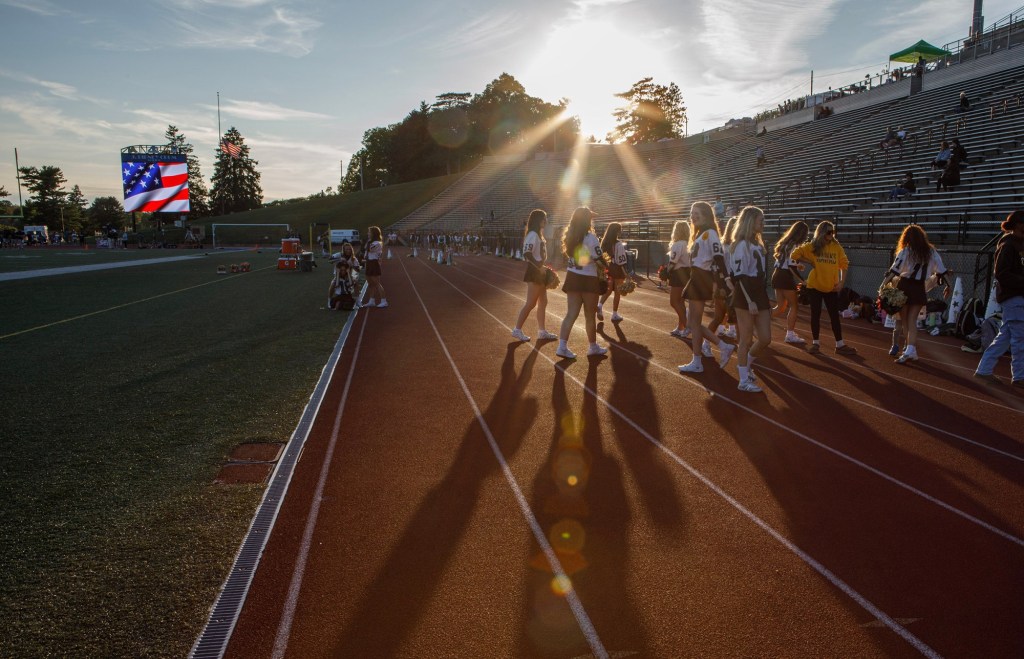
That said, the longer-term wish list includes $30 million to renovate the pool and physical education areas at Allen High (reports of mold raised community concerns; the district says testing revealed “no immediate health hazard”); $18 million for upgrades to Dieruff practice fields; and $7.5 million for renovations to J. Birney Crum Stadium.
The Dieruff community has long raised concerns about inequity in its athletic practice facilities versus those of in-district rival Allen. The use of Andre Reed Park for practice has been cited by athletes and coaches as an inadequate solution due in part to concerns about field conditions, and representatives from Dieruff’s athletic community told the school board last fall that one important goal should be to cut commute time for student athletes as they travel to practice and competitions.
Whartenby also told the school board, during his April 23 presentation, that the Central Administration Building is overdue for upgrades related to its aging HVAC, electrical and plumbing systems and that the sale of that building, plus the purchase or lease of an alternative site, should be considered.
See below for the Allentown School District’s presentation on its capital needs: