
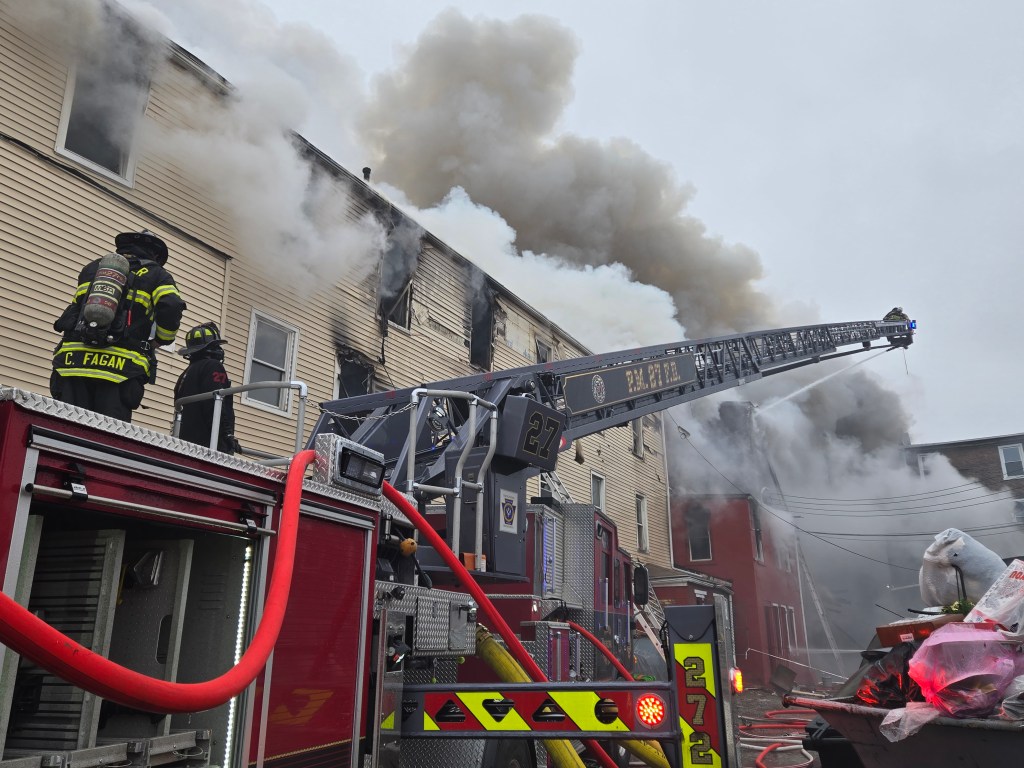
The Hotel Hampton rooming house in Easton had not been inspected in years before a fire broke out there in February, seriously injuring a firefighter, according to a recently released federal report.
The National Institute for Occupational Safety and Health released a report on the Feb. 20 fire in which Wilson firefighter Bobby Lewullis was injured. Investigators wrote that inspections of the building had not been done since 2017 because of limited staffing in the code enforcement and planning office.
The report also outlined a number of recommendations for the responding entities following the fire.
Easton city administrator Luis Campos did not respond to a message seeking comment Monday morning.
The report states the following happened:
Firefighters were called to the building at 462 Northampton St. the morning of Feb. 20 for a report of a fire. When the blaze reached a second alarm, Wilson firefighters arrived to help. Lewullis and another firefighter entered the building and found multiple victims, who they directed to the stairs.
The two firefighters split up to help others, and Lewullis went to another area to search for a reported victim on the fourth floor. While there, Lewullis realized he did not have enough air in his breathing apparatus to get out of the building. He went into another room, broke the window and hung his head outside of it.
He made multiple radio transmissions reporting he was out of air and needed a ladder to the window. Minutes went by and he called a Mayday, and activated his personal alert system (PASS). Firefighters on the ground could not see him because of the smoke coming out of the building. He was not able to hear or transmit clearly from his radio, so he turned off his PASS. The wind blew the smoke from the windows, and firefighters on the ground saw him briefly.
He told them he could not get out or breathe, and that he needed a ladder, and he saw one below him. They raised the 35-foot ladder to him.
Lewullis lost consciousness as he descended the ladder, and he fell more than 20 feet to the ground. He suffered serious injuries.
NIOSH was notified of the incident, and sent an investigator from the Fire Fighter Fatality Investigation and Prevention Program of NIOSH to speak with those involved and review procedures. The rooming house, originally a hotel, was built in the 1900s. Dozens were displaced in the blaze.
During its investigation, NIOSH representatives spoke to the city’s code enforcement, who informed them that the building had not been inspected since 2017. There had been several requests for inspections by the fire department in the years leading up to the fire, but they were not granted, according to the report.
The hotel had been inspected several times between 1990 and 2008, and some findings showed windows to the fire escape were nailed shut; multiple smoke detectors in hallways and bedrooms not working; fire doors propped open; and missing stair railings and exit signs, the report states.
NIOSH issued a number of recommendations in its 30-page report, including having fire departments help firefighters who have called Mayday down ladders when their medical status is not known; making sure fire departments are properly trained in air management; keeping a crew together while operating in a hazard zone; and developing a pre-incident plan for high-risk occupancies such as the Hotel Hampton.
Investigators noted that firefighters are trained to help victims down ladders during a fire, including protecting them from slipping and falling on the ladder. That should be the case when a firefighter is in Lewullis’ situation, the report states.
“This is an especially beneficial practice when a firefighter has been inhaling significant amounts of smoke, like in this incident. Assistance should include firefighters heeling the bottom of the ladder and a firefighter climbing down the ladder with the Mayday firefighter,” the report states.
NIOSH noted that firefighters involved have since done radio discipline training to make sure critical information is communicated, and are developing new procedures for tactical communications channels for complex incidents.