
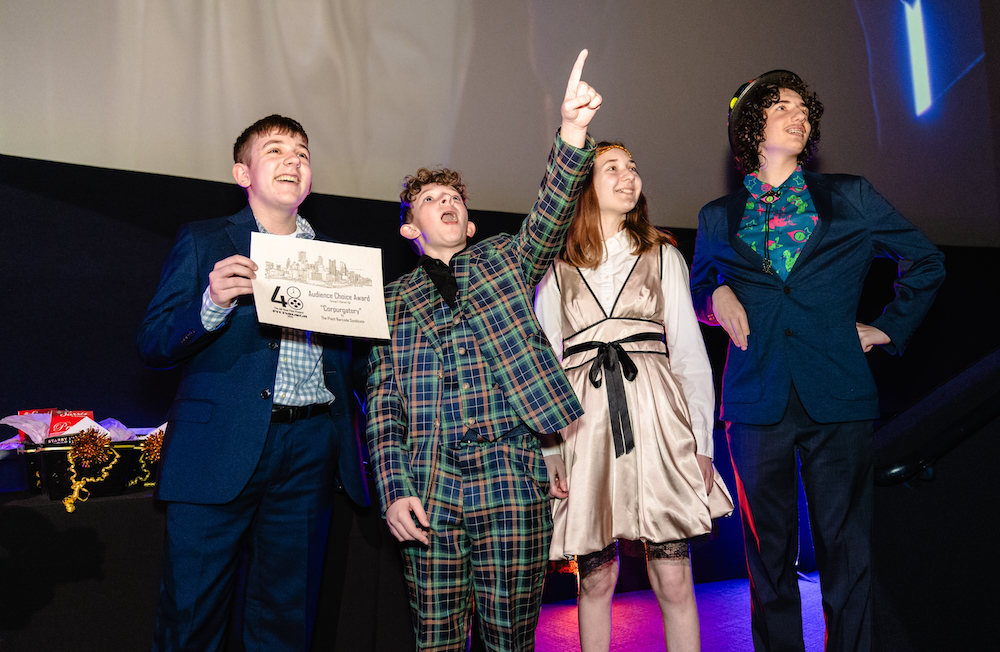
If you live in Pittsburgh, you’ve probably had some encounter with this city’s thriving film scene. From classic movies shot locally like “Night of the Living Dead” (1968) to newer TV shows such as “The Pitt,” which gets its title from its setting, Pittsburgh graces screens big and small every day.
But while filmmaking happens all around the Pittsburgh area, budding film artists (especially younger ones) can easily feel as though the barrier-to-entry is really high — as though it requires experience and equipment that can both be hard to get.
Here’s the good news: Pittsburgh’s student filmmaking community is flourishing and alive. You just need to know where to look.
In my search for the most crucial resources for filming in the city, I interviewed two student filmmakers (Sea Sombar and Jayden Greening, as well as the legendary PJ Gaynard, producer of the 48 Hour Film Project in Pittsburgh. Their interviews are quoted heavily here, and will be available in full at the bottom of this article, if you’d like to listen.
So if you have a young person in your life who’s looking to shine on or off camera, start here!
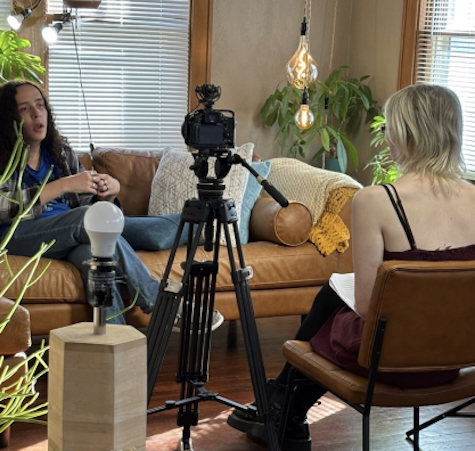 Photo courtesy of Moss Brinzer.
Dive in: The 48 and all things Goat Milk Fudge
Founded in 2001 and still running in over 100 cities today, the 48 Hour Film Project has been an incubator for more than 70,000 films made in more than 100 cities. The 48-Hour Film Project (or “The 48” as it’s been lovingly nicknamed) is exactly what it sounds like — teams of filmmakers write, film, edit, and submit a film in one weekend.
The list of awards that films made during The 48 have earned is extensive. But one of the best things about The 48 is, according to PJ, that every film “screens no matter what.”
It’s not a festival, but a project, he says. So the cool part is what happens along the way, when teams are quickly dreaming up stories and shooting them on the fly. Also, it’s also a way to find creative collaborators: ”The film project is an opportunity for people who don’t have a film team, who don’t have anybody, to glob onto each other.”
This makes The 48 a great place to make friends with equipment you might not otherwise have, and watch along with them as your film appears on the biggest screen in Pittsburgh at the Rangos Giant Cinema.
 Photo courtesy of Moss Brinzer via Goat Milk Fudge Productions.
Many filmmakers in Pittsburgh – myself, Sea, and Jayden included – got their start in film at The 48. When I asked Sea about the catalyst of her filmmaking career, she said without hesitation, “The 48 Hour Film Project.”
I just did it with my family the first year,” she says, and that led to more filmmaking.
Jayden shared that The 48 really incited his filmmaking career, as well. A friend knew that Jayden had a camera and asked: Do you want to do this project with me? Jayden said yes, and he realizes looking back: “I had no idea what I was getting into.”
Both of them have gone on to become very active in the film community; Jayden’s first feature-length project premiered in December 2025 (check out @greening_productions on Instagram), and Sea is working on Transcribe (@transcribe.documentary on Instagram), a documentary that will take her all over the U.S. for interviews.
With Spring 48 signups already open at 48hourfilm.com/pittsburgh, and filming scheduled for the weekend of May 15, now is the perfect time to dive into this whirlwind experience and begin your film journey!
You don’t need experience making or appearing in films. You just need to be willing to join a team, work hard, learn and have fun.
PJ Gaynard, Pittsburgh’s city producer of The 48, is busy expanding opportunities related to the project and beyond. He has recently founded a new nonprofit, Pittsburgh Shot, which will “help filmmakers network, and…illuminate the culture of Southwest Pennsylvania.”
The Pittsburgh 48, along with opportunities for more experienced older filmmakers such as Pittsburgh Crew Connect and Filmmaker Flea Market are set to become part of Pittsburgh Shot. More information about Pittsburgh Shot and its branches can be found through PJ’s production company, Goat Milk Fudge Productions.
 Photo courtesy of Moss Brinzer.
Look for learning opportunities: Magic Hour Creative
A recent addition to the options for Pittsburgh film education, founded in summer 2025, is Magic Hour Creative. Created by Trisha Hosac and Nathan W. Fullerton as “a welcoming hub for…storytellers to explore, collaborate, and bring ideas to life,” Magic Hour is the perfect safe space for budding creatives in need of resources, and it came at the perfect time.
With federal funding pulled for WQED’s Film Academy program, many student filmmakers found themselves in search of a place to go for guidance with their work.
“It’s a really great place to learn filmmaking…in a supportive environment,” Sea told me, when I asked her what organizations had been most helpful in her education. Their year-round programming for grades 9-12 provides opportunities for both new filmmakers and seasoned ones, with a 101 class for beginning students and a further “crew club” for returning students.
Learn more in this Kidsburgh story about Magic Hour and discover information about their programming at the Magic Hour website.
 Image courtesy of Magic Hour Creative.
Words of Advice
Aspiring filmmakers of all ages can find welcoming places to learn. Along with Magic Hour Creative, SLB Radio is another great place where kids and teens can learn to make media of all kinds.
Ultimately, experience is the best teacher so jumping into volunteer events like The 48 can be hugely helpful, as can following the social media pages of groups like Pittsburgh Crew Connect to find other opportunities.
To get advice from people who have navigated all of this, I asked each of my interviewees what their best advice would be to the new filmmakers this article aims to support.
Beyond the practical advice to plan carefully, stay calm, and, in Sea’s brief words, “[befriend] a producer,” the dominant theme was that film is an art to be shared. “Surround yourself with people who want to do the same thing,” Jayden said. “The help that you receive on set can make or break a production.”
In the end, PJ says, the most important thing to remember is that “The best movie is a done movie.” No movie is perfect and each is just one of many, many films you can make.
The projects you create may not be exactly what someone else thinks you should have made, but this is your art.
“You gotta do it until you say it’s done, and then you gotta do it again,” PJ says. “And whatever you do: Don’t stop.”
Listen to the interviews with Jayden, Sea and PJ right here.