
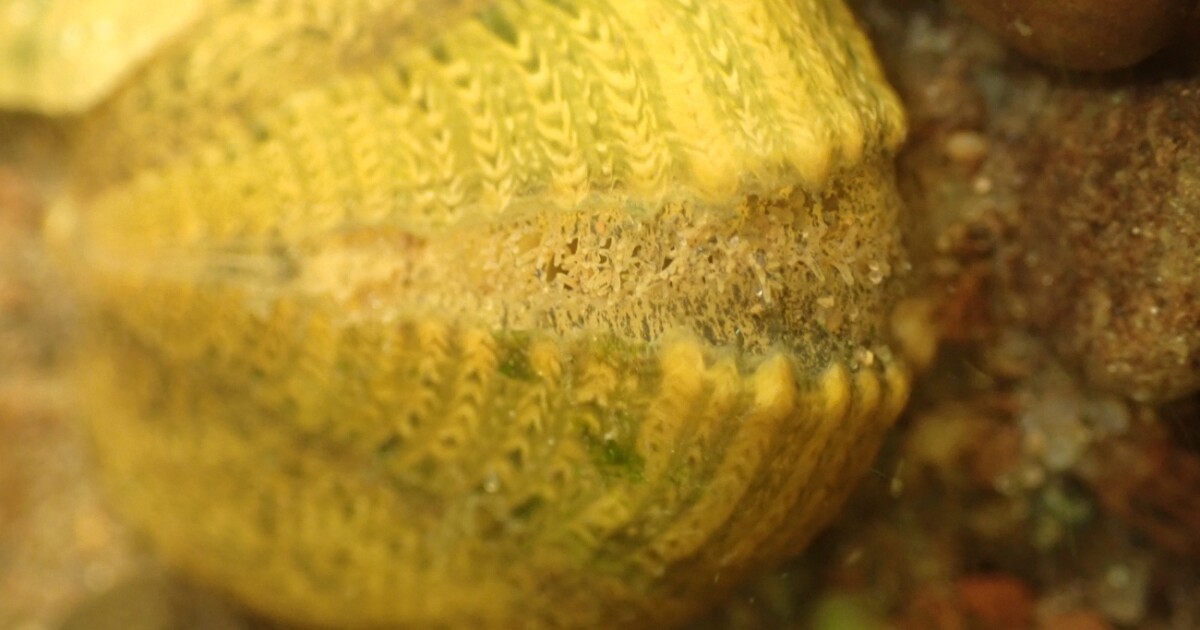
When a female snuffbox mussel wants to reproduce she lies in wait for her preferred fish, a logperch, to swim by. When the fish brushes against the mussel’s gaping shell, she snaps it close on the logperch’s snout, unleashing her larvae under the fish’s gills before she relaxes her grip. The fish swims away and the parasitic larvae grow and mature.
“Then they fall to the bottom of the stream and they start growing their shell and filter feeding,” said Rick Spear, aquatic biologist supervisor at the Pennsylvania Department of Environmental Protection. “They help to clean up a lot of the nutrients and some of the stuff that’s in our sewage.”
The snuffbox mussel is one the 95 species of freshwater mussels that have been listed as endangered or threatened under the U.S. Endangered Species Act.
Mussel populations have been decimated since industry popped up on the shores of the rivers, leaching heavy metals, fertilizers and chemical runoff. Mussels are sensitive to excess silt and sedimentation on the river beds, so when people started dredging channels and constructing locks and dams, they changed their habitats and stopped the flow of their reliable fish hosts. And when invasive species such as the zebra mussel arrived, they outcompeted and killed their native counterparts.
Last week, U.S. Fish and Wildlife Service issued a designation of critical habitat for 3,800 miles of river across 17 states, including Pennsylvania, to protect the snuffbox along with the rayed bean, sheepnose and spectaclecase mussels. In Western Pennsylvania, this includes French Creek, LeBoeuf Creek, Muddy Creek, Cussewago Creek, Allegheny River, Oil Creek, Shenango River, Little Shenango River, Woodcock Creek and Conneaut Outlet, according to the USFWS.
“That would mean we’ll try to keep their habitat away from any dams being built, any channelization, pollution, sedimentation,” Spear said. “And if you can protect the habitat when any activity is going to happen on the rivers, you’re protecting the mussels.”
Livers of the rivers
These bubbling bivalves bury themselves in the sand and gravel and pump in water through their siphons, eating bacteria, algae and plankton before releasing cleaner water. Because they can filter out pharmaceuticals, chemicals, E. coli and sediment, they’re often called “the livers of the rivers.” If they evade hungry muskrats and river otters, they can live for more than 100 years, in some cases.
Back in the 1700s, Western Pennsylvania had about 300 species of freshwater mussels, according to Spear. Now, it’s down to about 55.
The local story of freshwater mussels is one of “devastation and renewal,” according to Nevin Welte, conservation planning coordinator and former mussel biologist at the Pennsylvania Fish and Boat Commission.
Brittany Barker-Jones
/
U.S. Fish and Wildlife Service
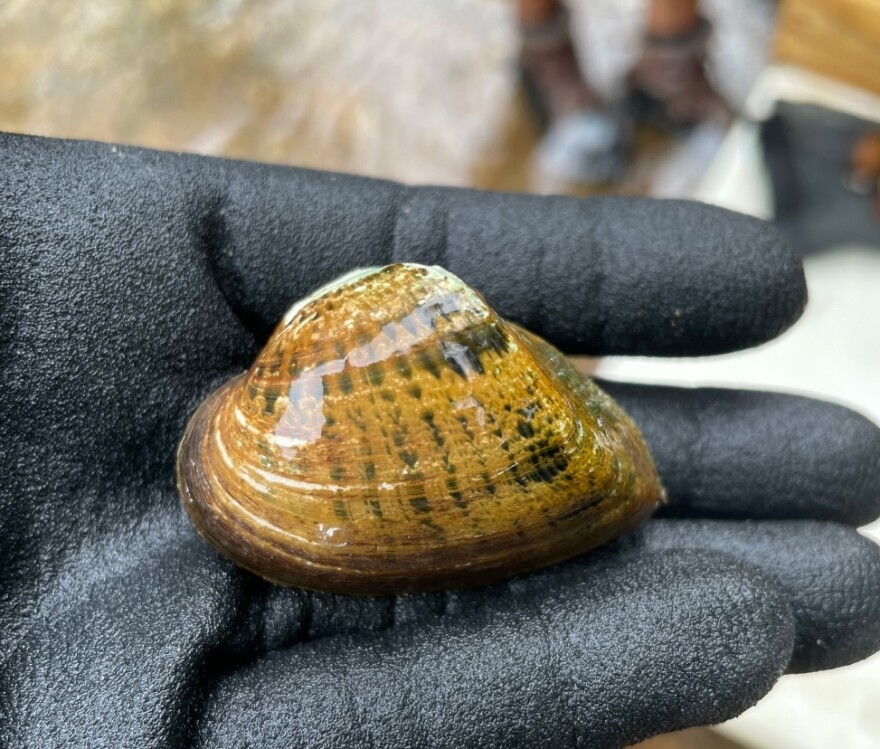
The middle Allegheny River in Northwestern Pennsylvania is the hotspot for the sheepnose, rayed bean and snuffbox mussels (pictured).
“Back to the Industrial Revolution, the amount of pollutants that were being pumped into the streams and rivers destroyed a lot of aquatic life,” he said. “But what’s interesting is that since the Clean Water Act of 1972, the water quality has slowly returned. There are still pockets of habitat in the big rivers and some of the streams that were historically impaired, but what we’re seeing is fresh water mussels returning under native host fish.”
The middle Allegheny River in Northwestern Pennsylvania is the hotspot for the snuffbox, the sheepnose and the rayed bean mussels where there are “really good populations of those endangered species,” according to Spear.
The rayed bean has been found in stable or even expanding populations in recent Pennsylvania Fish and Boat Commission surveys of the Allegheny River near New Kensington. The spectaclecase is a larger mussel species that can grow up to 9 inches long. It is uncommon in Pennsylvania but has been found in the Ohio River in West Virginia.
Musselin’ up a comeback
Surveys by state agencies and conservation groups, along with awareness of industry’s impact on water quality following the Clean Water Act and efforts to raise and stock mussels, have contributed to the local comeback story.
The DEP just finished a 10-year project that put around 40,000 mussels back in Pennsylvania’s rivers and streams. And today, an aquatic conservation center, founded in 2019 in Union City, Pa., breeds rare species of mussel but also fish, reptiles and amphibians. The goal is to help populations recover by raising snuffbox mussels, for example, before “placing animals out into the wild to help them reestablish themselves,” Welte said.
The federal designation of a critical habitat is intended to help keep this comeback alive by identifying and protecting the waters where these recovering species nestle and spawn. The designation ensures that federally funded or permitted development, such as building a bridge or expanding a lock and dam, doesn’t interfere with mussel recovery.
These designations have been used locally to protect endangered bat populations. And in the Clinch River in Virginia, these critical habitat designations for multiple species of mussels allowed for the removal of a dam, reconnecting 30 miles of steam and bolstering water quality and mussel populations, according to Jacob Burkhart, biologist at the U.S. Fish and Wildlife Service.
“It’s helping so that development isn’t destroying that critical habitat,” Spear said. “Maybe that development could happen somewhere else where it’s not gonna endanger the species.”