
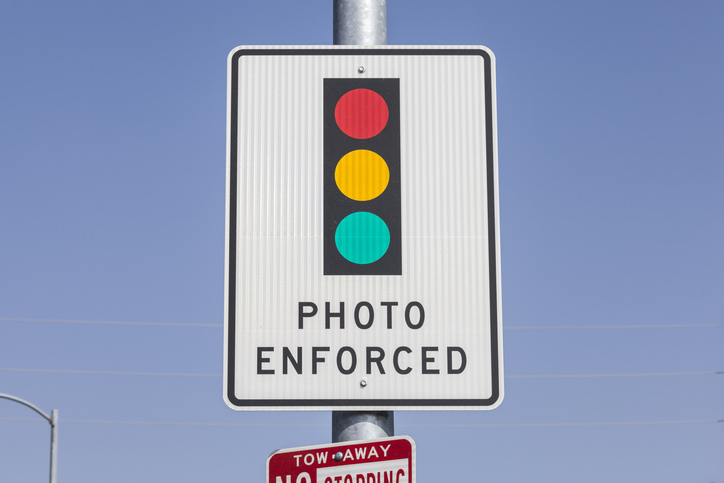
LOWER MERION — Lower Merion commissioners approved the passage of an ordinance that allows for red light cameras at some intersections.
According to discussions at early meetings, the township plans to install its first camera at Remington Road and Lancaster Avenue in Wynnewood. That will likely be expanded to other intersections later.
The township will be required to post signs at any intersection with the cameras. The violation notice will be sent to the registered owner of the vehicle.
Under the ordinance, a fine will not be authorized during the first 60 days of operation of the automated red light enforcement systems at the initial intersections or the first 30 days for each additional intersection selected for the automated red light enforcement system.
A violation will not be part of the vehicle owner’s operating record under the state’s Motor Vehicle Code. No points will be added to the driving record of the vehicle’s owner.
Under a section of the ordinance titled Defenses to Liability, “It shall be a defense to a violation under this Article that the person receiving the notice of violation was not operating the vehicle at the time of the offense. The owner may be required to submit evidence that the owner was not the driver at the time of the alleged violation. The Township may not require the owner of the vehicle to disclose the identity of the operator of the vehicle at the time of the violation.”
A Lower Merion police officer will review the violation before the notice can be sent out.
Todd Sinai, president of the board of commissioners, expressed his support for the new ordinance.
“This is a technology that has been studied at length,” Sinai said, “Anyone with access to a library can read the studies. The recent evidence appears overwhelming for safety, both in the academic research and reports from the Congressional Research Service, which does not have a stake in this. What do you take away? The red light cameras significantly reduce 90-degree angle crashes, which are the ones that hurt people.”
Sinai said initially that the cameras could lead to an increase in rear-end crashes, as people aren’t expecting others to stop at a yellow light. Those crashes, he said, tend to cause fewer injuries.
Commissioner Dan Bernheim asked, “Are we going to do an analysis at some point in time? We put this in and they say, ‘All right, are we getting the benefit out of this,’ and then report back to the board?”
Police Superintendent Andy Block said police would be able to review the data nearly immediately.